

Holi is a widely celebrated festival in India. While in some regions, emphasis is on the religious aspect, in some, it transcends the religious references with appeal to people of all ages and cultures.
Celebrations in the north are generally more intense and wild with heavy color play and traditions of folk culture, sometimes drawing on the religious legend of the rescue of Prahlad and the burning of Holika, but mostly celebrating the love of Krishna and Radha. In the south, the festival is often more muted, focused on religious and temple rites and on the legend of meditating Shiva burning Kamadev. Some Holi celebrations are rooted in folk art and culture and traditions which are also religious.
Cultural Traditions:
The Braj region in Uttar Pradesh including Mathura, Vrindavan and Barsana is considered the cultural heart of Holi, where festivities start weeks in advance and feature unique rituals like priests showering devotees with flower petals.
ADVERTISEMENT


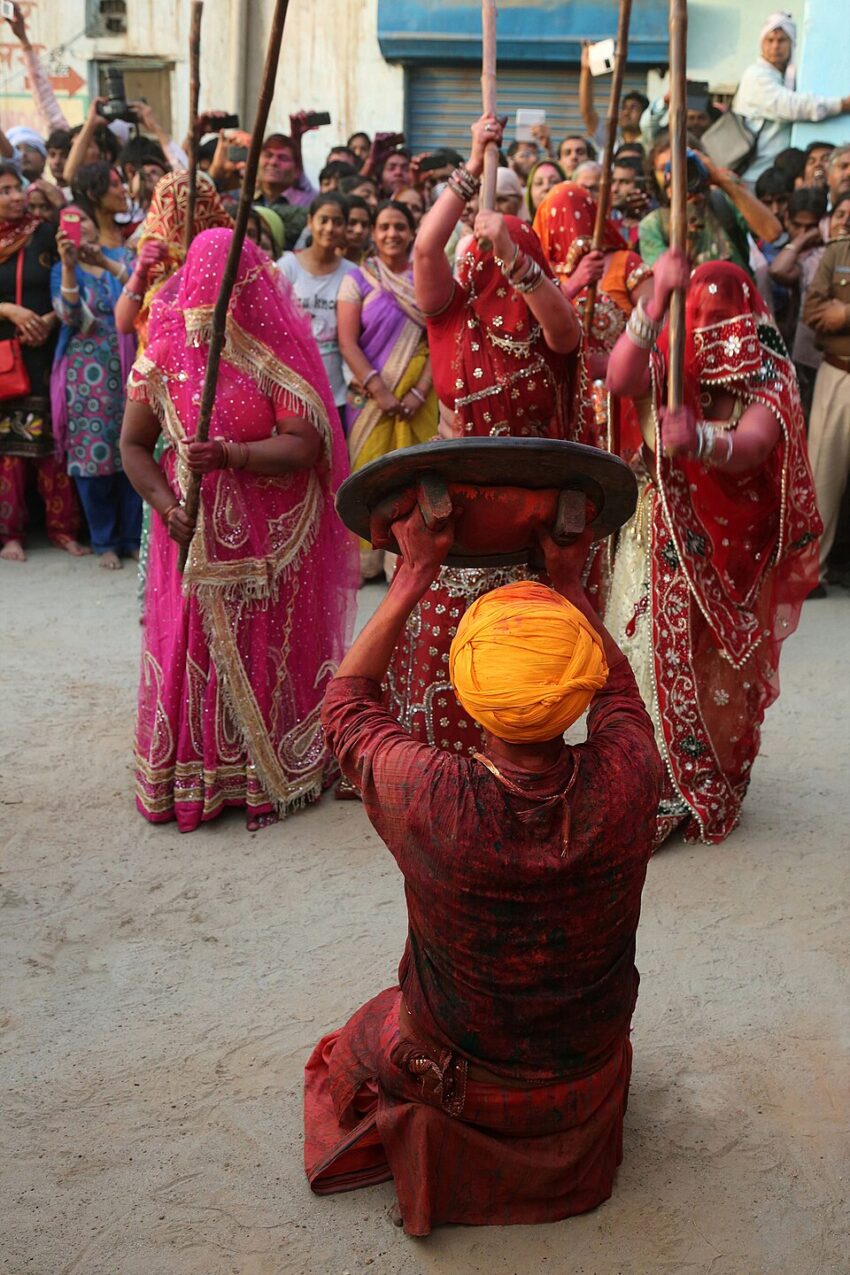
Lathmar Holi at the Radha Rani Temple in Barsana has women hitting men who throw color on them with sticks to the accompaniment of singing of folk songs. Vrindavans Holi is a celebration of sixteen days with special Pooja for Radha and Krishna. Special features include the Matki Phod and Holi played with flowers at the Banke Bihari Temple.
Kumaoni Holi is celebrated for a month from Basant Panchami day. Baithaki Holi is a celebration of the classical ragas with raga Peelu, Bhimpalasi and Sarang performed in the noon and Kalyan, Shyamkalyan and Yaman in the evening. Khadi Holi features singing and dancing in traditional costumes, while Mahila Holi is a women’s celebration. Festivities also include celebrating the Cheer Bandhan fifteen days before Holi.
Religious Traditions:
In West Bengal and Odisha, Holi celebrations have a deeply religious connotation, centering around tales of Krishna and Radha. Tripura, Manipur and Assam also have similar religious and cultural celebrations. Street processions of images of Krishna and Radha on a swing are an essential part of Holi celebrations in these states.

PHOTO: Dash Nistha @commons.wikimedia.org licensed under the Creative Commons Attribution Share Alike 3.0 International license.
West Bengal and Odishas Dol Jatra and Dola Purnima are celebrated with street processions, color-play and traditional music and dance. Processions celebrate the love of Radha and Krishna, with a procession, color-play and music and dance. In a unique tradition in Odisha, images from other temples are taken out to visit the images of Radha and Krishna, and first mangoes of the season are offered to the deities.
Assam celebrates Holi or Phakuwa as three-to-five days of Doul Utsav (or Deul). Deeply rooted in the state’s Vaishnavite tradition, Holi is celebrated at the historic Barpeta Satra, a Vaishnavite monastery, with colors and is a religious event worshipping Krishna and his wife Rukmini, featuring a street procession, devotional songs about Krishna and dance performances. A special feature is that of devotees of Maa Lakshmi blocking Krishna’s return to the temple with bamboo sticks which have to be broken to enter the temple.

Tripura’s two or three day Dol Jatra is a distinct celebration of Bengali traditions centering on the love of Radha and Krishna and unique indigenous rituals and color-play. Holi is also celebrated in Manipur’s Krishna temple in Imphal with singing of bhajans and dance and color-play.
Religious and folk traditions:
Maharashtra retains some of its own cultural traditions with the breaking of a pot filled with yogurt hung high and broken by a team of young people singing “Govinda aala re aala”. Bonfires are held the previous evening in societies and temples with women praying to them for safety of their children.
In Konkan region of Maharashtra, Holi, known as Shimga, is celebrated for a month, with the young collecting firewood and money for the bonfire. Traditionally, Shimga is believed to end all evil, all conflicts and confrontations, forging forgiveness on the day after Holi. Color-play or Rang Panchami is celebrated five days later.
The Holi bonfire has remained a tradition Gujaratis in Gujarat have loved and indulged in. The bonfire is much revered and women and newly married couples perform a ritualistic pooja of the fire symbolic of Holika dahan and harvest. A pot filled with wheat or other grains is placed in the center of the bonfire and the cooked grains are distributed as prasad. Color-play is limited to few hours in the morning.
Holi, known as Shigmo in Goa, is a two-week to one-month long celebration. Shigmotsava marks the arrival of spring, the beginning of harvest season and the homecoming of local warriors who left their families at the end of Dusshera to fight invaders. The celebrations feature colorful street parades with legendary floats depicting scenes from Ramayana and Mahabharata. Traditional folk dances are accompanied by traditional Goan musical beats of dhol, tasha, ghumat and kasale. Dances range from the horse dance Ghodemodni and Fugdi to Dhalo and Romtamel.

Punjab celebrates Holi with Luhatak a week before Holi when people begin to play with colors and a bonfire on the day of Holi. In rural Punjab, house walls are decorated with paintings or Chowk-poorana as it is known with drawings of trees, flowers, creepers and plants, peacocks and palanquins. Celebrations include Nautanki or folk drama performances, and melas or fairs.
Holi in Haryana is famous for mock battles between family members. Devar – Bhabhi Mock-Battles feature married women (bhabhis) playfully take revenge for mischief by beating their younger brothers-in-law (devars) with rolled-up saris or sticks. However, in urban areas like Gurugram and Faridabad, modern Holi celebrations feature DJs, rain dances, and culinary bazaars.
In Bihar and Jharkhand, Holi is a two-day festival, with a bonfire, color-play, dance and music of Dholak and bhang, an intoxicating drink made with cannabis, milk and spices. There is a Holi Milan on the evening of the second day, visiting each other to apply dry color on faces.
Karnataka in Southern India celebrates Holi with a tradition based on the burning of Kamadeva or Kamadahana by Shiva. Sirsi in Karnataka celebrates a five-day Holi with folk dance and music. In some parts of Karnataka, street processions are held of images of Kamanna (Kamdeva) and Rati, his wife. In some others, huge effigies of Kamadeva are burnt. In Navalgund, Holi is also celebrated as Ramalinga Kamanna (Kamdeva) Utsava at the Ramalingeshwara Temple which is believed to grant wishes to have children.
Metropolitan cities like Delhi and Mumbai celebrate urban Holi, featuring modern music festivals and organized DJ parties alongside traditional rituals.

In Delhi, Holi is a vibrant two-day celebration that blends ancient religious rituals with massive modern festivals. Delhi celebrations are a mix of public gatherings, private parties, and cultural festivals with people of all backgrounds participating.
The first day, known as Chhoti Holi, is celebrated with bonfires. The second day is celebrated with color-play and a drink of Thandai. There are mega music festivals, modern rooftop parties and eco-friendly parties with organic colors and folk music.
Whichever way Holi is celebrated, whether in homes, public places or temples, some aspect of the religious importance is kept alive even as modern celebrations are becoming more common.