

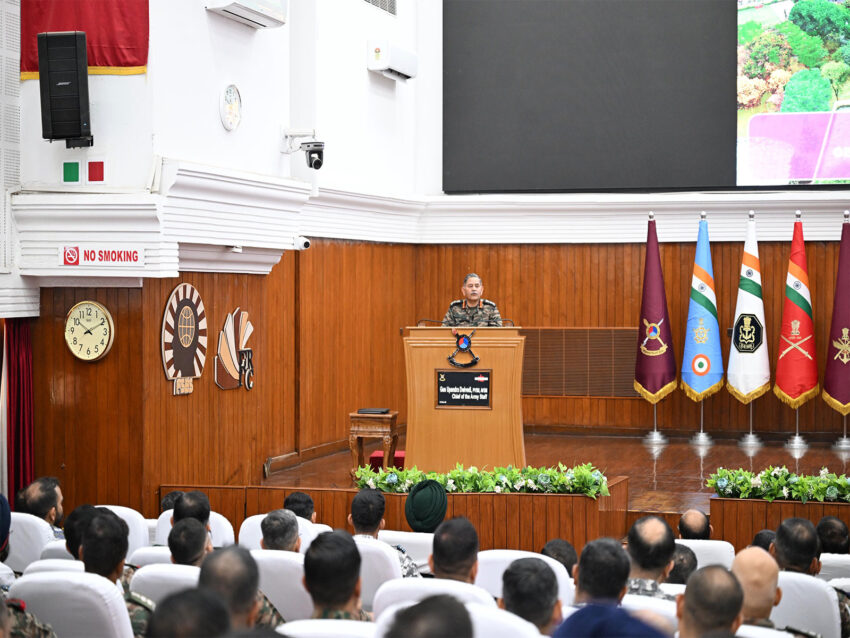
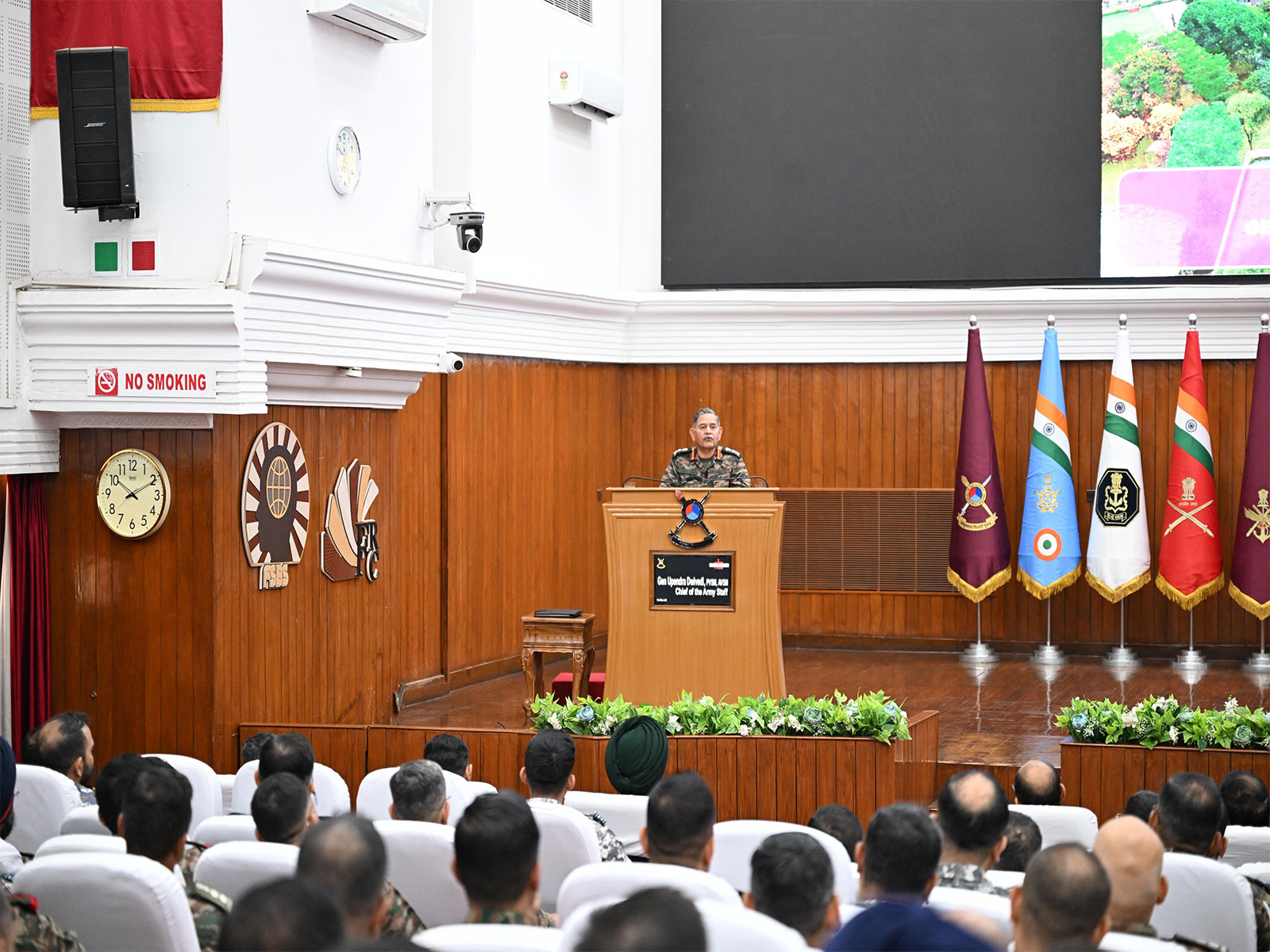
Secunderabad (Telangana) [India], March 11 (ANI): General Upendra Dwivedi, Chief of the Army Staff (COAS), visited the College of Defence Management (CDM), Secunderabad, on Tuesday, where he addressed participants of the 21st Higher Defence Management Course (HDMC-21), the faculty and the permanent staff of the institution.
During the visit, he also reviewed indigenous technological innovations at the Simulator Development Division (SDD), which is developing advanced training solutions for the Indian Army.
Addressing officers undergoing the Higher Defence Management Course, General Dwivedi outlined the Indian Army’s vision for transformation in response to an evolving security environment. He highlighted the Five Pillars of Transformation guiding the Army’s modernisation: Technology Assimilation and AI Integration, Organisational Restructuring and Force Modernisation, Human Resource Development and Leadership, Tri-Service Integration and Jointness, and Indigenisation and Atmanirbharta.
The COAS stated that the Indian Army stands at the cusp of a new era characterised by technological advancement, organisational agility and self-reliance, anchored in the core values of Truth, Trust and Transparency. Drawing lessons from Operation Sindoor, he emphasised India’s transition from a reactive security posture to a proactive deterrence framework. He underlined the importance of effectively harnessing multi-domain operations, data-centric warfare and unmanned systems in future conflicts.
General Dwivedi stressed that change management is a strategic necessity rather than an option. He urged officers to cultivate five dimensions of thinking: creative, critical, systems, cognitive and imaginative, to enhance institutional adaptability and promote innovative problem-solving within the armed forces. He also emphasised the need to balance conceptual clarity with measurable operational outcomes.
Highlighting the changing character of warfare, the COAS observed that modern conflicts require the simultaneous application of all five generations of warfare through an integrated multi-domain approach. He also underscored the importance of understanding grey-zone warfare across all levels of command, from unit commanders to the highest military leadership.
In his address, General Dwivedi called for optimal utilisation of human resources within the Army and emphasised empowering Junior Commissioned Officers (JCOs) to help bridge officer shortages while strengthening leadership at the tactical level. He also referred to the raising of new operational formations such as the Bhairav Battalion and the Special Operations Forces Brigade, reflecting the Army’s proactive adaptation to emerging security challenges.
During interactions with faculty members and international participants from friendly foreign countries attending the course, the Chief of the Army Staff exchanged views on strategic management, leadership development and efficient resource utilisation. He commended the College of Defence Management for its pivotal role in developing strategic leaders, fostering tri-service synergy and strengthening India’s defence preparedness through higher defence management education.
Later in the day, General Dwivedi visited the Simulator Development Division, where he reviewed cutting-edge indigenous technologies being developed for military training. The systems demonstrated included advanced solutions in augmented and virtual reality, artificial intelligence, drones, robotics and simulator-based training designed to enhance realism in combat training environments.
Brigadier Ashish Johar, Commandant of the Simulator Development Division, briefed the COAS on the organisation’s development roadmap and innovation-driven philosophy focused on advancing indigenous niche technologies for the armed forces. The briefing highlighted ongoing initiatives aimed at improving training realism, operational preparedness and capability development.
The visit showcased a range of indigenous innovations delivering immersive and data-driven combat training environments that enhance mission readiness and support faster decision-making. These systems are expected to play a significant role as the Indian Army advances towards network-centric and multi-domain operations, with a strong emphasis on data-centric warfare.
General Dwivedi lauded the Simulator Development Division for its work in developing technology-enabled training solutions that prepare soldiers for the increasingly complex battlefields of the future.
The visit reaffirmed the Indian Army’s commitment to professional excellence, transformational leadership and jointmanship, aligned with the national vision of Viksit Bharat 2047. (ANI)