


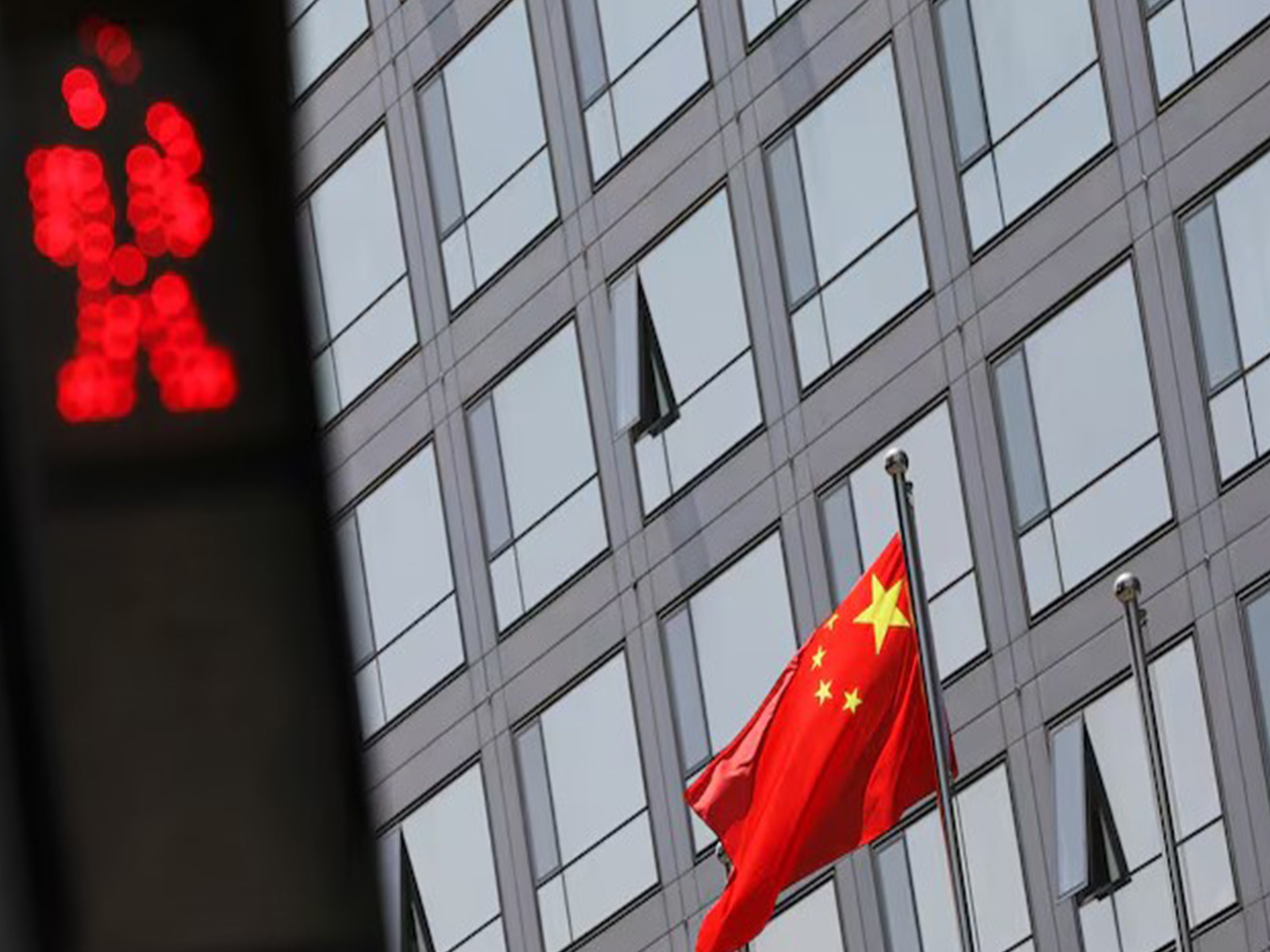
Beijing [China], December 30 (ANI): The Chinese Communist Party’s (CCP) official launch of the Hainan Free Trade Port (FTP) on December 18 has sparked widespread concern among residents and analysts, with rising living costs, strict political controls, and alleged military motivations casting doubt on Beijing’s claims of creating a truly “free” trade hub, according to a report by The Epoch Times (TET).
Hainan, a southern island province, has been designated a duty-free zone, separated from mainland China by a tariff barrier, as part of the CCP’s effort to attract foreign investment amid a slowing economy and the withdrawal of multinational companies. The regime has promoted the FTP as a Hong Kong-style commercial hub. However, CCP has stressed that the port must remain under the “centralised and unified leadership” of the Party, raising questions about its autonomy, TET reported.
While the CCP claims the FTP will promote institutional innovation, trade facilitation, investment liberalisation, and financial opening, analysts argue that meaningful freedom remains absent. Hainan is the largest free trade zone China has attempted, covering an entire province, unlike the 22 smaller zones established since 2013. Despite this, the province remains economically underdeveloped. In 2024, Hainan’s GDP stood at 793.57 billion yuan ($113 billion), ranking near the bottom nationally, according to the TET report.
Chen Bo, a researcher at Hainan and Liaoning universities, said that Hainan is unlikely to meet its 6 percent GDP growth target this year due to weak domestic demand and strained international trade relations. Analysts cited by TET argue that these structural challenges limit the port’s prospects despite Beijing’s hopes to draw global resources.
Critics also point to continued internet censorship. Hainan operates a “whitelist” system allowing limited internet access only to approved companies and high-level professionals in technology parks, subject to CCP approval. Analysts noted that no free trade zone in China, including Hainan, allows unrestricted internet access or independent judicial systems.
Capital flows remain tightly controlled as well. While overseas funds can enter Hainan quickly through special trade accounts, transfers to mainland Chinese accounts face strict scrutiny, trade background verification, and restrictions under the CCP’s negative investment list, TET reported.
Local residents have also voiced frustration over rising living costs. Singer Zhao Rourou posted on social media that food prices surged while wages remained between 1,800 and 3,000 yuan ($256-$427) per month. Her posts were later deleted. Other users shared images showing steep price hikes for vegetables and fruits, including bananas costing more in Hainan than on the mainland, despite being locally produced.
Beyond economic concerns, analysts cited by TET argue that the FTP carries strategic military objectives. Commentators Lan Shu and Mark suggested the CCP is using the free trade label to expand Hainan’s role as a military support base for operations in the South China Sea. Hainan already hosts the Yulin submarine base, China’s aircraft carriers, and key naval assets and is also being developed as a space launch hub due to its proximity to the equator.
Analysts warned that without political, legal, and institutional reforms, the Hainan Free Trade Port risks becoming more of a strategic military asset than a genuine free trade zone, as reported by The Epoch Times. (ANI)