

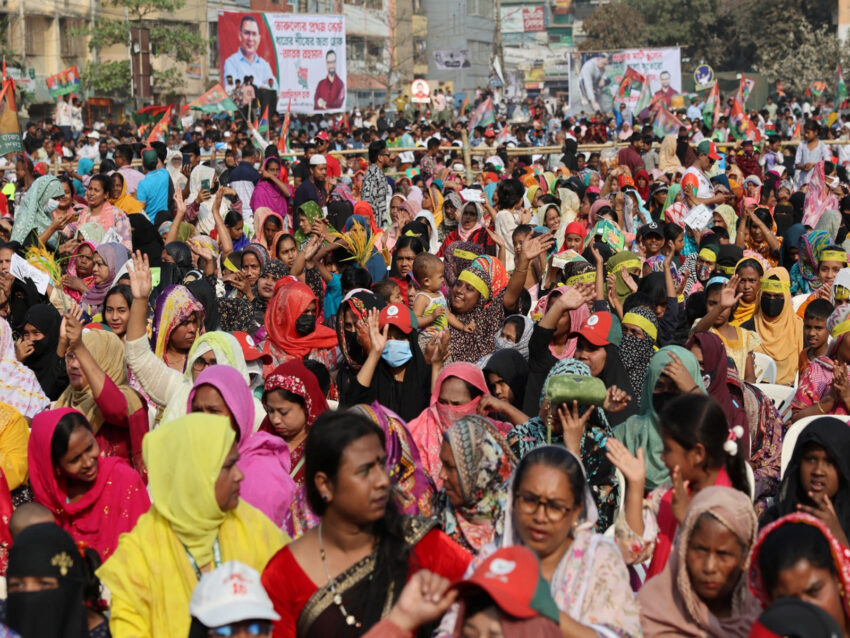
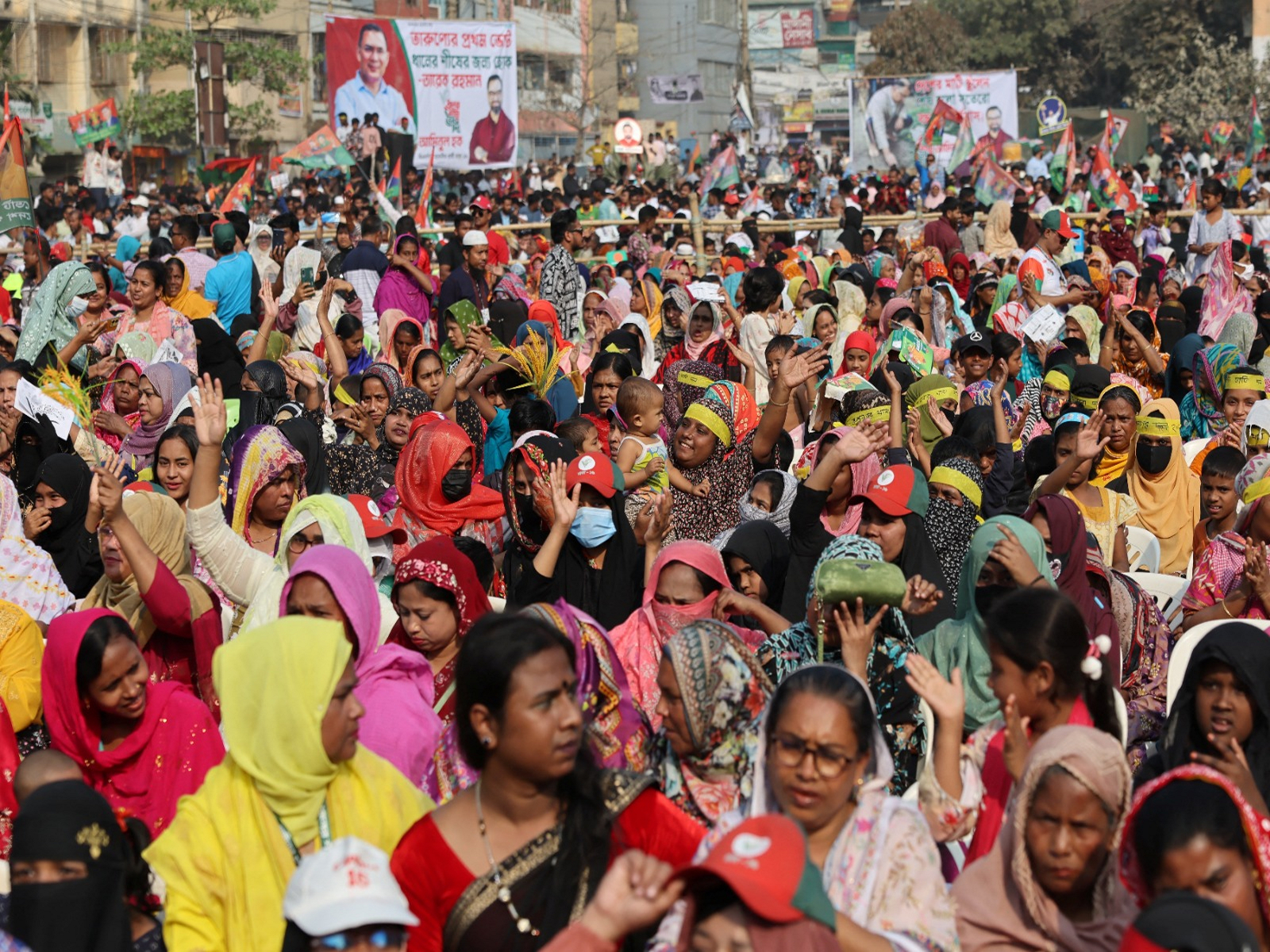
Dhaka [Bangladesh], February 8 (ANI): A sharp rise in Islamist politics following the July 2024 uprising in Bangladesh could have widespread negative consequences, particularly for women, according to a new research report released in Dhaka on Sunday.
The report, titled “Rupture, Reform, and Reimagining Democracy: Navigating the Agony of Transition,” was published by the BRAC Institute of Governance and Development (BIGD).
It examines the political and ideological shifts that have taken place since the uprising that led to the fall of the Sheikh Hasina-led government.
Explaining the findings, Mirza M. Hassan, PhD, one of the authors of the report, said the uprising did not result in the deep structural transformation many had anticipated.
“I’ll be very brief about it. We thought there would be a change in the political order in terms of, party system, in terms of, reforms, and massive changes in the elite structure. There has to be a new elite structure, a new elite circulation. These things should have happened, and also a certain degree of rule of law. That didn’t happen. Rather, we saw a chaotic situation, chaotic governance, a weak interim government who couldn’t control the mobocracy and promote the democratic aspiration of the people. So in that sense, it would be an exaggeration to call it a rupture. It’s rather, you know, some kind of, you know, some changes. More than regime changes, but not more than that. It wasn’t a rupture. So that’s the outcome of the uprising,” Hassan said.
Hassan noted that the political vacuum created after the collapse of what he described as an oppressive regime allowed previously suppressed Islamist groups to gain prominence.
“Since, you know, the extremely oppressive regime was overturned, we got rid of that. So there’s an opening of the space. And through that, different, you know, formerly suppressed Islamist political parties, Islamist civil society, they took their advantage and they’ve become very prominent. So what we’ve seen is a shift in the ideology. The ideology for the last several decades was essentially right of the center, with Awami League, BNP, and JP (Jatiya Party). You know, they had this kind of ideology. That ideology has changed with the rise of Islamist politics, political Islam, and particularly Jamaat. So we’ve observed a tremendous shift to the right wing, right of the center and also right. And right has gained. So what we’re witnessing after the uprising is this ideological shift,” said Hassan, who is also an Advisor and Faculty Member at BRAC University.
The report also warns that the rise of political Islam could disproportionately affect women in Bangladesh.
“Absolutely, especially women. Minority, I think the right-wing can tolerate the minority, they can absorb them since they’re not a major threat. But in terms of, you know, disciplining women, we will see a lot of bad things coming up with the rise of political Islam, until the future political party, whether it’s BNP or Jamaat, if they can handle it properly. But there would be a shift. So this is the first time Bangladesh will see some kind of, you know, formal and informal Islamic governance, and that would create some problems for the women. That’s the sad story here,” he added. (ANI)