

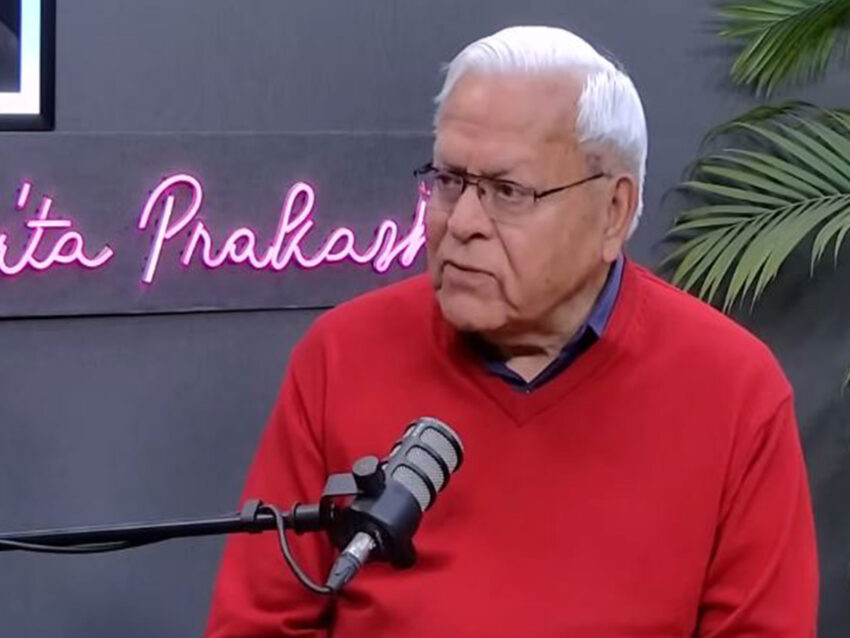
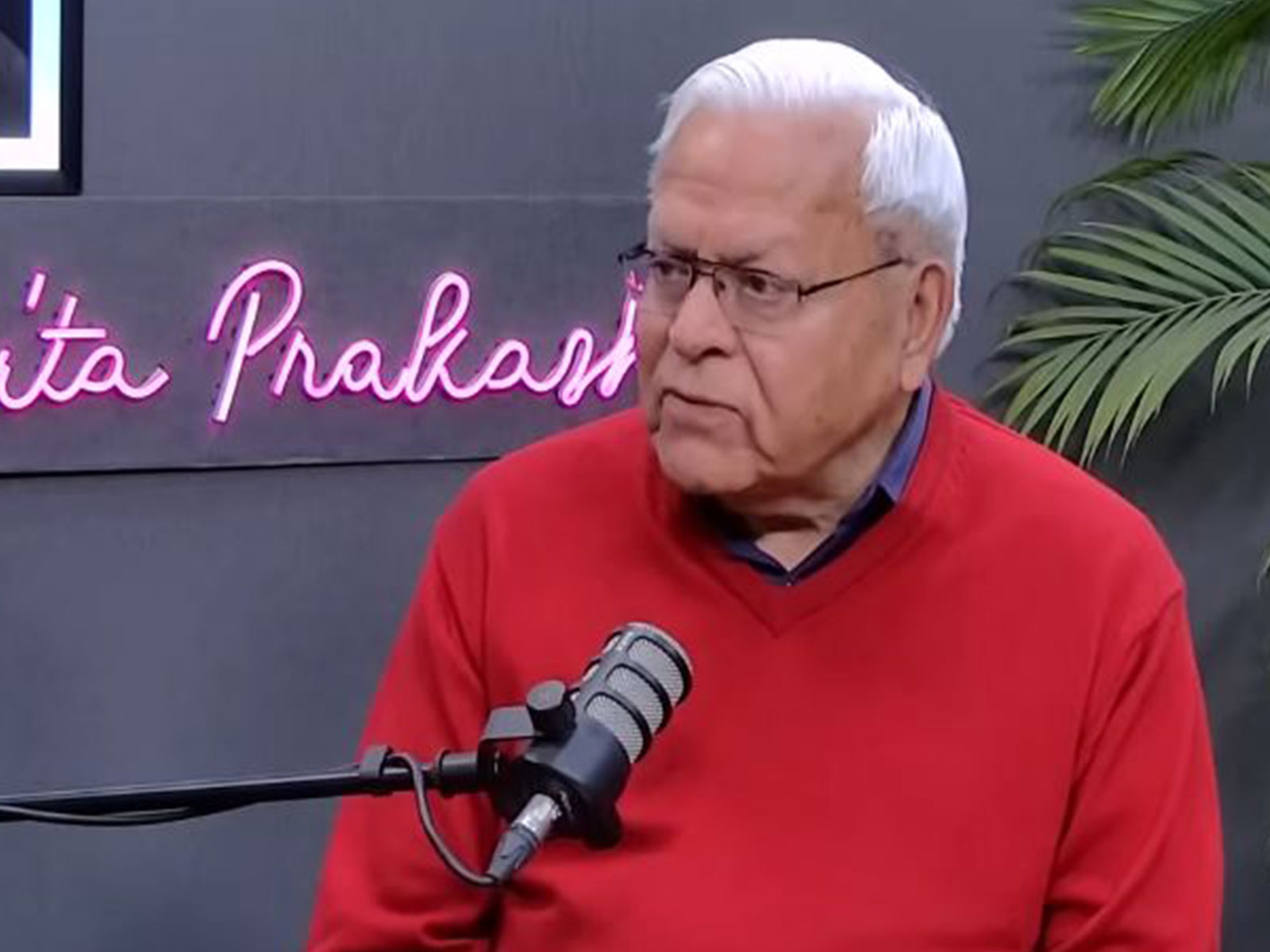
New Delhi [India], January 10 (ANI): Former Indian Ambassador Ashok Sajjanhar has said that the United States’ actions against Venezuela amount to a serious violation of international law, raising concerns over sovereignty, the use of force, and the precedent such actions could set globally.
In an interview with ANI, Sajjanhar also said that people of Venenzuelan-origin outside the country are in favour of a change of government in the South American country, but within the country, the Army, the law enforcement authorities who have power with them, “they still appear to be very much with Nicolas Maduro” .
He said the US action in Venezuela is a violation of the UN Charter.
“First, if you look at the UN Charter, the UN principle, you know, there is an independent country, there is a sovereign country, and you have violated its territorial integrity and sovereignty, that is a huge gross violation of international law,” he said.
“The second would be in terms of Article 2 of the UN Charter, where it is mentioned that use of force in settling any disputes that is not permitted. There are two very short exceptions to that. One, if you are (in) self-defence. And the second is if it is authorized by the United Nations. And none of that really held in this particular case,” he added.
Sajjanhar, who was India’s envoy to Sweden, Kazakhstan and Latvia, referred to the international legal principle that protects a sitting head of state from arrest, noting that even the Permanent International Court of Justice has ruled against forcibly detaining a head of state.
“The Permanent International Court of Justice has ruled against picking up a ruling head of state, a person in position as the head of state, because his persona is to be treated as inviolable,” he said.
He added that several political figures in Venezuela are demanding elections, but that does not justify external intervention.
“And there are others also waiting in the wings like, you know, Edmundo Gonzalez, who fought the election. They want new elections. Maria Corina Machado, she wants elections,” Sajjanhar noted.
The former diplomat also questioned the legality of the action under US domestic law, saying the US Constitution requires Congressional approval before engaging in military action against another country.
“The charge that has been levelled against them (US) also is that you did not take permission from the Congress. And you cannot wage war against any other country without… getting the authorization from the Congress,” he said.
Sajjanhar said the US administration is attempting to justify the move as a law enforcement action rather than a military operation.
“That’s what they are trying to defend in their domestic context. That it is a legal, it’s a law enforcement measure. We have not gone to war,” he said, adding that US authorities argue Maduro was indicted earlier and is being brought to face justice.
He also referred to an earlier US intervention and said “two wrongs does not make it right”.
“…Coming back to what George HW Bush has done to, you know, to (Manuel) Noriega in Panama in 1989… two wrongs does not make it right. You know, that was wrong as it stood. This is also wrong as it stands. both international law and domestic law,” Sajjanhar said.
He also questioned claims concerning US action in Venezuela.
“Are they going there to restore democracy as they have done in Afghanistan? The sort of democracy that they have restored in Iraq, in Libya, meaning is that the sort of democracy?” he asked.
“I think there is evidence to suggest that Venezuela has not been the biggest transporter of drugs into the United States. Much more of it is being processed in Colombia and the other places,” he added.
Sajjanhar said the US President Donald Trump’s remarks soon after Maduro was captured in military action, raised further alarm.
“Mr. Trump used it on Saturday evening in his press conference that now we are going to run Venezuela. What does that mean?” he asked.
He added that Trump later claimed that Venezuelan leader Delcy Rodriguez had agreed to U.S. demands, but her public statements contradicted this claim.
“And he said she didn’t have any choice. But after that, we have seen what Delcy Rodriguez has said. She said, we do not want to be again a colony of any other empire,” Sajjanhar said.
“There might be one-fourth of the population which is outside, which has fled the diaspora, which wants change. But within the country, and, you know, particularly as far as the army is concerned, the law enforcement authorities, they have the power with them. and they still appear to be very much with Nicolas Maduro,” he added.
Sharing a personal anecdote, Sajjanhar recalled meeting Delcy Rodriguez during her visit to India in February 2025.
“I don’t have a connection in that sense, but I was totally unaware that she will be rising to this particular position,” he said, adding that she had visited India to attend India Energy Week and is also Venezuela’s oil minister.
Sajjanhar also spoke about the influence of India’sn spirituality in South America.
“In South America, there is a lot of interest in Indian spirituality, Indian spiritualism… The Brahma Kumaris, they have huge followings there,” he said. (ANI)