

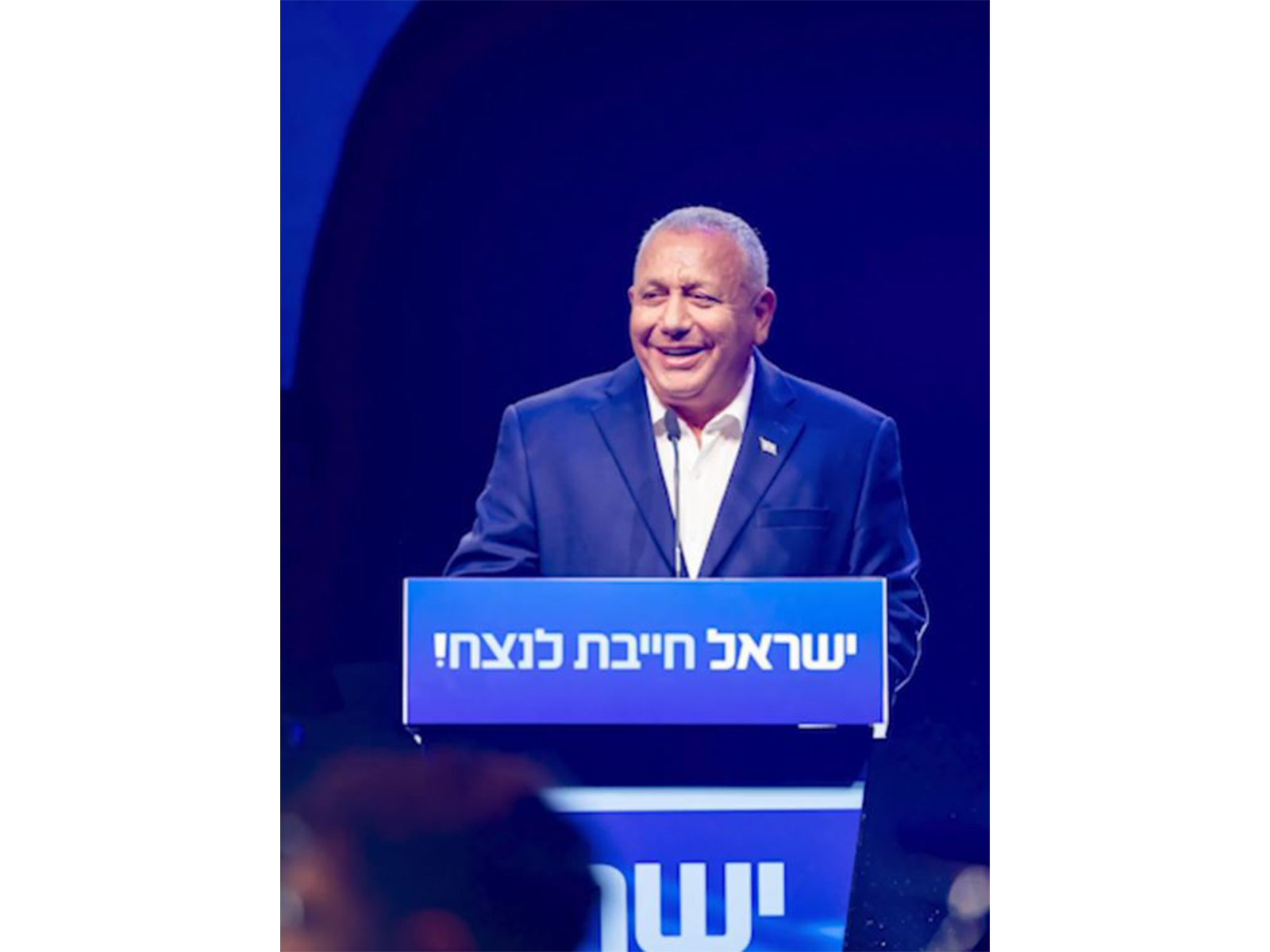
Tel Aviv [Israel], November 23 (ANI): Yashar party chairman Gadi Eisenkot plans to announce a coalition at an unexpected moment over the coming weeks and push for a Knesset vote within a day or two to head off political manoeuvres and defections.
The Times of Israel reported, citing public broadcaster Kan, that despite a lack of substantial progress so far toward deals with ultra-Orthodox factions, Arab-led parties, or Prime Minister Benjamin Netanyahu’s Likud, Eisenkot has pledged to try to swear in a new government regardless.
His calculation is that even if some partners do not back the government, they might abstain rather than vote against it, creating a minority government that puts him in the prime minister’s seat in place of Netanyahu, even if that administration collapses later and triggers another round of elections.
The Times of Israel further reports that Eisenkot faces a political squeeze because members of his own camp have publicly rejected each of his prospective coalition paths.
Kan, without naming sources, reported that Eisenkot intends to unveil his coalition at a surprise time and hold a plenum vote in the Knesset within one to two days, aiming to heighten pressure on allies and leave little room for counter-moves or defections, The Times of Israel reported.
This comes a day after Eisenkot directed his party’s negotiating team to invite representatives of Likud for intensive coalition talks, with the first meeting scheduled for tomorrow (Sunday), in a fresh attempt to form a broad-based government, The Times of Israel reported.
In a statement, Yashar described the move as a sincere effort to establish the widest possible government, pledging to explore all avenues and pursue bold initiatives to break the deadlock in negotiations.
The two parties had previously held an initial round of discussions last Sunday but failed to make progress, subsequently exchanging accusations over their willingness to form a unity government. Likud has called on Eisenkot’s bloc to suspend its legislative agenda and end cooperation with Arab parties, while Eisenkot has ruled out a rotation arrangement with Benjamin Netanyahu, insisting that he would serve as the sole prime minister in any unity government involving Likud, The Times of Israel reported.
Democrats chairman Yair Golan has said he would not oppose the formation of a coalition government involving ultra-Orthodox parties, amid ongoing efforts by Eisenkot to assemble a government and differences within his bloc over potential coalition partners.
Golan ruled out joining what he described as a “fake unity government” that would allow Benjamin Netanyahu to remain in power, The Times of Israel reported.
However, Netanyahu said a “national unity government” was the only government capable of addressing the challenges facing the country.
In a post on X on Monday, Netanyahu said, “A national unity government is the only government that can meet the challenges we face. To do so, it must include all parties that regard the State of Israel as the state of the Jewish people.”
He further said, “In any government that is formed, we will work together with our Haredi partners and enshrine in law, by mutual agreement, the status of those who study Torah.”
President Isaac Herzog formally tasked Eisenkot with forming Israel’s next government on November 8, granting him an initial 28-day window (with a possible 14-day extension) to assemble a ruling coalition of at least 61 lawmakers in the 120-seat Knesset.
The parliamentary arithmetic underscores the urgency of the talks. In the October 27 election for the 120-seat Knesset, neither bloc secured the 61 seats required to govern: Netanyahu’s right-wing and ultra-Orthodox alliance won 53 seats (Likud 27, Otzma Yehudit 7, United Torah Judaism 7, Shas 6, Religious Zionism-Zehut 6), while Eisenkot’s four-party Zionist bloc won 48 (Yashar 21, B’Yachad 12, Democrats 8, Yisrael Beytenu 7).
Although the two Arab-majority parties–the Joint List (11) and Ra’am (8)–backed Kahana’s 66-52 speakership vote, key figures in Eisenkot’s bloc have ruled out formal coalition ties with them, forcing leaders to explore alternative paths to a majority. (ANI)