

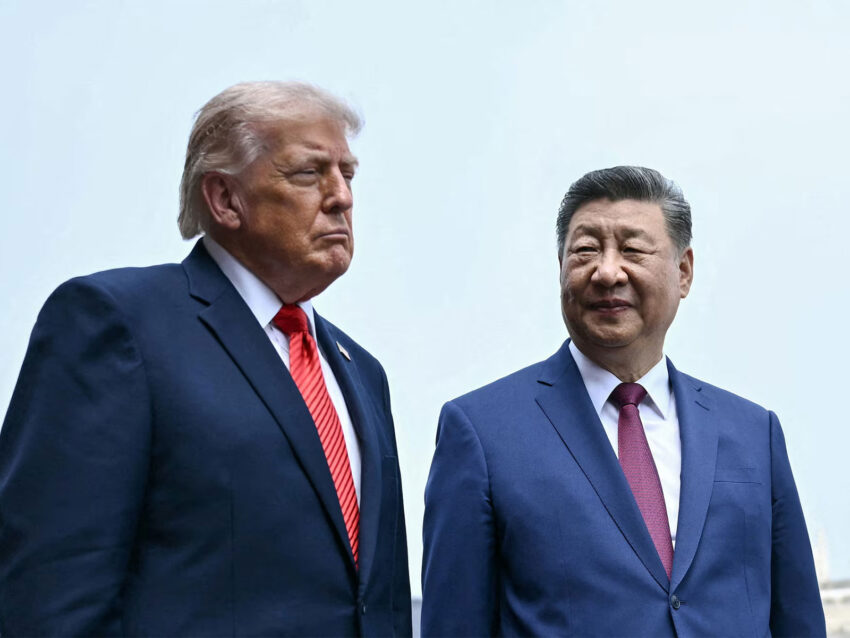
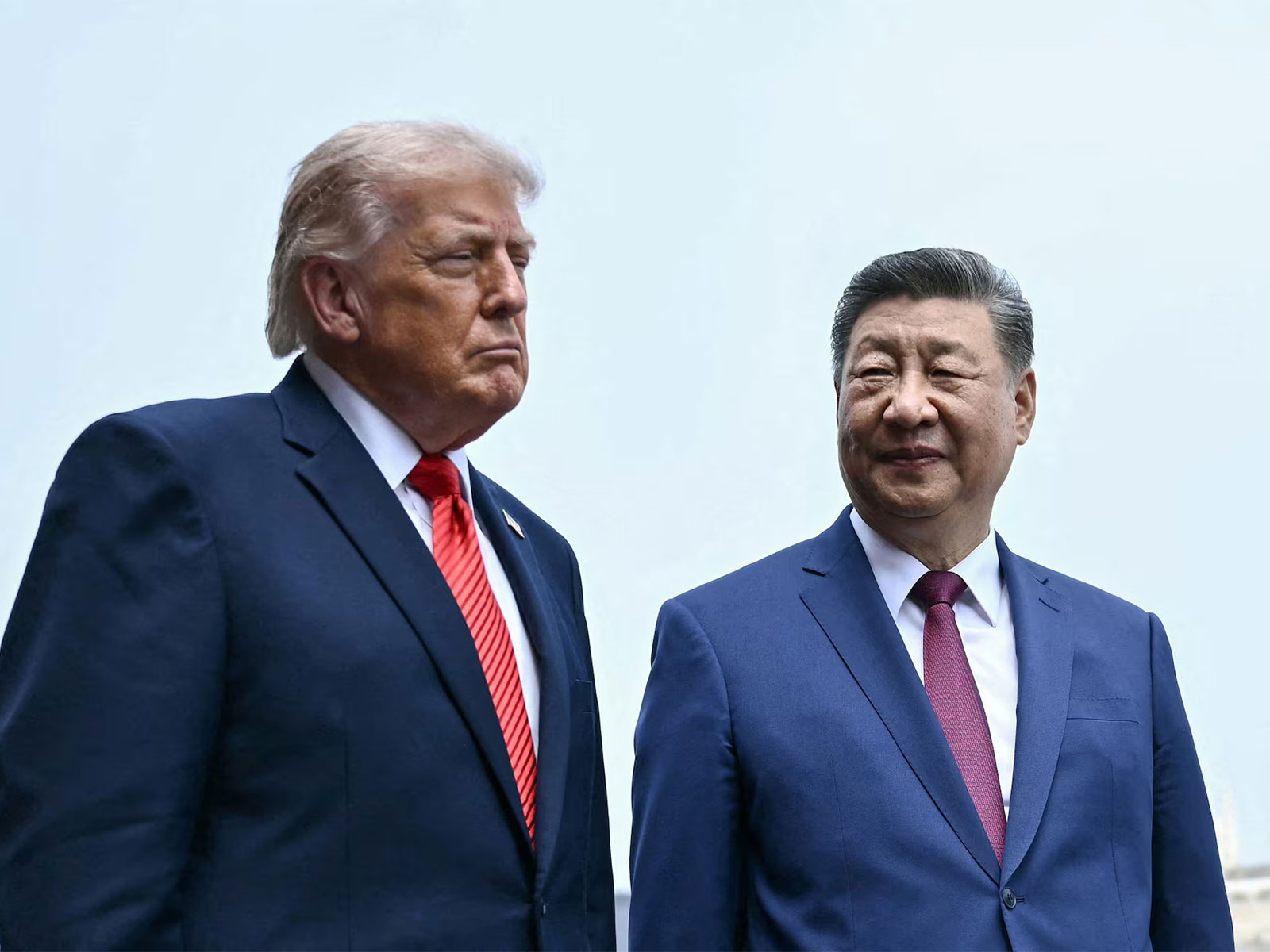
Hong Kong, November 17 (ANI): US President Donald Trump is scheduled to arrive in China on November 18, 2026, for an Asia-Pacific Economic Cooperation (APEC) summit. Whilst in China, Trump is expected to attend a three-way meeting with Russian President Vladimir Putin and host President Xi Jinping.
During the summit in Shenzhen, southern China, there is much for the American and Chinese leaders to discuss, including a trade war, microchips, nuclear non-proliferation and security. Yet multiple recent events, such as the Iran war, the shocking defeat of Trump’s Republican Party in the midterm elections, and the spectacular fall of Nvidia CEO Jensen Huang, may have put the US in a position of relative weakness vis-à-vis China.
Of course, it is quite likely that nothing substantive will emerge from bilateral and trilateral talks. This is partly because, for China, visual optics and symbolism matter most. Xi will be delighted that the US is treating China as an equal when it comes to discussing global affairs. Beijing certainly believes its growing strategic power has earned it the right to sit at the table with the US and for Washington, DC, to treat it with due respect.
In many ways, Trump has little option. After a crippling midterm election defeat, Trump must take any wins he can, and one of those is foreign diplomacy. Therefore, meeting with world leaders at APEC, including host China, is vital for an emasculated Trump. In fact, Trumpism has accelerated great-power competition towards a de facto G2 structure that balances China against the US.
Discussing the US midterm elections, Ryan Hass, Director of the Brookings Institution’s John L. Thornton China Center, commented, “The US midterm election outcome wasn’t about China, but there’s a lesson in it for the forthcoming China policy debate in 2028. When the US public isn’t brought in or bought into major foreign policy actions, it will not tolerate being told to bear costs for them.”
Hass pointed out that Trump, as he promised whilst electioneering, neither reduced costs nor avoided war. Instead, he pursued both with his tariff and Iran war agendas, all without consulting the public. Hass thus warned, “Trump’s midterm reckoning offers a cautionary tale for future leaders. If strategy is disconnected from the priorities of the American people and indifferent to the costs they’re willing to bear, it’ll struggle to survive contact with voters. This doesn’t mean the US should take a passive or cost-avoidant posture towards China, but it does mean future US leaders will need to understand Americans’ priorities and concerns on China and be straight with them about the trade-offs of their strategy to gain public support.”
Hass concluded, “To be durable, China strategy will need to reflect the priorities of the American people. If strategy appears disconnected from US public preferences and lacks public support, it’ll struggle to attract buy-in from allies and partners, and will invite challenges from Beijing.”
China has already been exploiting the weakness of US governance and the vested interests of big business. With companies seeing only dollar signs when viewing the Chinese market, few are willing to toe the line when it comes to US national security interests. This is evident in the behaviour of Huang of Nvidia.
Miles Yu, principal China policy and planning adviser to former US Secretary of State Mike Pompeo, and now Director of the China Center at the Hudson Institute, argued that Huang had for years promoted a false narrative about China and artificial intelligence (AI). These premises include the assertions that China is winning the AI race; export controls do not work; selling chips to China protects US leadership; restricting Chinese researchers is unpatriotic; Nvidia’s profits are in America’s interests; and being a China hawk is a “badge of shame”.
Yu commented, “Why do Chinese AI developers, including those behind Kimi and Alibaba’s models, constantly exploit American AI systems such as Claude and OpenAI’s models? Beijing’s hunger for American technology exposes the weakness in Huang’s alarmism.” Yu said restricting Chinese access to advanced chips cripples China’s momentum, and that such delays are a strategic victory.
Yu warned that, in reality, “Nvidia wants market share. Beijing wants military and technological supremacy. Why should America supply the tools that could help the People’s Liberation Army challenge American forces and enhance the Chinese Communist Party’s (CCP) surveillance empire?”
The fact is that private companies, among them Tesla and Nvidia, are beholden to profit-making rather than national security. Huang had thus lobbied for expanded Chinese access to advanced American technology. Revelations concerning Huang’s extramarital relationship with Alice Huang indicate that hundreds of thousands of advanced chips made their way into Chinese hands through the latter’s Singapore-based Megaspeed.
Certainly, the balance of power between China and the US has changed. Indeed, Chinese Foreign Minister Wang Yi’s readout of Xi’s mid-September 2026 state visit to Washington, DC, underlined a new framework for China-US relations, which Beijing refers to as a “constructive relationship of strategic stability”.
In a 16 October 2026 article published by Fu Xiaoqiang, President of the China Institutes of Contemporary International Relations (CICIR, which is affiliated with the Ministry of State Security), he argued that the new relationship sets boundaries for competition, supports China’s core interests and promotes future cooperation.
Regarding this article, J. Michael Dahm and M. Reece Breaux, writing for the Jamestown Foundation think tank in the US, remarked, “The October 2026 article likely serves three overlapping purposes ahead of Xi and Trump’s November and December meetings. Externally, it communicates Beijing’s conception of a sustainable PRC-US relationship to Washington. Domestically, it explains to Chinese policymakers how to operationalise the new great-power relationship. Strategically, it presents the PRC and the United States as equals, making future US accommodation of PRC interests both necessary and achievable.”
Wang emphasised three principles upon which this “constructive relationship of strategic stability” is based. The first is respect, which entails “honouring each other’s sovereignty and territorial integrity, the social systems and development paths chosen by each side, and each other’s core interests and major concerns”. This is what the CCP craves: for others to accept its Orwellian authority and monstrous abuse of human rights, for example.
The second principle China demands is “fairness”, which implies “engaging in mutually beneficial cooperation, addressing differences through consultation, avoiding zero-sum games where one side wins at the expense of the other, and eschewing the pursuit of unilateral, absolute advantage”.
The third ideal is “reciprocity”, which signifies that “both nations are sovereign equals, with neither being superior or inferior to the other, rejecting hegemonic or bullying behaviour, addressing each other’s concerns on an equal footing, and fostering balanced cooperation across all areas”.
Referring to the CICIR article, Dahm and Breaux explained, “In effect, Fu asserts that the new constructive relationship should prompt US restraint on the PRC’s core interests, while preserving the benefits of commerce and cooperation in other areas.”
But what are those core interests? According to a 2025 State Council white paper, its core interests include “state political power, sovereignty, national reunification and territorial integrity, the wellbeing of the people, and sustainable economic and social development”. In other words, Beijing wants others to accept its claims over Taiwan and the South China Sea, and the absolute authority of the CCP. Those are China’s red lines.
Dahm and Breaux said, “The 2026 shift in Chinese foreign policy, especially towards the United States, aligns with how leadership has recently characterised the country’s external environment.”
Yes, the strategic opportunities China enjoyed from 2002-22 have devolved into a period of risk and opportunity, but Beijing perceives that it can still shape the international environment. This is reflected in the 15th Five-Year Plan (2026-30), which reaffirms that China has favourable conditions to “actively manage international space and shape the external environment”.
Beijing regularly says, “Time and momentum are on our side.”
Dahm and Breaux also highlighted how “a number of Chinese policy analysts and influential academics have framed the PRC’s rise against a rapid decline in the relative power and influence of the United States”. China believes the US has fallen from the world’s sole superpower to being merely the strongest power in an emerging multipolar order. China believes the US-Iran conflict has accelerated the decline in US international influence.
Dahm and Breaux concluded, “Chinese leaders do not believe dominance over the United States is imminent. Rather, they currently assess that their external environment increasingly favours the PRC.” They added, “In the near term, Beijing may pursue a seemingly benign initiative to test the limits of the newly established ‘constructive relationship of strategic stability’. Beijing may also act quickly on its perceptions of a narrowing power differential with the USA and leverage its interpretation of the new bilateral relationship to seek advantages and concessions from Washington.”
Hopefully, Trump will still put contentious issues on the bilateral and trilateral agenda at APEC, including nuclear arms control. However, as Tong Zhao, a Senior Fellow at the Carnegie Endowment for International Peace, pointed out, “Xi and Putin are hard-nosed realists who see nuclear weapons as essential to advancing their visions of history and justice. Russia faces constraints on nuclear expansion, while China has the greatest potential to reshape the global nuclear balance. Joining trilateral nuclear talks would mean acknowledging that responsibility, hence Beijing’s reluctance.”
Of course, China typically seeks power without engaging in responsibility. It is happy to support ornamental initiatives that make it look good or advance its own preferences. This is part of its efforts to reshape the global order and implement acceptance of its authoritarian style of government.
China wants to design how the game is played, but it does not wish to commit significant financial resources. China projects an image of representing the Global South, but its long-term ambition is an international governance system incorporating the concept of tianxia (where China is the world’s epicentre).
Zhao warned that expectations for nuclear progress are understandably low. “Yet an explicit commitment from the three leaders to regular, institutionalised nuclear dialogues among their governments, insulated from broader political tensions, could still be meaningful. Nuclear talks have too often served as diplomatic leverage, suspended over unrelated disputes, such as US arms sales to Taiwan, and resumed as a reward for more ‘stabilising’ US behaviour. A durable mechanism could help prevent arms control from being merely a bargaining chip.”
Discussing the likely trajectory of talks between China, Russia and the US in Shenzhen, Zhao pointed out, “With little shared interest in near-term nuclear arms control, non-proliferation may offer slightly more promise. North Korea’s nuclear expansion is a difficult topic given fears of provoking Kim Jong-un, but the Iran nuclear issue may appear a cooperation opportunity that might interest Trump. China and Russia hold important cards. Their support could help Iran rebuild missile capabilities and improve targeting intelligence, both critical to deterring future strikes on its nuclear facilities. But such cooperation could carry a geopolitical price, potentially involving Ukraine and the EU.”
Zhao said, “Two more urgent threats to the global nuclear order deserve greater attention: nuclear weapons or explosions in outer space, and the resumption of nuclear testing.”
Interestingly, the Quad held a meeting in Manila in the days preceding the APEC summit. The leaders of Australia, India, Japan and the US did not hold a Quad meeting last year, so convening one in 2026 was doubly important. This Quad alliance is heavily criticised by China, which is understandable given that one of its purposes is to support Indo-Pacific nations in strengthening their sovereignty and simultaneously constrain China’s attempts to undermine that capacity-building. The Quad meeting is therefore a form of political signalling and solidarity.
Xi perceives that he is now on an equal footing with the US. Of course, any compromises that Trump makes on issues such as Ukraine and Taiwan would be alarming to US allies. The results of the APEC meeting in Shenzhen on November 18-19, plus a G20 summit in Miami from December 14-15, will show whether the Chinese premise of equality is true or false. (ANI)