


A simmering battle over global airline access to India’s commercial capital has become a test case for the rising clout of the country’s tycoons.
From next summer, flights from Mumbai to 14 international destinations – including Doha, Dhaka, Muscat, and Kuwait City – will take off from a new airport 50 kilometers (31 miles) away. Or so carriers have been told by the Adani Group, which operates both facilities.
As the world’s third-largest market for air travel, trailing only the US and China, India desperately needs bigger, better airports – it also wants 50 more of them over the next five years, as part of a broader upgrade of transportation infrastructure. The sheer scale of the overhaul would challenge any public or private operator taking on the task. Even so, it needs to be done.
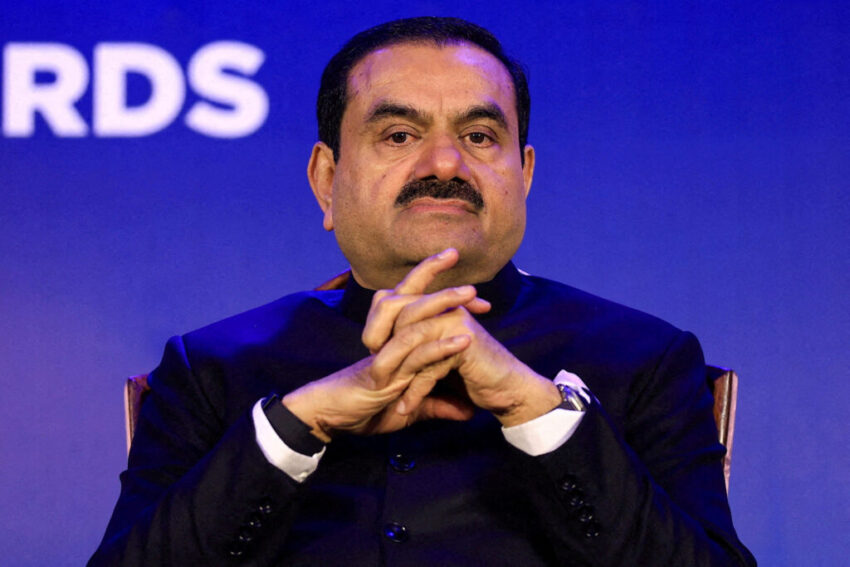
So it’s well understood that the Adani Group, presided over by Gautam Adani, India’s undisputed infrastructure czar, must move fast: Even with the new airport’s first phase boosting capacity by 20 million passengers, the metropolitan region’s annual handling limit stands at 75 million. Demand by 2040 is expected to hit at least 140 million. But this expansion has to occur alongside modernization of the existing infrastructure, some of which has become unusable.
ADVERTISEMENT

There are downsides to any such capacity rejig, as there would be regardless of who was overseeing the effort. Split operations between two airports will raise costs for airlines and flyers alike. Foreign carriers will struggle to find decent hotels for crew on the outskirts of Mumbai, and ground staff will hesitate to move to an area with few good schools.
Some amount of pain is inevitable in large urban projects, especially where civic authorities are slow to provide supporting amenities. This is a longstanding problem in India and overcoming it requires an abundance of will and perseverance, which Adani possesses. India’s richest businessman also commands enormous clout – a quarter of the country’s flyers pass through his airports.
The Adani Group says the Mumbai reshuffle is unavoidable: Terminal 1 at the legacy airport is 60 years old and hazardous; it must be razed, temporarily shifting its mostly domestic flyers to Terminal 2 of the same facility. But because T2 is itself congested, it must parcel out some international routes to the brand-new $2 billion Navi Mumbai site.
Not everyone is happy with this arrangement, however – and the tussle offers a window onto the debate over where private power should begin and end in an expansive, complex country. Airlines resent what they see as the high-handed manner in which Adani’s conglomerate is flexing its market dominance.
Takeoff and landing slots are treated as quasi-public property managed by neutral coordinators under strict international rules elsewhere in the world. Foreign carriers have questioned whether a private operator can unilaterally dictate global routing for passengers and cargo, while the US Department of Transportation warned New Delhi in March that Adani’s push to move freighters to the new airport, Navi Mumbai, breached a bilateral air treaty. (FedEx Corp., for its part, is embracing the move; Adani is building it a dedicated hub.)
It isn’t just airlines upset over losing – at least for a few years – the landing rights some of them have enjoyed for decades. Powerful politicians are also questioning the relocation. Devendra Fadnavis, the chief minister of Maharashtra, the state at the center of the drama, said Tuesday that he has urged New Delhi to allow demolition and reconstruction in stages, insisting that no flights from Mumbai will move to Navi Mumbai.
Most of India’s busiest airports are privately run. They recoup their capital by charging airlines for landing and parking. They also keep a share of the rent paid by restaurants, shops, and carparks, plus a user development fee levied on travelers. At Navi Mumbai, built from scratch, the international departure fee is 1,225 rupees ($13) – double what the older airport, privatized in 2006 and acquired by Adani in 2021, can charge.
With Mumbai’s aviation market barely expanding this year because of the Iran war and high fuel prices, Adani has every incentive to push international traffic to the new site, even if sweeteners dilute early gains: Overseas flights get free landing for a year and 50% off in year two, while passengers receive vouchers offsetting the steeper user fee.
Airports are natural monopolies. The UK defanged its operators by breaking up the British Airports Authority and forcing Heathrow Airport Holdings Ltd. to use retail and parking profits to keep aeronautical charges affordable.
Privatization in India has moved the opposite way. The Adani Group controls eight facilities; GMR Group controls six. These airports operate under a hybrid-till model that shields 70% of lucrative commercial revenues from cross-subsidizing air tariffs – all while tacking on steep user development fees. The Airports Economic Regulatory Authority has recently proposed reducing the 70% figure to lower the burden on passengers. The government ignored its advice for a UK-style single till a decade ago, and it may well do so again.
Continental Europe has private airports and hybrid tills as well, but high-speed rail keeps operators’ monopolistic power in check. Not getting a good fare to Barcelona? Fly to Madrid and hop on a train. There are no such options in India. IndiGo and Air India control over 90% of domestic aviation capacity, leaving fragmented overseas carriers with no bargaining chips. When IndiGo left a trail of widespread chaos late last year after failing to prepare for new pilot rest rules, stranded flyers had few alternatives.
There’s another constituency that is routinely underserved by this mess: multitudes of passengers in India or from abroad who rely on the country’s air services. India’s aviation industry has evolved in an inherently anti-consumer fashion. For relocation to Navi Mumbai, the dominant domestic airlines chose to offer routes filled with migrant Indian laborers from around the country flying to jobs in the Middle East – they can be brought straight to the new site and sent to Jeddah or Riyadh. Meanwhile, Dubai and London, where wealthy Indians have their second homes, will still be serviced from the main airport.
As long as well-heeled travelers aren’t disturbed too much, shifting costs to the less affluent is ridiculously easy in India. Global investors have taken notice, and can’t wait for Navi Mumbai airport’s construction loans to get refinanced by long-term bonds they can buy. Why spend sleepless nights lending to AI data centers in the West, facing community backlash and uncertain prospects, when Adani offers a far superior real-estate play? How the tycoon handles the pushback – not only from airlines, but from the state chief minister as well – will be the real test of his dominance.
Andy Mukherjee is a Bloomberg Opinion columnist covering industrial companies and financial services in Asia. Previously, he worked for Reuters, the Straits Times and Bloomberg News.
(All opinions expressed are the author’s own)