

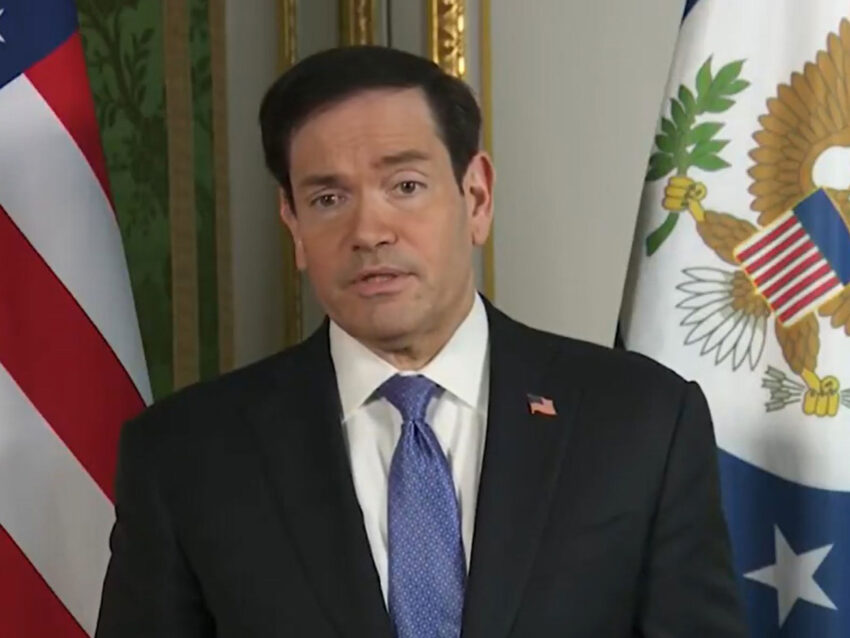
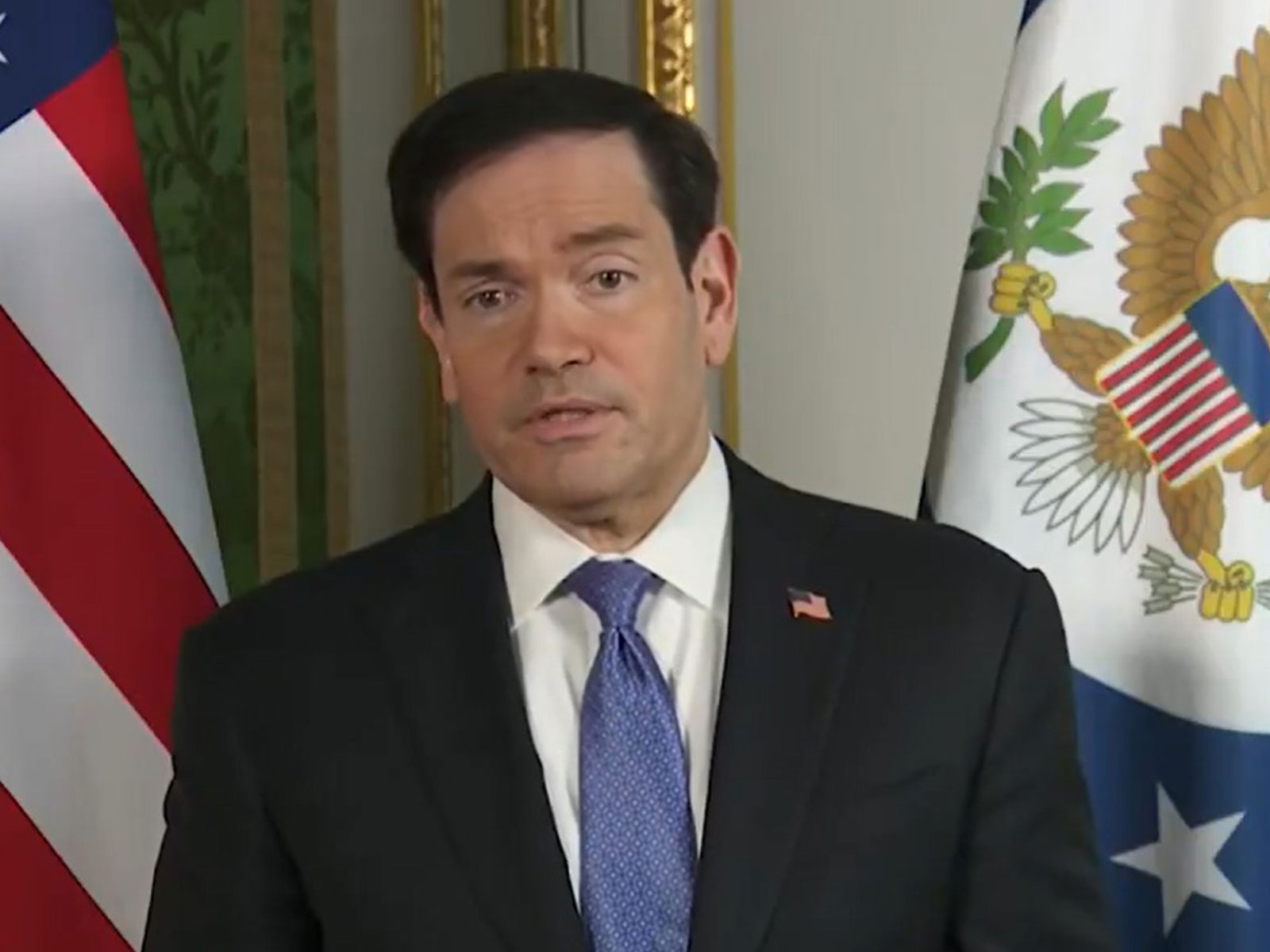
Paris [France], November 10 (ANI): US Secretary of State Marco Rubio, speaking during the G7 foreign ministers’ meeting in Paris, outlined its administration’s foreign policy priorities.
Rubio dismissed concerns over a rift with European allies regarding Ukraine peace negotiations, while asserting that Washington will escalate economic pressure on Tehran rather than yield to demands for reparations.
Reassuring European partners amid ongoing peace discussions, Secretary Rubio dismissed fears that Washington might unilaterally broker a deal with Moscow behind Europe’s back.
Commenting on the shared strategic posture between the United States and European nations, Rubio stated, “I don’t think there’s a difference. I think we have the same interest in mind. Our goals are the same. We want the war to end, and we want there never to be a war again. So that requires not just ending the war, but also ensuring that Ukraine never again feels threatened for its security… There’s always this concern in Europe that they’re going to be left out, that America’s going to cut some deal with Russia and leave Europe out of the equation. Well, Europe’s at the table. They’re with us… And as our negotiators have made clear, we think the trilateral should eventually include our European partners at the table as well, because they are a part of solving this problem for the long term.”
The Russia-US-Ukraine trilateral talks with the participation of the UAE as hosts have begun in Abu Dhabi, according to the Russian Ministry of Foreign Affairs
Rubio described the initial US-mediated trilateral talks involving Russia, Ukraine, and the US in Abu Dhabi as productive and noted that five EU member countries have representatives present.
He pushed back against European fears of being sidelined, stating that Washington wants to expand the format to formally include European partners for a long-term solution.
German Foreign Minister Johann Wadephul stressed that any post-conflict security architecture must involve Europe directly (“there can be no solution without Europe”).
Earlier in the day, US Special Envoy Steve Witkoff said that the United States, Ukraine and European partners had discussed security guarantees for Ukraine, post-war European security arrangements and mechanisms to prevent escalation ahead of trilateral discussions with Russia in Abu Dhabi on November 10-11.
In a statement shared on X, Witkoff said, “Ahead of the upcoming trilateral discussions with Russia, representatives of the United States, Ukraine, and European partners met to continue their close coordination on efforts to end the war in Ukraine and establish the conditions for a durable peace, including support for robust security guarantees as part of any settlement.”
Highlighting the shared objectives, he said, “Discussions took place collaboratively between the United States, Ukraine, and European partners, reflecting their shared objectives, ongoing consultations, and commitment to Euro-Atlantic security.”
Participants emphasised that any future arrangements must respect Ukraine’s sovereignty and territorial integrity.
“Participants emphasised that any future arrangements must respect sovereignty, territorial integrity, independent decision-making, and provide credible security guarantees for Ukraine,” the statement said.
“The shared objective is to develop a practical and mutually reinforcing security framework that strengthens Ukraine’s long-term security and builds the confidence necessary to reach a negotiated settlement,” Witkoff said.
The discussions also covered the broader European security architecture after the war, including the role of existing institutions.
“Alongside a central focus on a lasting peace, the discussion covered how to build upon existing European security institutions and agreements following the conclusion of the war in Ukraine,” he said.
“Participants further recognised that addressing post-war security concerns and reducing the risk of conflict are essential. They discussed how to ensure strong mechanisms for managing risk and avoiding dangerous escalation,” the statement said.
“The participants reaffirmed their shared commitment to a strong post-war European security architecture and arrangements, and were clear that a strong NATO will remain central to Euro-Atlantic collective defense,” Witkoff said.
“The United States, Ukraine, and European partners will continue working in close partnership throughout the negotiating process, with the shared objective of moving toward broader multilateral discussions involving European partners and achieving a comprehensive and lasting peace,” he added.
Addressing the conflict with Iran and pushing back on Tehran’s diplomatic demands, Rubio rejected assertions that holding off on further military strikes signals a stalemate. Instead, he underscored that Washington’s economic campaign and naval enforcement measures will compound.
Refusing Tehran’s calls for financial compensation, Rubio said, “It’s not the status quo because the economic pain we’re imposing on Iran will get worse, not better. In essence, it’s going to continue to increase. It’s going to be worse for Iran in a month and in two months and in three months than it is now. Iran is demanding reparations. They should be the ones paying reparations because they’re the ones that have destabilised the region for long periods of time…” (ANI)