

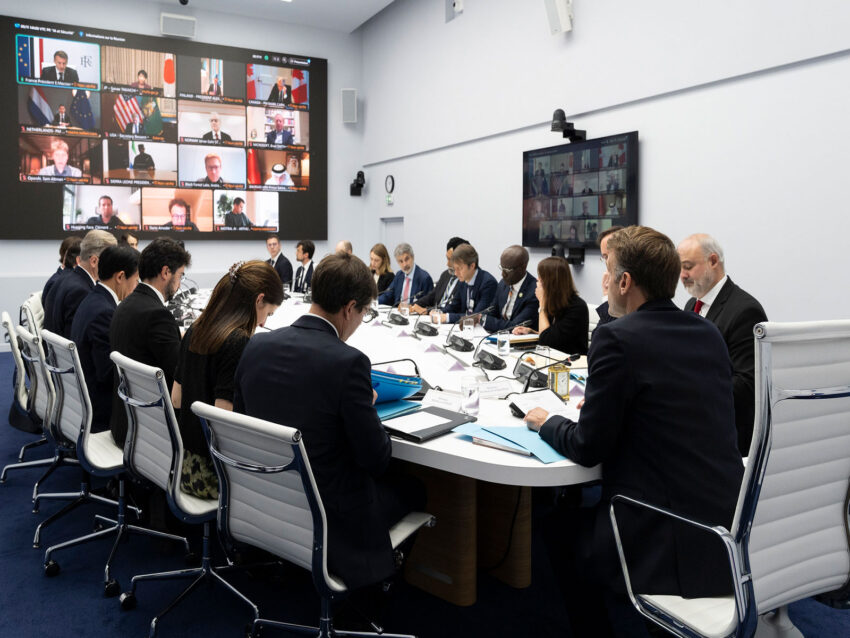
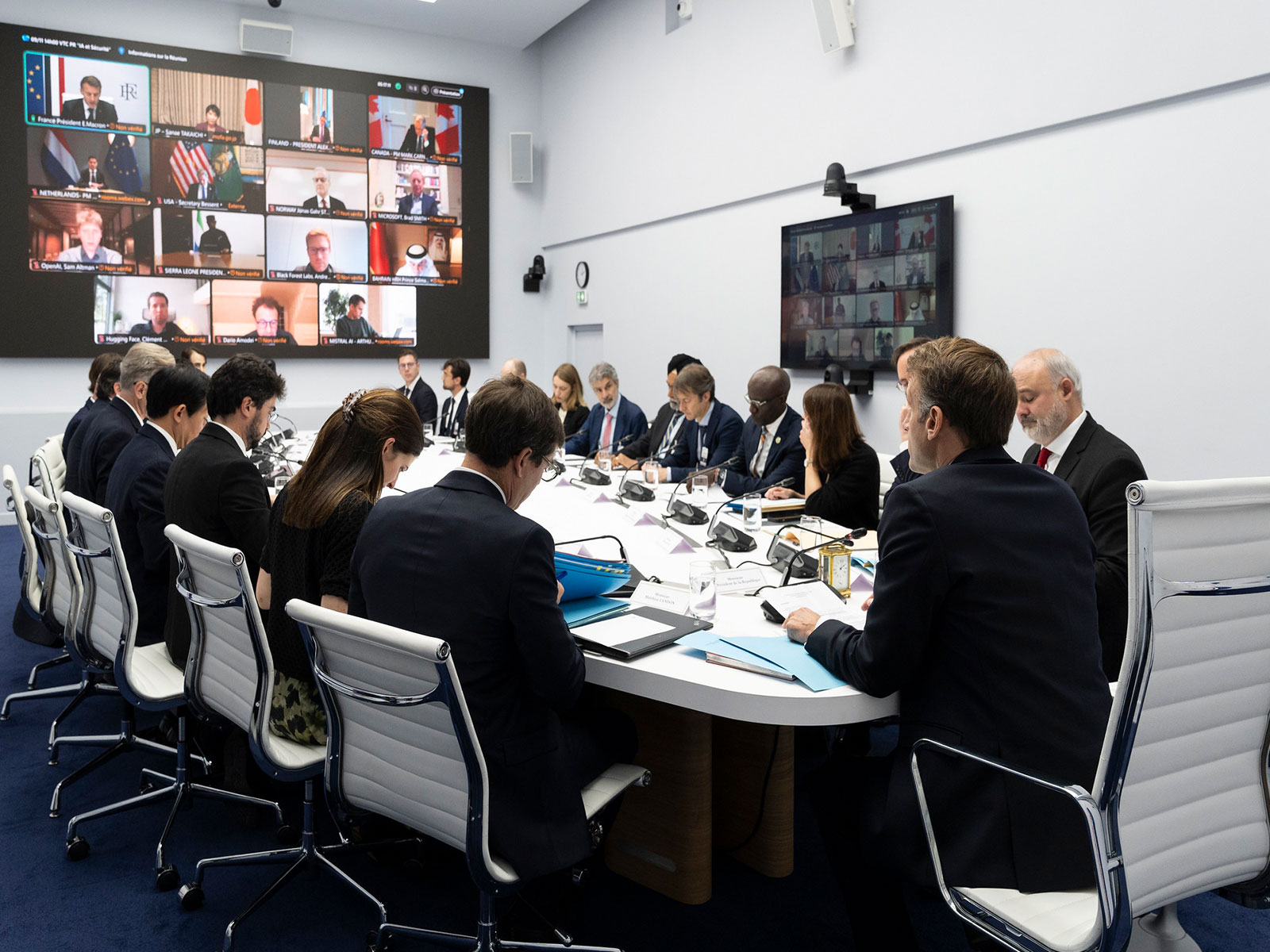
Paris [France], November 10 (ANI): Following France’s formal accusation of Iran executing an “unprecedented” cyberattack on its supermarket refrigeration systems, the French President Emmanuel Macron announced that around fifty global stakeholders—including heads of state, leaders of premier artificial intelligence (AI) laboratories, researchers, and domain experts—convened in Paris and virtually to address the critical security challenges posed by rapid advancements in AI.
Highlighting the need for collective global action, Macron stated that participants reached a consensus to establish guardrails, securing commitments across three major priorities: independent public risk evaluations, incident alert-sharing mechanisms, and developer accountability.
Taking to social media platform X, the French President said, “Artificial intelligence is advancing very quickly. As we have already seen, this poses real risks to our collective security. Our work to develop our technologies must also involve anticipating and managing these risks.”
“I brought together around fifty stakeholders in Paris and online: heads of state and government, leaders of the largest AI labs, researchers and experts,” he noted.
Detailing the outcome of the high-level deliberations, Macron added, “There is a shared understanding of the situation. We must act together. We secured commitments from everyone on three priorities: better independent, public assessment of the risks posed by the most advanced models, better sharing of alerts in the event of a serious incident, and holding those who develop models accountable.”
Underscoring France’s push for inclusive and secure technological governance, Macron asserted, “Our ambition is clear: to make AI a force for progress for everyone, with safety guaranteed by everyone’s commitment.”
The development follows French authorities formally accusing Iran of orchestrating an “unprecedented” cyberattack campaign targeting supermarket refrigeration networks across the country, pledging to push for European Union sanctions against Tehran, CNN reported on Monday.
The cyber operation, which took place last month, targeted around 700 retail locations—including major chains like Intermarché, Coopérative U, and E. Leclerc—resulting in massive food spoilage and equipment fires after hackers deliberately caused commercial cooling units to defrost.
French Foreign Minister Jean-Noël Barrot condemned the incident as an act of “unprecedented scale and unprecedented aggressiveness,” describing it as the first large-scale act of cyber sabotage carried out on French soil, according to CNN.
Characterising the disruption as a direct threat to “the nation’s interests and the security of the French people,” Barrot confirmed that the French government had summoned the Iranian ambassador and is actively pursuing punitive diplomatic measures alongside its European partners.
Tehran has yet to issue an official response to the claims.
According to CNN, the Paris prosecutor’s office initiated a formal inquiry after uncovering digital footprints leading directly to Iran, including “the use of Farsi and IP addresses pointing to devices located in Iran.”
French judicial authorities have focused their investigation on the leadership of Shahid Kaveh—a cyber unit tied to Iran’s Islamic Revolutionary Guard Corps (IRGC)—specifically targeting the unit’s head, two of his deputies, and associated operatives.
The French revelations follow a pattern of similar, unexplained cyber disruptions that hit food retailers in Ireland, Belgium, and Sweden earlier this month, though investigators have not confirmed whether those incidents are connected to the breach in France, CNN reported.
CNN also reported that following joint US and Israeli military strikes on Iran earlier in the year, American intelligence agencies had circulated confidential alerts advising government departments and private sector firms to bolster their defences against potential Iranian retaliatory cyber operations. (ANI)