

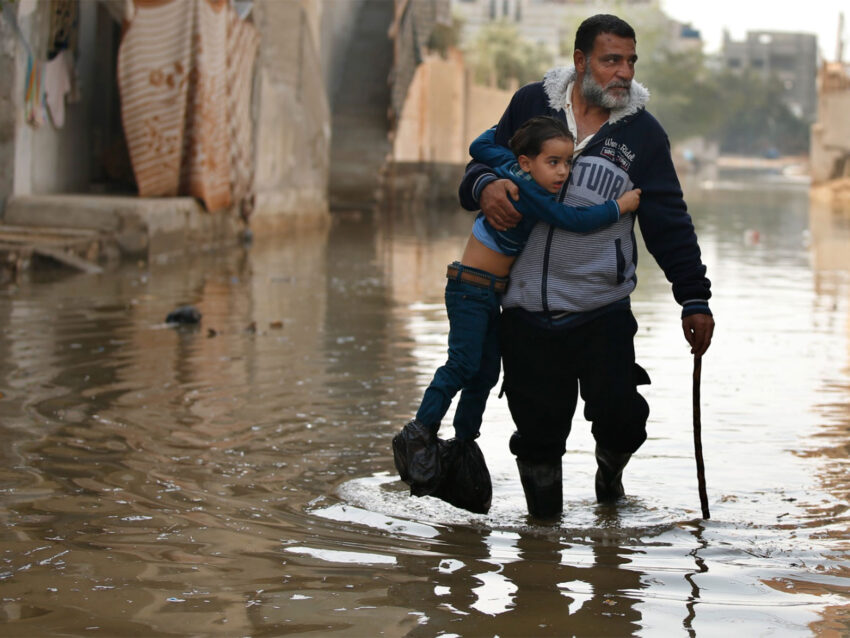
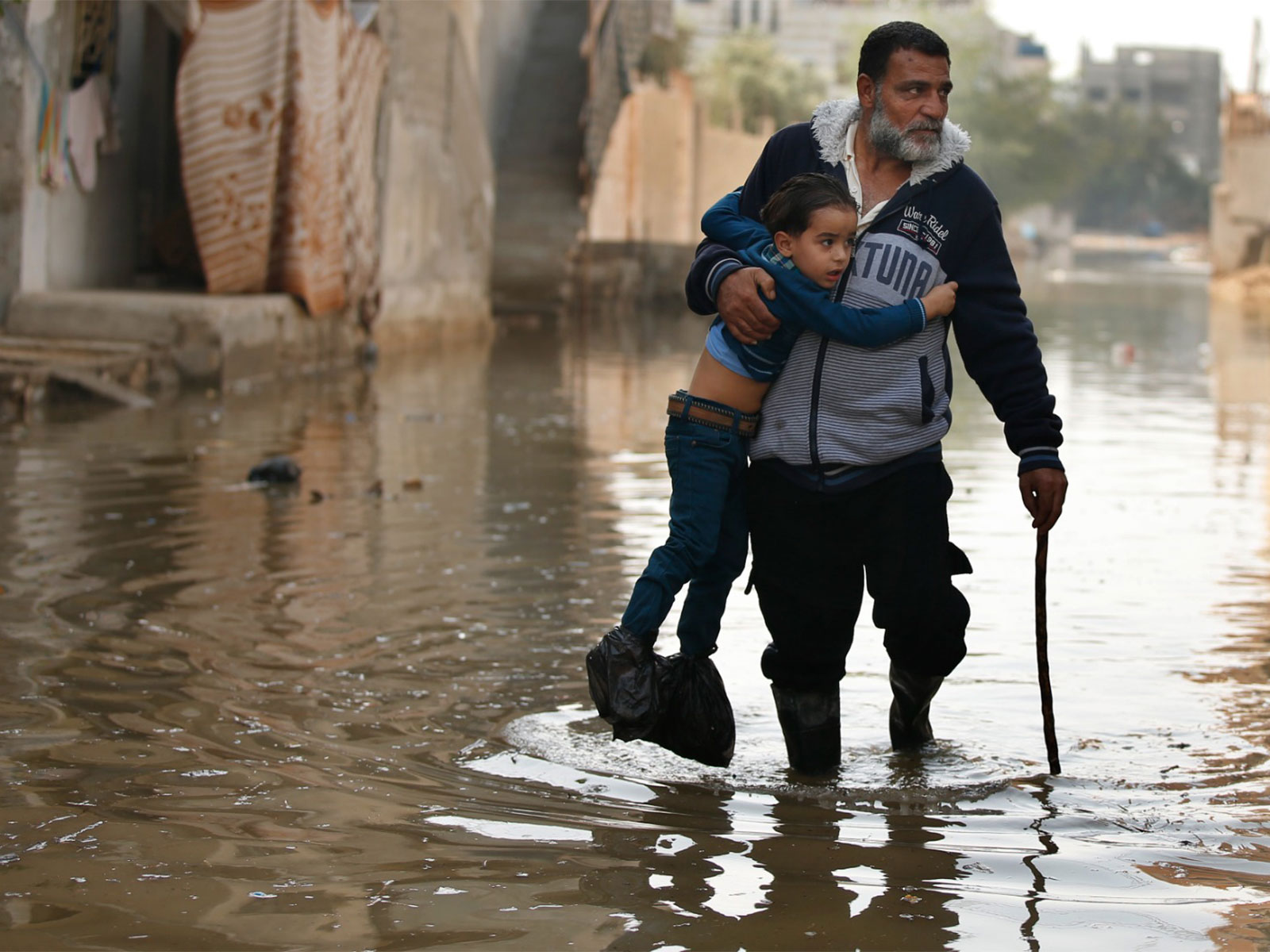
Gaza [Palestine], November 7 (ANI): Around 70,000 tents sheltering displaced Palestinian families have been flooded across the Gaza Strip within 12 hours of the first winter storm of the season, leaving thousands exposed to heavy rainfall, rising water levels and harsh weather conditions, Al Jazeera reported, citing Gaza’s Government Media Office.
In a statement issued on Saturday, the Government Media Office estimated the initial losses from the flooding at approximately USD 3 million.
It also reported that dozens of walls had collapsed, several people had sustained injuries and damaged buildings at risk of further collapse posed an additional threat to residents.
The office held Israel “fully responsible” for a disaster resulting from the continued closure of border crossings and restrictions on the entry of shelter and reconstruction materials.
It also called on the international community and United Nations agencies to intervene immediately to protect displaced Palestinians, Al Jazeera reported.
According to Gaza’s Civil Defence agency, rescue teams received around 1,500 distress calls within just 10 hours after rainfall began early Saturday. Water levels at several displacement sites reportedly rose by 30 to 40 centimetres.
Describing the situation, Civil Defence spokesperson Mahmoud Basal told Al Jazeera that several shelter centres had been completely inundated, forcing residents to leave their tents.
“What we feared has actually happened,” Basal told Al Jazeera.
“A few shelter centres were completely flooded, and everyone inside them has now been forced out into the unknown,” he added.
He warned that vulnerable groups, particularly premature babies, elderly people and those suffering from illnesses, faced the greatest risks amid the worsening weather conditions.
“Those living in tents are at risk of death at any moment, and of illness at any moment,” he said, as quoted by Al Jazeera.
The storm also caused further damage to buildings already weakened during Israel’s war on the enclave, which began in October 2023.
Gaza’s Civil Defence agency said rescue teams evacuated residents from a building in the central Nuseirat area after it partially collapsed amid strong winds and rainfall. In northern Gaza, the wall of another building collapsed following heavy rainfall, injuring two people, according to the Palestinian news agency Wafa.
Footage from displacement camps in Gaza City, Khan Younis and Deir el-Balah showed families wading through ankle-deep water, with mattresses and blankets soaked in rainwater and children standing barefoot in muddy and sewage-contaminated pools.
In Khan Younis, Al Jazeera reported that rainfall had begun around 10 pm (local time) on Friday in al-Mawasi, the coastal area in southern Gaza where more than 900,000 displaced people are sheltering.
Gaza’s emergency committee warned that more than one million displaced people were facing a difficult winter and said the territory urgently required approximately 200,000 tents, along with heating supplies.
Highlighting the limited resources available to rescue teams, Raed al-Dahshan, director of Civil Defence in Gaza, told Al Jazeera that crews lacked even basic shelter materials to assist affected families.
“Civil defence does not have a single tarpaulin or a single tent,” al-Dahshan said.
“We deal only with saving lives, and that is not enough,” he added.
Aid organisations have blamed Israeli restrictions on the entry of shelter materials for the shortage of essential supplies.
The rainfall has also affected Gaza’s already battered healthcare infrastructure. Mohammed Abu Salmiya, director of al-Shifa Medical Complex in Gaza City, told Al Jazeera that the hospital’s emergency department was flooded and remained out of service for approximately four hours.
He warned that the mixing of sewage with rainwater inside displacement tents could lead to an increase in gastrointestinal, respiratory and skin infections.
“We will see many deaths, in the dozens and perhaps the hundreds, among newborns who need warmth in these tents,” Abu Salmiya said.
In Gaza City port, Al Jazeera reported that thousands of displaced families had established tents along the shoreline, leaving them exposed to strong winds and rising tides.
Many of the tents currently sheltering displaced Palestinians were initially set up during the first year of displacement and are now in their fourth year of use. Families have repeatedly patched and re-stitched them to keep them functional.
Under the humanitarian protocol of the ceasefire, the tents were supposed to be replaced with caravans, which Israel has not allowed into the territory.
Highlighting the desperation among displaced families, one man living in a tent along the beach told Al Jazeera, “They pushed us west towards the sea. Why don’t they just throw us into the sea and be done with it?”
Meanwhile, Mohammed Salha, director of the Palestinian NGO Network, told Al Jazeera that only 180 to 200 trucks were entering Gaza daily, significantly below the 600 trucks agreed upon under the humanitarian protocol of the ceasefire. He added that only around 40 of the trucks were carrying humanitarian assistance.
He also said that approximately 50,000 tents were waiting on the Egyptian side of the border.
“We must respond before the disaster happens,” he said, describing international pressure on Israel to allow additional supplies into Gaza as “timid”. (ANI)