

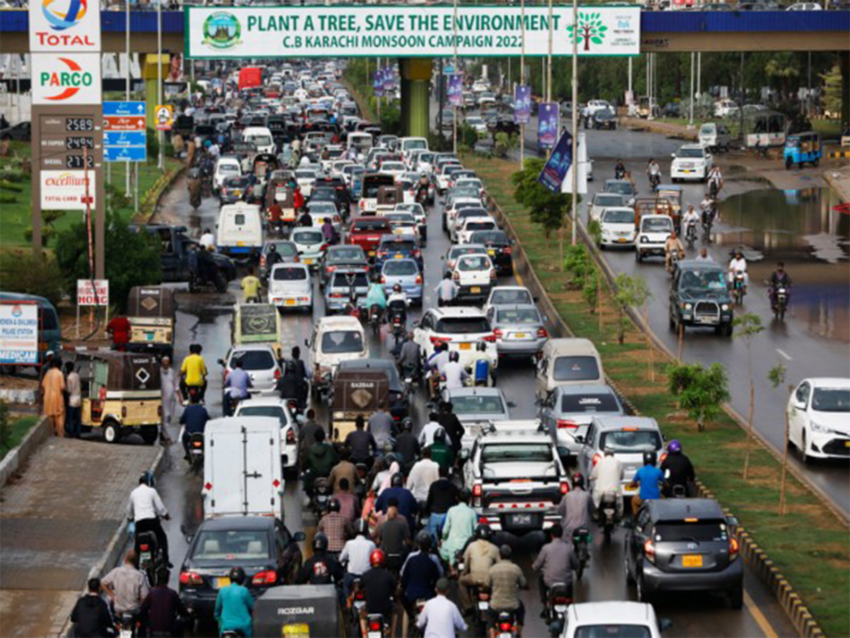
Karachi [Pakistan], October 10 (ANI) Karachi’s fragmented administration, unchecked urban expansion and persistent civic failures are undermining climate resilience and aggravating public health risks, experts warned at a conference, highlighting the Pakistani authorities’ failure to address the city’s deepening environmental crisis, as reported by Dawn.
According to Dawn, the discussion, titled “Climate Change, Urban Issues and Health Management,” was held during the 8th Biennial Conference, ICON 2026, at the Indus Hospital & Health Network (IHHN). Participants called for coordinated governance, evidence-based policymaking and a comprehensive health policy for Sindh, expressing concern over the lack of tangible progress on the provincial health framework.
Sindh Environment, Climate Change and Coastal Development Secretary Faisal Ahmed Uqaili said administrative divisions and unregulated development were obstructing climate adaptation.
He noted that hundreds of housing schemes had emerged without adequate civic infrastructure, while Karachi’s administration remained divided among 26 agencies. Uqaili argued that meaningful progress would remain elusive without coordination among government departments and other stakeholders. He proposed establishing a think tank involving officials, academics and civil society representatives to examine data and develop practical solutions.
Dr Zafar Zaidi, dean of Indus University of Health Sciences, linked the city’s inadequate urban planning to worsening health conditions, including malaria outbreaks, cardiovascular complications and sewage contamination.
He stated that authorities needed to establish clear responsibilities and assess development interventions against their long-term consequences. Dr Zafar Fatmi of Aga Khan University said Sindh’s health policy had only recently been revised after remaining unchanged since 2010.
He called for stronger collaboration between academia and government to ensure research informs public policy rather than remaining confined to academic publications, as highlighted by Dawn.
Climate medicine specialist Dr Paul Charlton highlighted international frameworks, including the Lancet Countdown toolkit, which help healthcare professionals engage with policymakers on climate-related health challenges. He urged Pakistani medical professionals to assess the financial burden of climate change, receive training in public communication and present national climate-health data on international platforms, as reported by Dawn. (ANI)