

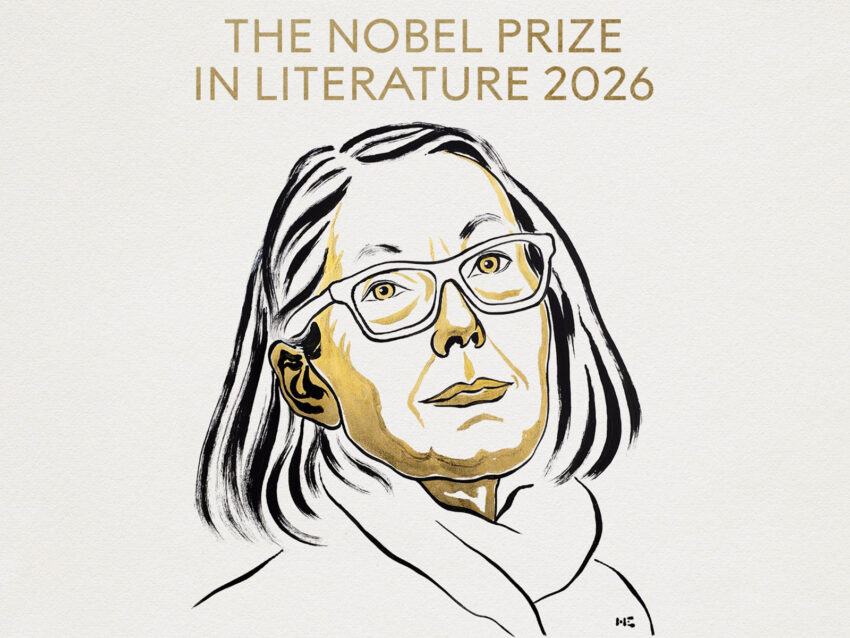
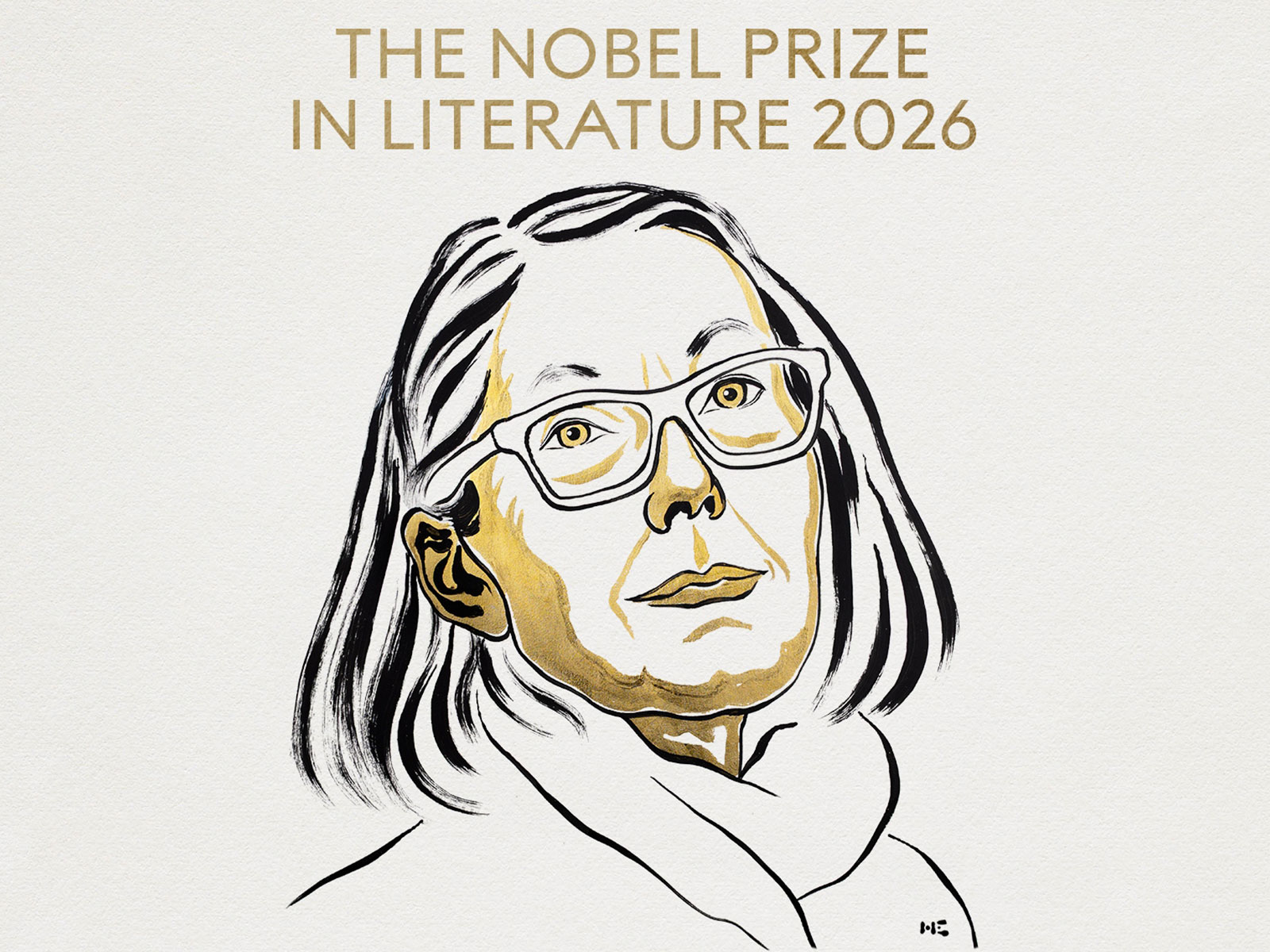
Stockholm [Sweden], October 8 (ANI): The Nobel Foundation on Thursday awarded the 2026 Nobel Prize in Literature to Canadian author Anne Carson “for her bold and inventive oeuvre that, in playful dialogue with the classical tradition, has created new forms for contemporary literature”.
The Swedish Academy, which announced the prize, recognised Carson’s distinctive body of work spanning poetry, translation and literary scholarship, highlighting the way she has brought together classical Greek literature and contemporary forms of writing.
Born on June 21, 1950, in Toronto, Carson has throughout her career moved between poetry, translation and teaching, with much of her work exploring the relationship between language, classical texts and the creation of new literary forms.
According to the Nobel Prize organisation, Carson’s writing is rooted in the intersection between “the philologist’s obsession with words and the poet’s desire for new meaning”.
The author has also identified the etymology of words as a starting point for her work.
Her engagement with classical literature has been a defining feature of her career. Her translations from Classical Greek include Sappho’s fragments in If Not, Winter (2002), as well as Sophocles’ Electra (2001) and Antigone (2015) and Euripides’ Bakkhai (2015).
The Nobel Prize citation particularly reflects Carson’s ability to bring together seemingly distant literary voices and traditions.
Her work frequently places classical authors alongside modern writers, creating what the Nobel committee describes as unexpected literary constellations.
One early landmark was Eros the Bittersweet, published in 1986. In the long essay, Carson examines Eros through the poetry of Sappho and explores the tension between lovers as a source of poetic energy. Carson describes this approach as a “‘stereoscopic vision’ that allows me to ‘hold in equipoise two perspectives at once’”.
That method can also be seen in Economy of the Unlost (1999), where the sixth-century BC Greek poet Simonides of Keos is placed alongside Paul Celan, and in Men in the Off Hours (2000), which brings the historian Thucydides into conversation with Virginia Woolf.
The Nobel Prize organisation said it was through such “often unexpected, literary constellations” that Carson moved away from lyrical poetry centred on a single narrative self and helped inspire new forms of contemporary literature.
Carson’s ability to reshape classical material is perhaps most evident in Autobiography of Red: A Novel in Verse, published in 1998.
The work takes inspiration from fragments by the sixth-century BC Greek poet Stesichoros concerning Geryon, the winged red monster encountered in the myth of Heracles. Carson transforms the mythological figure into a vulnerable young protagonist and recasts the ancient story as a contemporary coming-of-age narrative.
The book combines poetry, mythology and fiction while exploring love, violence, vulnerability and loss. In doing so, it illustrates the approach for which Carson has become known: using ancient literature not simply as material to translate or preserve, but as a foundation for creating something new.
Her 1995 collection Glass, Irony, and God similarly demonstrated her interest in crossing conventional literary boundaries. Its celebrated long poem The Glass Essay blends poetry, narrative, literary criticism and reflections on abandonment, weaving Emily Brontë’s world into the story of a woman confronting grief and an ended relationship.
Carson has also approached intimate subjects through unconventional literary forms. The Beauty of the Husband: A Fictional Essay in 29 Tangos (2001) explores a fractured marriage through a mixture of prose and verse, with each of its 29 sections opening with lines from the Romantic poet John Keats.
Among Carson’s most distinctive works is Nox, published in 2010 as a memorial to her brother Michael, who died in Denmark in 2000.
Rather than taking the conventional form of a book, Nox is constructed as a box containing an accordion-folded sequence of photographs, letters and texts. The work incorporates Carson’s translation of Catullus’ famous elegy for his own deceased brother, creating a connection between ancient mourning and Carson’s personal loss.
The Nobel Prize organisation described the work as “a creation as sculptural as it is literary”.
Carson’s experimentation has continued into her later work. Float (2016) consists of 22 chapbooks that can be read in different orders, while Wrong Norma, published in 2024, brings together a diverse collection of texts with a strong performative element.
Her work has also extended beyond conventional literary forms through collaborations with visual artists, choreographers, opera productions and theatre directors.
The Nobel Prize organisation said Carson’s willingness to cross “various artistic and academic fields” demonstrates the freedom with which she approaches established literary conventions.
Throughout her career, Carson has combined scholarship and creative writing, using classical texts, linguistic investigation and contemporary experience to challenge the boundaries between poetry, fiction, essay and translation.
The 2026 Nobel Prize in Literature, according to the Swedish Academy’s citation, recognises precisely that ability to transform inherited literary traditions into new forms.
The prize motivation states that Carson has produced “bold and inventive” work that remains in “playful dialogue with the classical tradition” while creating new possibilities for contemporary literature. (ANI)