CHICAGO, IL — The Chicago South Asian Film Festival (CSAFF) concluded its 17th edition with the announcement of its 2026 Audience Choice and Jury Award winners, bringing to a close four days of cinema, cultural performances, filmmaker conversations and special events held September 17–20 at AMC River East in downtown Chicago.
The festival’s official opening-night program featured Naval’s Lifetime Achievement Award presentation, followed by the screening of Boong.
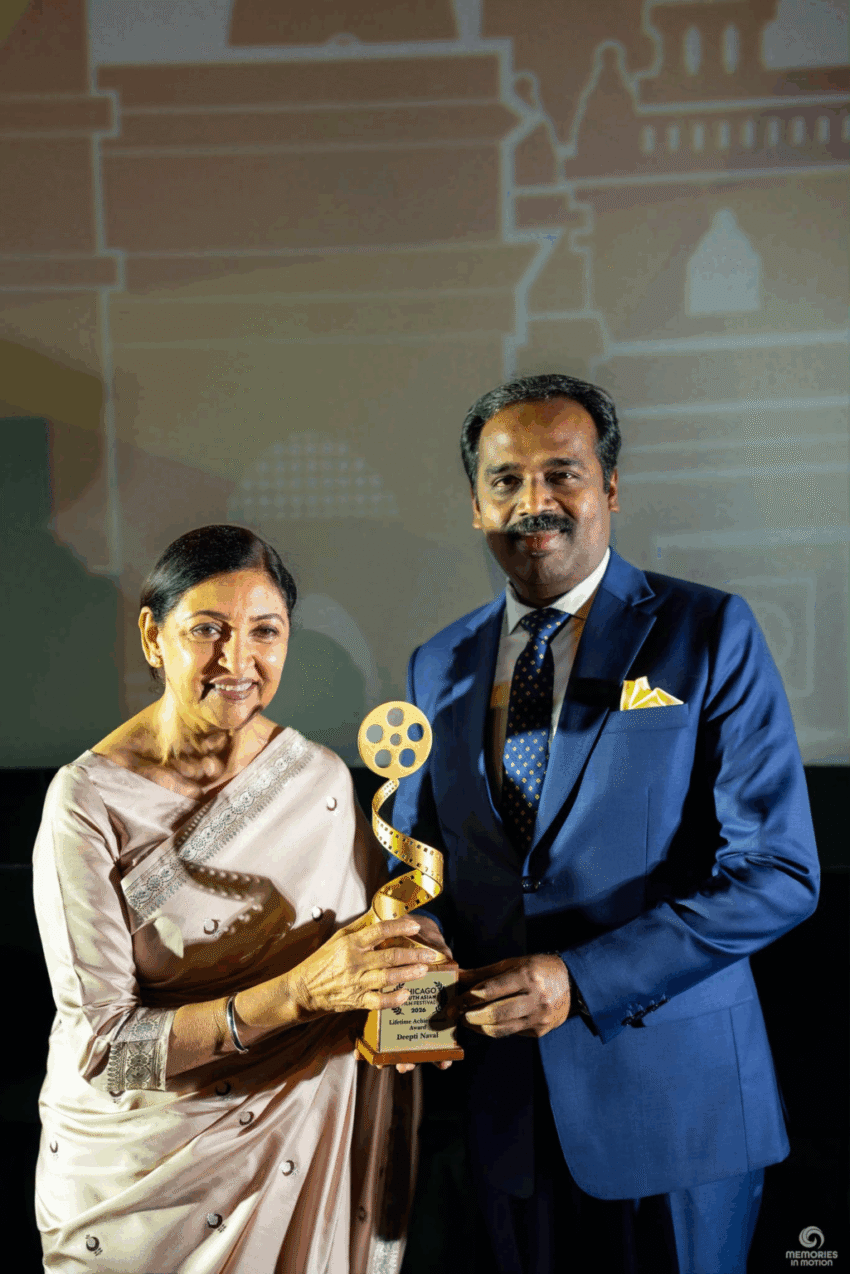
Consul General of India in Chicago Dr. M. Anand Prakash, presented the Lifetime Achievement Award to acclaimed actress Deepti Naval, honoring her remarkable contribution to Indian cinema and her lasting artistic legacy. PHOTOS : Chicago South Asian Film FestivalDeepti Naval speaking at CSAFF after receiving her Lifetime Achievement Award
Consul General of India in Chicago Dr. M. Anand Prakash who assumed charge in September this year, presented the Lifetime Achievement Award to Deepti Naval, recognizing her remarkable contribution to Indian cinema and her lasting artistic legacy.
Naval has enjoyed a celebrated career spanning decades and is particularly associated with India’s parallel and art-cinema movement. Through memorable and sensitive portrayals of ordinary women and the complexities of everyday life, she established a distinctive place in Indian cinema.
Dr. Prakash, who assumed charge as Consul General of India in Chicago in September 2026, addressed the gathering. In his remarks he highlighted the enduring legacy of Indian cinema and its ability to transcend geographical and cultural boundaries, connect people, inspire audiences and bring communities together through the universal power of storytelling.
Consul General of India in Chicago speaking at the CSAFF
The annual festival once again brought together filmmakers, actors, artists and film enthusiasts from Chicago and around the world. The festival, which has celebrated South Asian cinema in Chicago since 2010, featured screenings, red-carpet appearances, filmmaker Q&A sessions and opportunities for audiences and artists to engage directly with one another. The official 2026 program ran from September 17 through September 20, with the closing-night awards ceremony held September 20.
The 2026 Audience Choice Awards, determined by festivalgoers, recognized four films across documentary and fiction categories:
Documentary Feature: Marriage Cops, directed by Shashwati Talukdar and Cheryl Hess. Documentary Short: Threading the American Dream, directed by Ashish Shrestha. Fiction Feature: Lala & Poppy, directed by Kaizad Gustad. Fiction Short: Meethi, directed by Shreya Saini.
Above and below: scenes from the Red Carpet at CSAFF
The recognition of Meethi provided a special Chicago connection to this year’s festival. Directed by Chicago-based filmmaker Shreya Saini, the film underscored CSAFF’s dual role in bringing international South Asian cinema to Chicago while also providing a platform for filmmakers and stories emerging from the city’s own creative community.
Jury Awards Spotlight Pakistani Film-makers. The festival’s jury honored The Gymnasts of Fisherman Colony, directed by Pakistani-born filmmaker Habiba Nosheen, in the Documentary Feature category.
The Fiction Feature Jury Award went to Ghost School, directed by British-Pakistani filmmaker Seemab Gul.
The honors highlighted the breadth of Pakistani filmmaking represented within a festival dedicated to showcasing the diverse voices, languages, cultures and experiences of South Asia and its diaspora. Both Ghost School and The Gymnasts of Fisherman Colony were included in CSAFF’s official 2026 program.
The opening night featured Boong, directed by Lakshmipriya Devi, who joined festivalgoers for a post-screening conversation.
Manipuri dance performance at the CSAFF
The evening also celebrated the cultural traditions of Manipur with a colorful Manipuri dance performance on the red carpet, which CSAFF board member Arup Raha described as one of the memorable highlights of this year’s festival.
ADVERTISEMENT
Another memorable moment came following the screening of centerpiece film Lali, when audience members continued discussing and debating their interpretations of the film’s ending even after the screening had concluded.
Raha described the festival as a conduit between storytellers and viewers—a place where films can spark conversations, challenge perspectives and create connections among people from different backgrounds.