

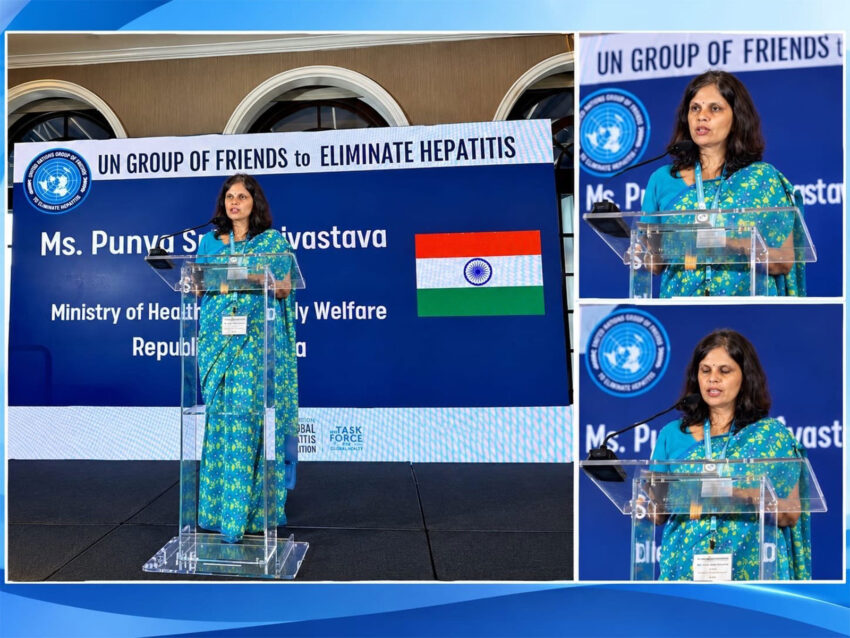
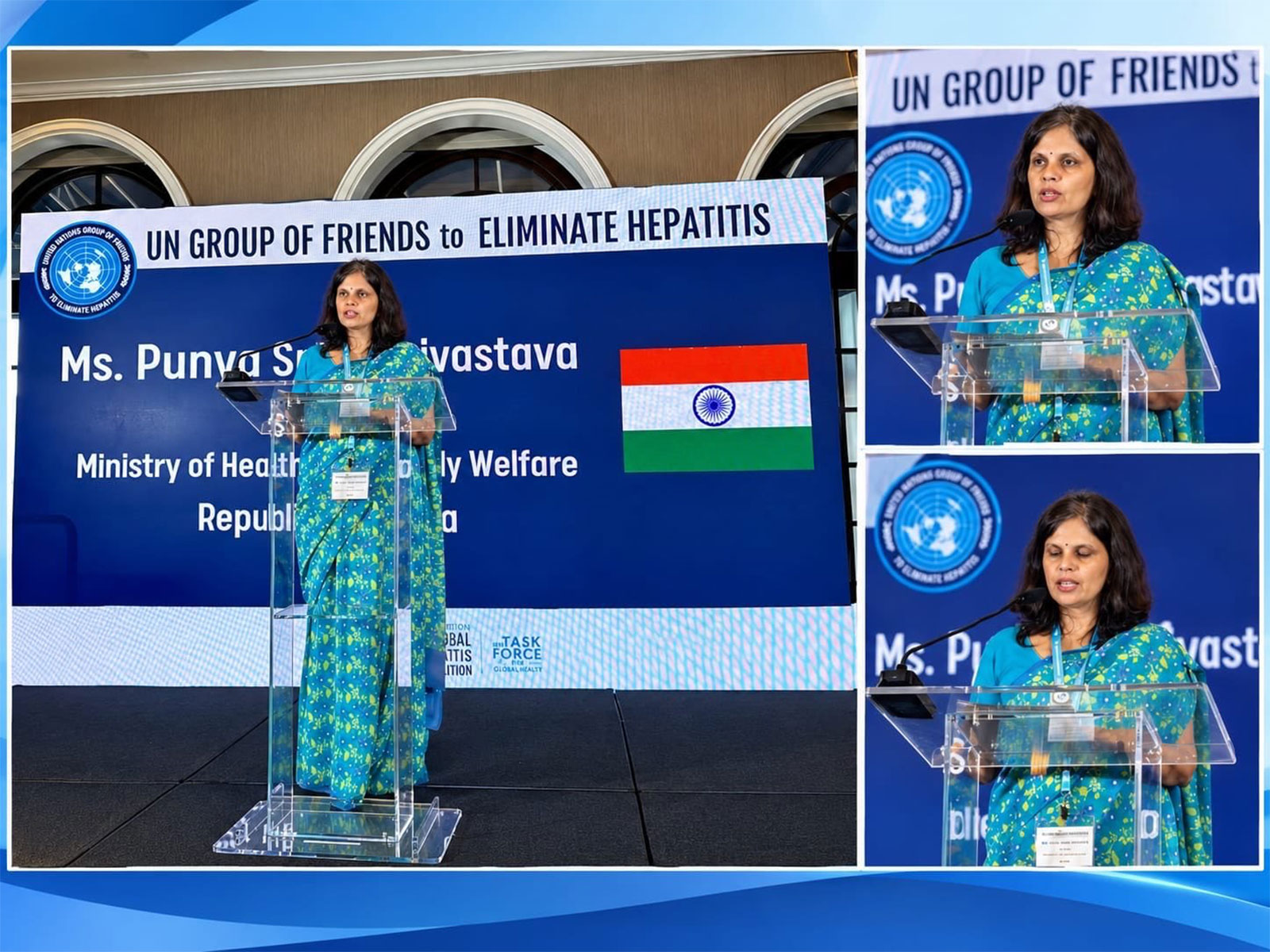
New Delhi [India], September 23 (ANI): Union Health Secretary Punya Salila Srivastava highlighted India’s comprehensive and people-centred approach towards combating Hepatitis at an event titled “Advancing Global Action to Eliminate Hepatitis”, a UNGA 81 side event organised by the UN Group of Friends to Eliminate Hepatitis.
Addressing the event, Srivastava spoke about India’s efforts across prevention, screening, diagnosis, treatment and care for Hepatitis.
According to the Ministry of Health and Family Welfare, she reaffirmed India’s commitment to the 2030 Sustainable Development Goals (SDG) agenda on combating Hepatitis and the global target of eliminating Hepatitis B and C as public health threats by 2030.
The Union Health Secretary’s remarks came as India continues to focus on strengthening measures related to the prevention, early detection, diagnosis and treatment of Hepatitis, with efforts aimed at addressing the disease burden through a people-centred public health approach.
Meanwhile, the Central Drugs Standard Control Organisation (CDSCO) has issued an advisory circular to healthcare professionals, pharmacists, retailers, distributors, hospitals and the general public against the indiscriminate use of painkillers, particularly Non-Steroidal Anti-Inflammatory Drugs (NSAIDs), and antibiotics, citing associated risks of Chronic Kidney Disease (CKD).
According to the Directorate General of Health Services (DGHS), the circular dated September 21 stated that NSAIDs and antibiotics should only be used when clinically indicated, in appropriate doses and for the recommended duration, under the supervision of a Registered Medical Practitioner.
The DGHS said that the import, manufacturing, sale and distribution of drugs are regulated under the Drugs and Cosmetics Act, 1940 and the rules framed thereunder.
It further noted that various drugs, including NSAIDs and antibiotics, are placed under Schedules G, H, H1 and X of the Drugs Rules, 1945, depending on their applicability and potential risks, and are required to carry prescribed warnings, cautions and conditions of sale.
“Most of the NSAIDs are included in Schedule H of the Drugs Rules, 1945. Thus, they are not to be sold by retail without the prescription of a Registered Medical Practitioner, as is required in Rule 97 of the Drugs Rules, 1945,” the circular stated.
Similarly, the DGHS said that most antibiotic drugs are included in Schedule H1 and are required to carry specific warnings. (ANI)