

New Delhi [India], September 22 (ANI): Proxy advisory firm InGovern has warned that the reasoning behind the Delhi High Court’s forensic-audit order against Fortis Healthcare, if it stands, could expose any listed company in India to enforcement proceedings arising from the personal debts of its promoters, a concern that has taken on fresh significance now that Fortis has itself approached the Supreme Court against the order.
On August 31, 2026, the Delhi High Court appointed a forensic auditor in execution proceedings tied to Daiichi Sankyo’s arbitral award against Fortis’s former promoters, Malvinder Mohan Singh and Shivinder Mohan Singh.
The audit, which dates back to conduct from May 2016, covers pledges, transfers, sales and the use of consideration connected to the erstwhile promoters’ Fortis shareholding and specifically brings the 2018 change-of-control transaction, through which IHH Healthcare acquired Fortis via Northern TK Venture, within its scope.
That transaction had cleared board and shareholder approval, CCI clearance, and a SEBI-sanctioned open offer. Fortis has stressed, and the Court has acknowledged, that the audit is a fact-finding exercise and does not by itself impose liability on the company or its officers.
In a note on the order, InGovern argued that its underlying logic poses a risk to corporate India more broadly. “If the reasoning is upheld, any listed company in India could potentially be pulled into enforcement proceedings arising from the personal liabilities of its owners,” the firm said, adding that board members and compliance officers could effectively be expected “to monitor and enforce the personal undertakings and liabilities of promoter-shareholders a responsibility that no existing Indian law or regulation imposes on them.”
InGovern said corporate India has long operated on the premise that a company is not a guarantor of its promoters’ private affairs, and warned that the order “threatens to rewrite that understanding overnight.”
The firm also flagged a separate-legal-personality concern, noting that the order treats Fortis and the Singh brothers “as the same” while stopping short of formally piercing the corporate veil, a stance it argued sits uneasily with established Supreme Court jurisprudence distinguishing a listed company from its former promoters.
InGovern further pointed to the roughly 69% of Fortis held by public shareholders, who it said bear the disclosure overhang and reputational cost of the audit regardless of whether liability is ultimately found. Its recommendation was institutional rather than judicial: that SEBI, the Ministry of Corporate Affairs, and Parliament, if necessary, define clearer thresholds for when a listed company not party to a dispute can be drawn into enforcement proceedings against former promoters, and give defined finality to change-of-control transactions completed after full regulatory clearance.
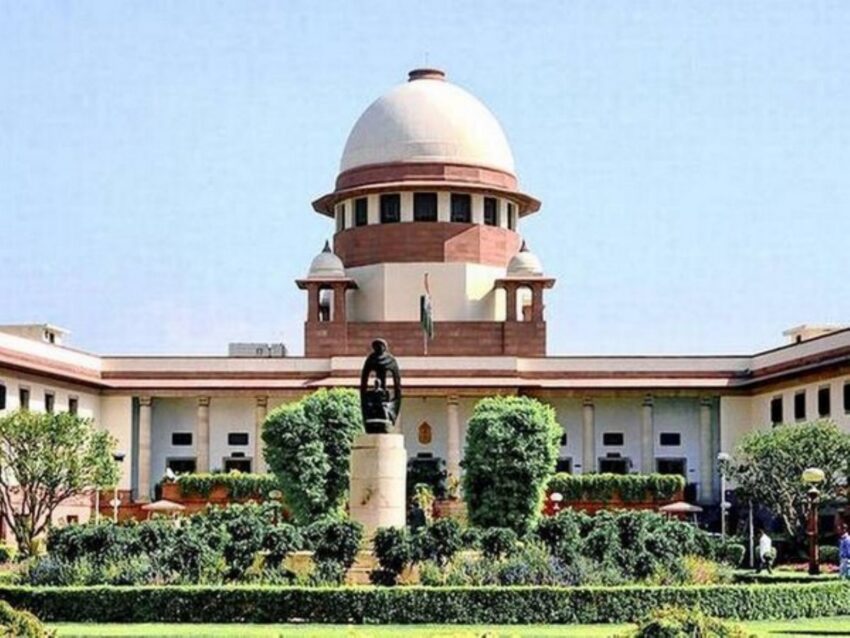
Fortis has since taken the matter to the Supreme Court. On September 16, 2026, the company filed a Special Leave Petition challenging the Delhi High Court’s August 31 order. In the SLP, Fortis has argued that it was neither a party to the original arbitration nor a judgment debtor or garnishee, and that the High Court effectively treated the company as an extension of its former promoters before establishing any legal or factual basis to do so, placing, as the petition puts it, the cart before the horse.
The filing also challenges the High Court’s reliance on “reverse piercing” of the corporate veil, a doctrine Fortis says Indian courts have not recognised, and argues that applying it to a listed company with roughly 2.5 lakh public shareholders would have significant consequences for parties uninvolved in the underlying dispute. (ANI)