

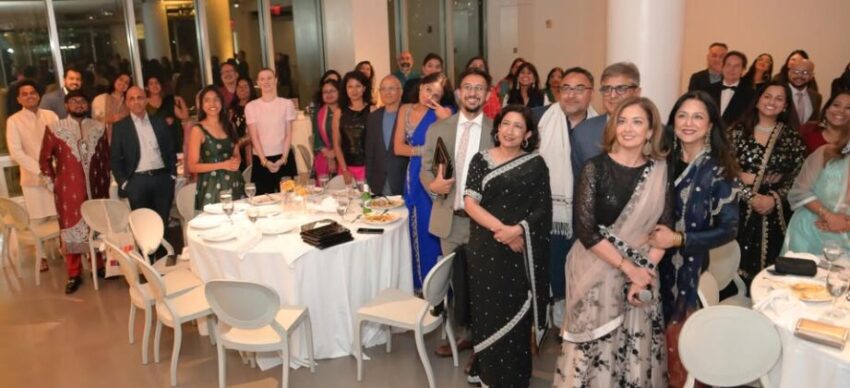


Reflecting on Its Role Helping Journalists Understand South Asia
Sept. 11, 2026 — On the 25th anniversary of September 11, the South Asian Journalists Association honors and remembers the thousands of people who lost their lives in the attacks, as well as the countless families, communities and first responders whose lives were forever changed.
SAJA had a profound impact on journalism in the days, weeks and months following 9/11, helping mainstream news organizations better understand South Asia, a region that had suddenly been thrust into the spotlight.
ADVERTISEMENT
For more than a year, SAJA documented reporting from South Asian journalists, tracked the experiences of South Asian victims and survivors, shined a light on hate crimes and backlash against Muslim and Sikh communities, and offered journalists sources for covering the aftermath.
In 2002, SAJA worked with the family of Daniel Pearl, the Wall Street Journal reporter who was kidnapped and killed while reporting in Pakistan, to create an award in his name. The Daniel Pearl Award continues to this day, recognizing outstanding investigative reporting about South Asia that exhibits courage and exposes important public issues.
“SAJA was still a relatively new organization on 9/11, but in that difficult time, it showed the value of a journalism organization dedicated to the region and to the journalists who cover it,” said Jyoti Thottam, SAJA’s president at the time. “We became a resource for countless journalists all over the world trying to quickly get up to speed, even as many of our members were deeply involved in covering 9/11 or were affected by it. SAJA also showed what it meant to be a community of journalists, the people who are there for each other in times of crisis.”
“At the time, I was the vice president of SAJA, and the South Asian Journalists Association became the organization of record to which most mainstream journalists turned for context and understanding of Pakistan, India, Afghanistan, the Taliban, al-Qaeda and more,” said Indira Somani, SAJA’s current president. “I’m grateful we existed and helped educate the mainstream.”
“Looking back, I am so grateful to all the members who volunteered to help other journalists understand complex issues around religion, history, geopolitics and more,” said Sree Sreenivasan, SAJA’s co-founder and former president.
Twenty-five years later, SAJA is proud to continue its mission of supporting South Asian journalists, strengthening the next generation of storytellers and helping news organizations better understand the communities they cover.
As we mark this anniversary, we honor the journalists, colleagues and communities affected by 9/11 and reflect on the enduring importance of accurate, nuanced and informed journalism.
About us: Founded in March 1994 with just 18 members, the South Asian Journalists Association (SAJA) now represents more than 1,000 journalists of South Asian origin across the U.S. and Canada. SAJA serves as a network for training, inspiration, and support—not only for South Asian journalists but for anyone covering South Asia and its diaspora. SAJA also aims to improve the coverage of the subcontinent and its diaspora.
FOLLOW US ON SOCIAL MEDIA
X: @sajaHQ | IG: @theofficialsaja | LinkedIn: South Asian Journalists Association |
Facebook: South Asian Journalists Association