

Tashkent [Uzbekistan], August 31 (ANI): India and Uzbekistan have elevated their bilateral relationship to a Comprehensive Strategic Partnership and agreed to further strengthen cooperation between their defence and security agencies, including through regular exchanges, institutional mechanisms, capacity-building, joint activities and cooperation in the defence industrial domain.
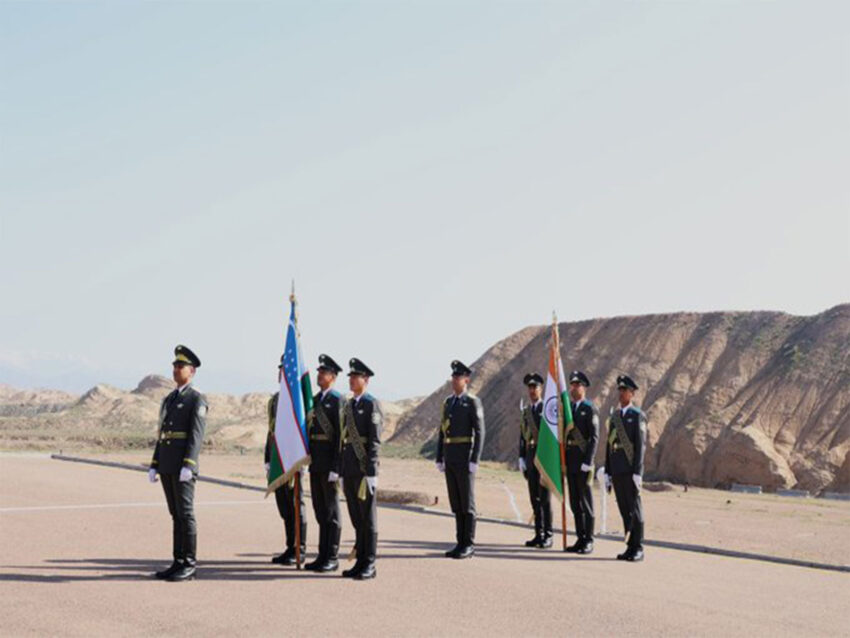
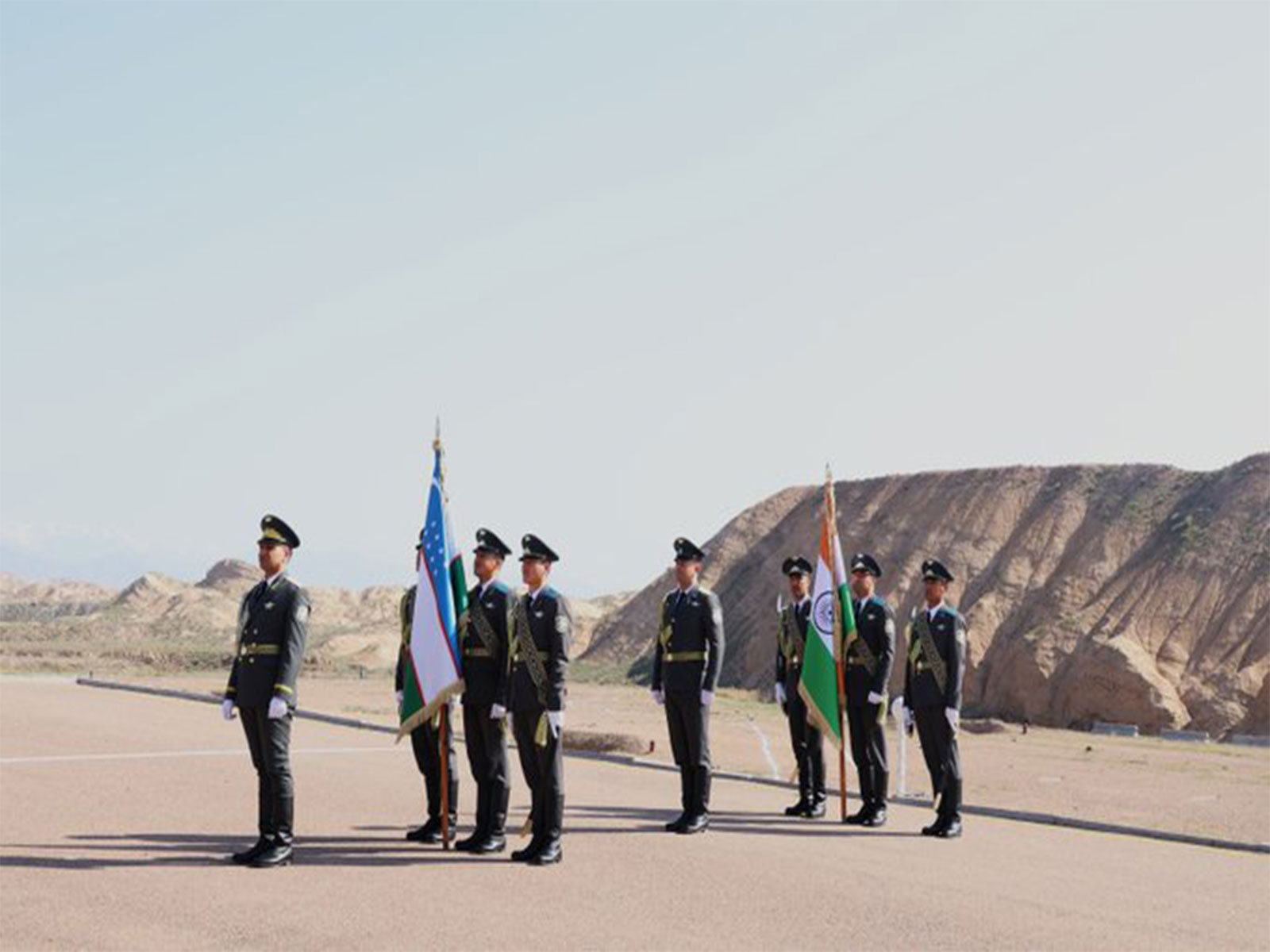
According to a joint statement issued during Prime Minister Narendra Modi’s State Visit to Uzbekistan, the two sides also expressed satisfaction with the activities of the Joint Working Group on Military Cooperation, through which new avenues of cooperation in the defence industrial domain are being explored, and welcomed the successful conduct of the Uzbekistan-India Joint Military Exercise “DUSTLIK”, the latest edition of which was held in Namangan Region in April 2026.
“The Leaders appreciated the growing cooperation and close coordination between the defence and security agencies of Uzbekistan and India, including through regular exchanges, institutional mechanisms, capacity-building and joint activities, and expressed their commitment to further strengthen such cooperation in addressing shared security challenges. The Leaders expressed satisfaction with the activities of the Joint Working Group on Military Cooperation, wherein new avenues of cooperation in the defence industrial domain are being explored. They welcomed the successful conduct of Uzbekistan – India Joint Military Exercise “Dustlik”, the latest of which was held in Namangan Region, Uzbekistan, in April 2026,” the MEA statement read.
During a special briefing on Prime Minister Modi’s State Visit, Foreign Secretary (West) Sibi George said the two leaders also discussed further strengthening defence and security cooperation.
George said India has provided the Uzbekistan Army with Arogya Maitri Bisham Cubes to augment its disaster relief capabilities. India has also equipped the polyclinic at the University of Military Security and Defence of Uzbekistan, he added.
Earlier today, speaking during a joint press statement with Uzbek President Shavkat Mirziyoyev, Prime Minister Modi said the close defence and security cooperation between the two countries reflected the deep mutual trust underpinning their relationship and announced that the two sides would promote direct linkages, co-production and co-development between their defence industries.
“The close defence and security cooperation between our two countries reflects the deep mutual trust that underpins our relationship. Going forward, we will promote direct linkages, co-production, and co-development between the defence industries of our two countries,” PM Modi said.
He also said that terrorism, extremism and separatism posed serious challenges to the entire region and highlighted the shared resolve of India and Uzbekistan to adopt a policy of zero tolerance towards them.
“We believe that terrorism, extremism, and separatism pose serious challenges to the entire region. Our shared resolve to adopt a policy of zero tolerance towards them has been, and will continue to be, unwavering,” he added.
The joint statement said the two leaders “unequivocally condemned terrorism, including cross-border terrorism, in all its forms and manifestations”, reiterated their zero-tolerance approach to terrorism and rejected any justification for terrorism.
The leaders called for concerted action against terrorist entities and for disrupting terrorism financing networks, safe havens and infrastructure. They stressed that those responsible for terrorism, including perpetrators, backers, facilitators and affiliates, should be brought to justice.
They also stressed the importance of strengthening cooperation in law enforcement, intelligence sharing, combating violent extremism, illicit drug trafficking, organised crime and cyber threats, and reaffirmed the importance of continued cooperation under the Joint Working Group on Counter Terrorism.
The two countries have longstanding defence and security ties. A Joint Working Group on Defence was established in 2019, and its sixth meeting was held in Uzbekistan in August 2026. The fifth Joint Working Group meeting on defence cooperation was held in New Delhi on August 11, 2025, while the ninth Joint Working Group on Counter Terrorism was held in Tashkent on September 30, 2025.
India and Uzbekistan also regularly participate in the DUSTLIK joint military exercise, which is conducted alternately in the two countries. The seventh edition was held in Uzbekistan in April 2026.
The Indian Armed Forces contingent for the latest edition comprised 60 personnel, including 45 personnel from the Indian Army, mainly from a battalion of the Mahar Regiment, and 15 personnel from the Indian Air Force. The Uzbekistan contingent also comprised approximately 60 personnel from its Army and Air Force.
The exercise was conducted at the Gurumsaray Field Training Area in Namangan from April 12 to 25 and focused on strengthening the ability of the two forces to conduct joint operations in semi-mountainous terrain.
The exercise involved joint planning, tactical drills, land navigation, strike missions on enemy bases and seizure of enemy-held areas. It also included a 48-hour validation exercise focused on the preparation and execution of joint special operations aimed at neutralising unlawful armed groups.
DUSTLIK also enabled the two sides to share best practices in tactics, techniques and procedures for joint operations and strengthen interoperability, operational synergy and joint command-and-control coordination.
The two countries have also stepped up interaction between their defence industries, including through the participation of a delegation from the Defence Industry Agency of Uzbekistan at Aero India 2025.
The leaders’ decision to further deepen defence and security cooperation comes as India and Uzbekistan seek to broaden their bilateral relationship across several strategic and economic sectors.
The joint statement added that the relationship is anchored in longstanding bonds of friendship and deep historical and cultural ties. The leaders reaffirmed their commitment to deepening bilateral ties and elevating cooperation to a Comprehensive Strategic Partnership covering trade, economy and investment, transport connectivity, digital transformation, IT, artificial intelligence, space, cybersecurity, energy transition, critical minerals, food security, healthcare, pharmaceuticals and education.
The leaders agreed to maintain regular and trust-based dialogue at leadership and institutional levels and continue exchanges of visits and contacts bilaterally and on the margins of international events.
They also agreed to establish a Foreign Ministers-led mechanism to provide high-level coordination and oversight for implementing agreements and arrangements reached between the two countries and facilitate the timely realisation of priority bilateral initiatives and projects.
The two sides welcomed growing parliamentary exchanges and agreed on the importance of strengthening the legal framework governing bilateral cooperation and modernising existing agreements to reflect current priorities.
On the economic front, the leaders welcomed the strong economic partnership and agreed to expand and diversify bilateral trade, remove non-tariff barriers and promote industrial cooperation.
Prime Minister Narendra Modi paid a State Visit to Uzbekistan from August 29 to 30 at the invitation of President Mirziyoyev. Following his visit to Tashkent, PM Modi will travel to Bishkek at the invitation of Kyrgyz President Sadyr Zhaparov to participate in the 26th SCO Summit, which will mark 25 years of the organisation. (ANI)