

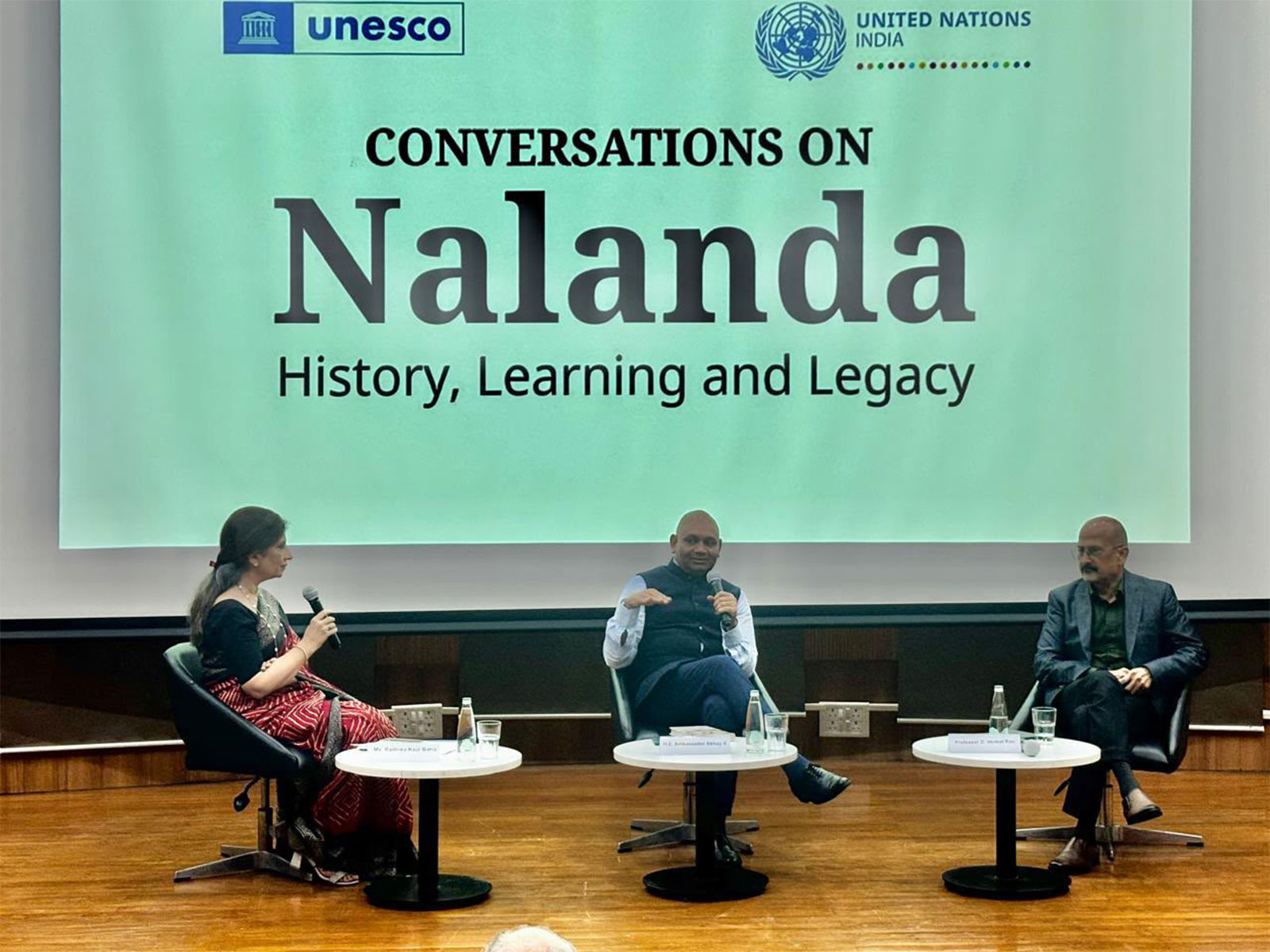
New Delhi [India], August 27 (ANI): The UNESCO and UN in India hosted a special session on writer-diplomat Abhay K.’s book Nalanda: How it Changed the World, bringing together diplomats, scholars, experts and students for a discussion on the ancient centre of learning and its global legacy.
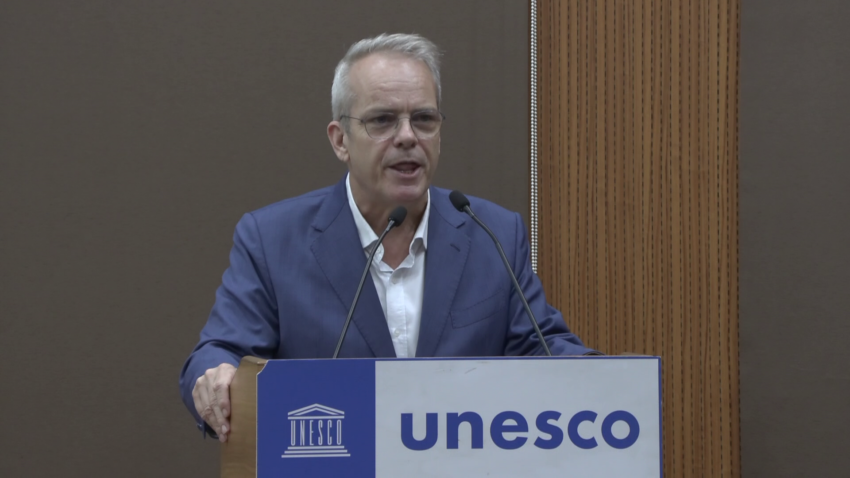
Speaking on the occasion Stefan Priesner-Resident Coordinator of the United Nations to India said- “Nalanda, a subject, speaks to something that United Nations care deeply about–the power of learning, dialogue, exchanged freely across borders in order to shape how societies grow. Before I came to India, I was quite proud to have studied in a city of Europe with the oldest university, 1088 CE, Bologna, from where the word Universitas, University comes from, but Nalanda is 600 years older. It was founded as we know in the 5th century, growing to be, as many regards, the world’s first great residential modern university, attracting scholars from as far as China, Korea, Japan, Tibet, Mongolia, Sri Lanka, across Central and South east Asia. It became a cradle for studies in philosophy, science, mathematics, medicine, and art. And it was a place where ideas were tested, debated and exchanged openly at a scale the world had not seen before. “
“I look forward to listening in detail, how was this happening, how was it taken forward, today. I believe this reflects something larger about India itself, from Nalanda to the thriving institutions today, India has long been a cradle of knowledge and intellectual exchange, representing this incredibly diverse country. This is also why the sustainable development goals and the vision of Viksit Bharat resonates so strongly in this part of India. The 2030 agenda braces the same conviction that animated Nalanda. The progress depends on learning from evidence, sharing what works and connecting knowledge across boundaries whether between countries, disciplines, or institutions. I had the huge pleasure to visit Patna, a week ago and to reflect on my impressions of Patna. I think if you come to Patna, it was not Nalanda, this is outstanding. Hopefully I’ll soon go to Nalanda, sooner than later, but this incredibly fertile land, the state with 130 million people, where the progress is very central to India’s progress. What struck me is the ambition of the state in terms of development, poverty reduction and so on and also as the head of UN, I can say the excellent partnership with the United Nations system spending time on a number of dimensions such as health, nutrition, education, gender equality, climate resilience, and social protection. While in Patna, I also had the opportunity to visit the beautiful Patna Museum, the Bihar Museum, and I saw many impressive exhibits, including the replica of the seal of Nalanda. Walking through its galleries it was a reminder that Bihar’s contribution to human civilisation is impressive. It began many centuries, indeed millennia ago–ideas, art, scholarship, flowed out of this region and shaped the wider world. So we are honoured to be joined this evening by Ambassador Abhay Kumar whose book Nalanda: How it Changed the World, has done so much to bring Nalanda’s history to the wider audience,” he added.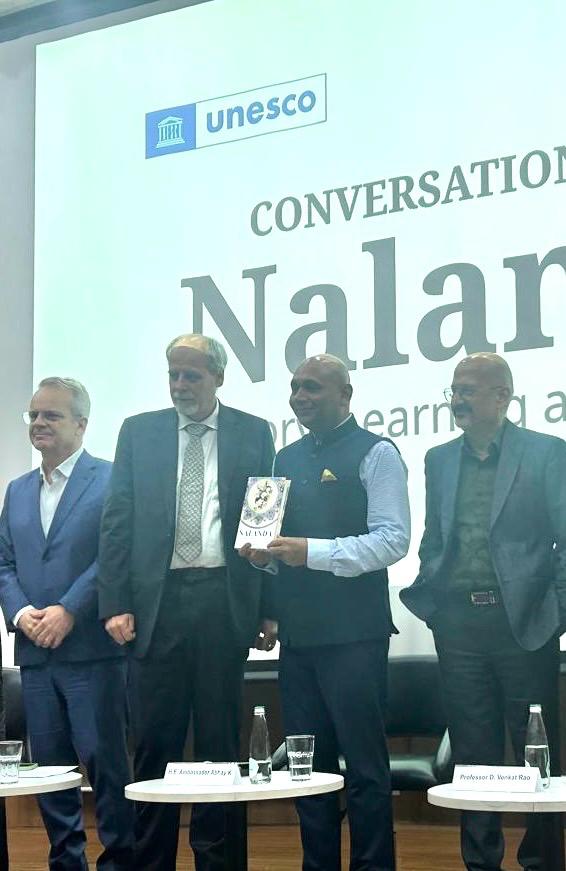
Tim Curtis, the Head of UNESCO to South Asia speaking on the occasion said,” UNESCO deals with among other things with world heritage and Nalanda is a world heritage site and India has a very rich cultural heritage including 45 World Heritage Properties, which calls for long interest in heritage conservation, the most recent inscription happened a month and half ago, the ancient Buddhist site of Sarnath, which was inscribed in the meeting in Korea, but the archaeological site of Nalanda Mahavihara, as it is called officially, on the world heritage site inscription, was inscribed in 2016 and of course we will be hearing about the history of Nalanda from Ambassador Abhay K. , so I won’t talk about it here but I would like to speak a little bit about why Nalanda became a World Heritage Site, and what it means in practice. When it was inscribed, it was inscribed according to what they called the statement of outstanding universal value, which recognises the site on two criteria, firstly what we call criteria 4, and I quote -‘ Nalanda firmly established principles of institution building, site planning, architecture, and artistic traditions, notably the quadrangular Vihara form, Chaitya in quincuncial form, stucco and metal art, which were adopted in similar institutions across south and Southeast Asia.’ So its really a unique place that inspired the whole world out there of similar architecture in both south and south east Asia. Another criteria, criteria 6, it states– Nalanda Mahavihara marks zenith in the evolution of a monastic establishment into a university, contributing to the development of Buddhism, to the systems of philosophy, logic and discourse and to distinctive modes of pedagogy including debate and Guru-Shishya tradition. Its continuity can still be traced in the monasteries of South and Southeast Asia today. The statement of outstanding value also notes that Nalanda continues to inspire modern universities, establishments in the region including Nalanda University itself…Conservation, documenting of archaeological excavation, visitor management and controlling of visitors’ pressure around the buffer zone, are all the ongoing challenges faced by the site. And in that sense we will continue to keep it in inscription, not as an end point, but as a commitment to keep this fantastic site alive for the future generations. But today we are lucky to have Prof. Rao, to share how the Nalanda University is coming up, its future legacy and of course Ambassador Abhay, who will tell us a lot more in detail about the history of Nalanda. With that I would like once again to welcome you all and thank you for being here.”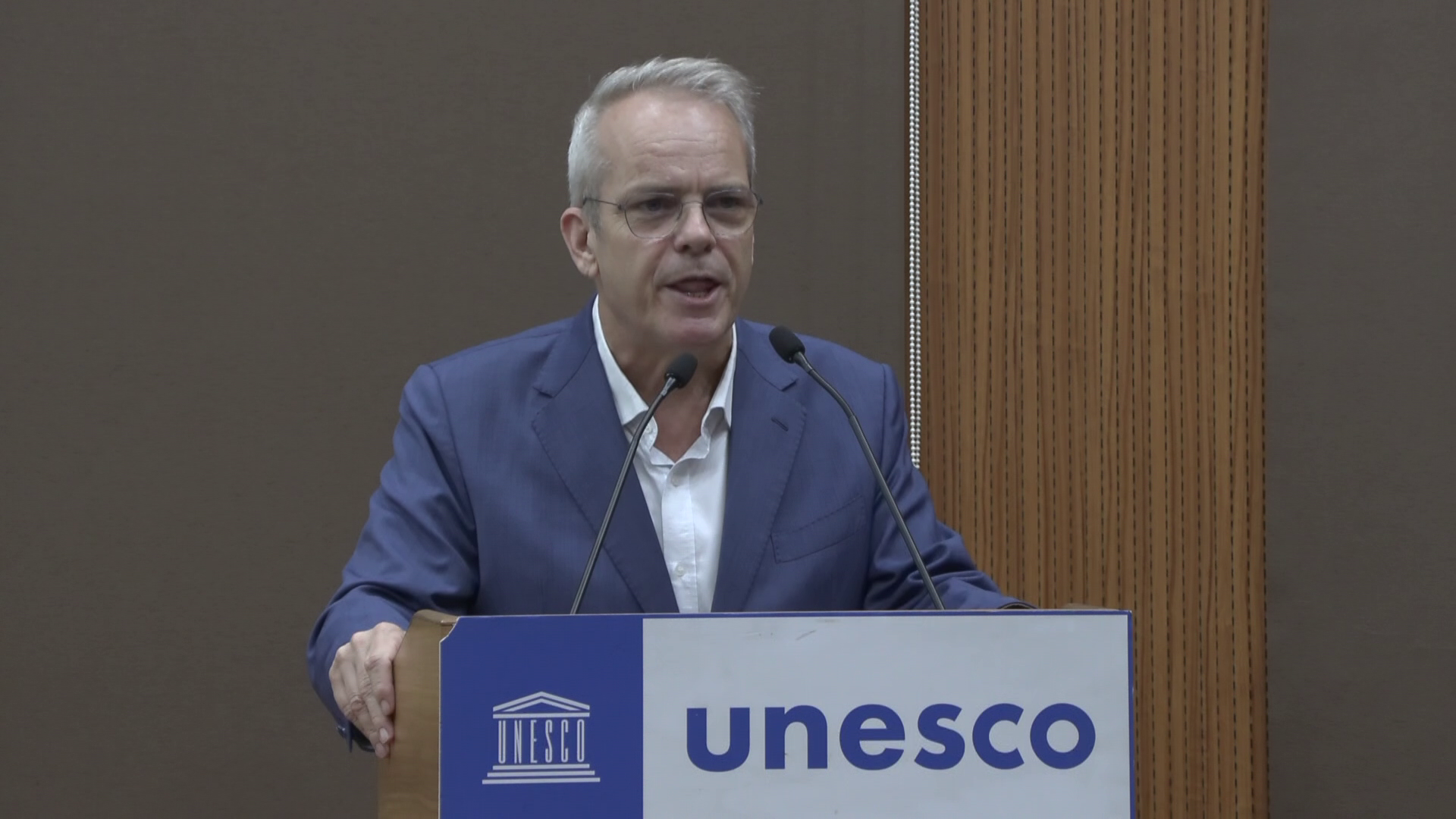
The session featured a conversation with Abhay K. and Professor D Venkat Rao Nalanda University, moderated by Radhika Kaul Batra, focusing on Nalanda Mahavihara’s historic role as a global hub of knowledge and intellectual exchange.
During the discussion, Abhay K. highlighted Nalanda’s wide-ranging academic traditions, spanning astronomy, mathematics, medicine, philosophy and poetry.
He also underlined the institution’s interdisciplinary approach, diverse faculty and merit-based scholarships, describing these features as a potential model for contemporary education systems.
The discussion also drew attention to the modern revival of Nalanda University and its renewed role in India’s educational landscape.
The new campus of Nalanda University at Rajgir was inaugurated by Prime Minister Narendra Modi in 2024, marking a significant milestone in the revival of the ancient institution’s legacy. (ANI)