

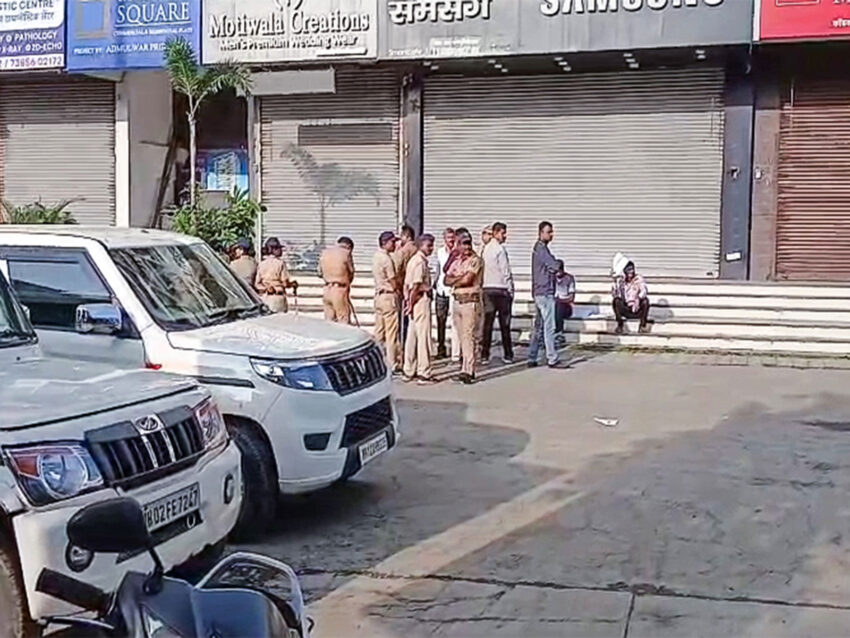
Pune (Maharashtra) [India], July 16 (ANI): Pune Rural Police have registered a non-cognisable (NC) offence against an unidentified person after an objectionable poster claiming that Muslims were not allowed to enter the historic Sinhagad Fort was found at the fort’s entrance, a police official said on Wednesday.
According to a senior Pune Rural Police official, the poster was noticed near the main entrance of the fort close to the vehicle parking area, in the wee hours of Wednesday. It was affixed to an old metal board and was removed immediately after authorities were informed.
The poster, written in Marathi, claimed that the fort “belongs to Hindus” and that “Muslims are not allowed to enter.” It also carried the words “by order,” allegedly to give the impression that it was an official directive.
Police said no government department had issued any such order.
An NC has been registered against an unidentified person, and further inquiry is underway to identify those responsible for putting up the poster.
Earlier on Tuesday, the Maharashtra Anti-Terrorism Squad (ATS) on Tuesday initiated questioning of 66 individuals from Pune district who were “found to have been in contact” with Pakistani gangster Shehzad Bhatti.
The inquiry is being conducted at various locations with the assistance of the Pune City Police Commissionerate, Pune Rural Police, and the Pimpri-Chinchwad Police Commissionerate.
According to a press release, the questioning commenced at 7:00 am. The action has been initiated on suspicion that Bhatti was using social media platforms to influence and encourage young people to engage in anti-national activities.
Maharashtra ATS had launched a statewide operation on July 10, during which it began questioning 102 individuals suspected of having been in contact with Bhatti through social media. The exercise was conducted by 58 ATS teams across the agency’s 14 regional units in Maharashtra.
According to the ATS, preliminary investigations and inputs received from various agencies indicate that Bhatti and his associates allegedly used multiple or fake accounts on platforms such as Facebook, Instagram, Telegram and WhatsApp to establish contact with Indian youth.
The agency alleged that the network attempted to exploit religious and socially sensitive issues to create resentment and radicalise young people. It also claimed that unemployed and economically vulnerable youth were allegedly lured with financial incentives to participate in anti-national and anti-social activities.
Investigators suspect the network was also involved in collecting confidential information, facilitating drug trafficking, transporting illegal weapons and creating sleeper cells or local agents to carry out activities detrimental to national security.
The ATS has appealed to citizens, particularly youth, to avoid interacting with unknown or suspicious individuals on social media and urged parents to monitor their children’s online activities. It reiterated that strict action would be taken against anyone found involved in activities threatening the nation’s security. (ANI)