

United Nations – India has suggested using technology as a national safety net for digital learning to keep children educated during conflicts, stating it as a national responsibility.

PHOTO: UN Photo/Manuel Elias.
India’s Permanent Representative to the UN, P.Harish, has emphasized that national governments bear the primary responsibility for safeguarding children’s rights.
He pointed to India’s digital platform, DIKSHA (Digital Infrastructure for Knowledge Sharing), which uses interactive and AI tools to give children access to learning anywhere. He noted that the world learned how to do this during the COVID-19 pandemic, and the same logic should apply to war zones.
Highlighting DIKSHA as a central tool in broadening access, Harish said, “It has democratized access to quality learning through interactive content and AI-powered tools across multiple languages.”
ADVERTISEMENT

Drawing on lessons from the Covid-19 pandemic, Harish stressed the role of technology in ensuring continuity of learning when classrooms are shut, whether due to health emergencies or conflict. “Our experience has convinced us that access to digital learning can be the bridge that helps children access education during conflicts.”
“In India, the Right to Education is a fundamental right enshrined in our Constitution, guaranteeing free and compulsory education up to the age of 14 years,” he said.
“India’s domestic commitment to ensure access to affordable and quality education also shapes our engagement on this issue internationally,” he said.
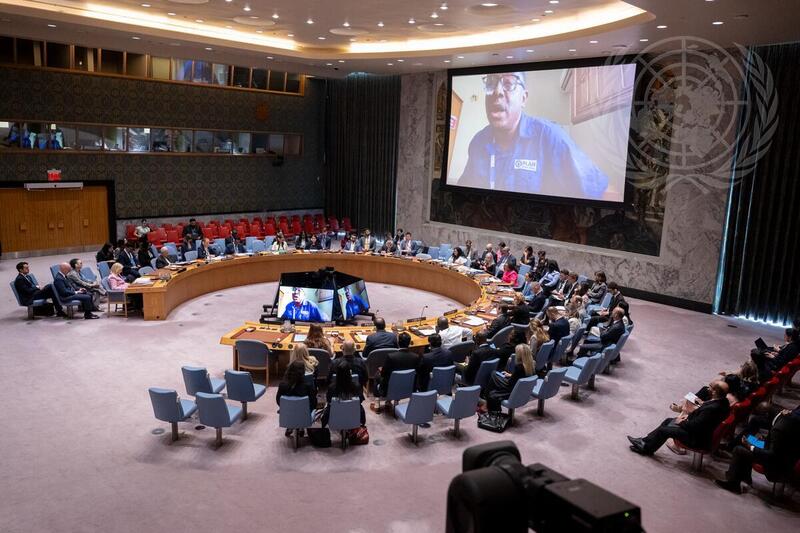
Harish was speaking at the Council’s Open Debate on Children and Armed Conflict (CAAC) at the UN Headquarters in New York on 24 June. The debate focused on “Strengthening the Prevention of and Protection of Education for Children Affected by Armed Conflict: From Normative Commitments to Effective Implementation.”
Calling for stronger global measures to safeguard education for children living amid war, he stressed the time for rhetorical commitments had passed. India urged the international community to move decisively from pledges to action to protect education in conflict zones, warning the UN Security Council, that the surge in attacks on schools and the denial of learning to millions of children reflects a “damning verdict on humanity’s collective failure” to uphold its commitments.
Calling for an end to impunity, Harish insisted that norms alone are insufficient without credible accountability. “Protection without accountability is incomplete,” he said. “Those who target schools and children with impunity must be held to account.”
He pointed out how children’s education has become an overwhelming global crisis, 30 years after the international community first setting a mandate at the UN for sparing children from conflicts.
Citing the UN Secretary-General’s 2025 Annual Report on Children and Armed Conflict, Harish stressed, “These figures are a damning verdict on humanity’s collective failure to translate commitments into reality on the ground.”
Detailing the statistics, Harish warned of a sharp escalation in attacks on educational institutions, by 44 per cent in a single year, and described the trend as “alarming.” Nearly 473million children, more than one in six globally, are living in or fleeing conflict zones, he said, and over 85 million of them have no access to education at all.
Harish underlined that education is not simply an auxiliary service but the cornerstone of a country’s future. “Schools are far more than places of learning. They provide the foundational basis for the cognitive, emotional and social development of children,” he said. “To protect a child’s education is, therefore, to protect a nation’s future.”
Harish emphasized that protecting a child’s education is the literal foundation for a country’s future recovery and long-term peace. Education, he argued, must be treated as an investment in long-term peace and stability. “Education is a right that should endure in times of conflict. It is the right whose fulfillment is among the most powerful contributions to lasting peace,” he added.
Harish also stressed on the need to help refugees and rebuild schools as India is doing by funding education for refugees in its own neighborhood and actively building schools and training centers in countries recovering from war. India has invested in rebuilding education infrastructure, including the construction of schools and vocational training centers, in different countries including our neighborhood,” he stated.
Harish said, “We believe that investment in education for those bearing the heaviest burden of war is an imperative.”
Concluding his remarks, Harish reaffirmed India’s long-standing commitment to children affected by armed conflict, urging the Council and the wider UN membership to match words with action.