

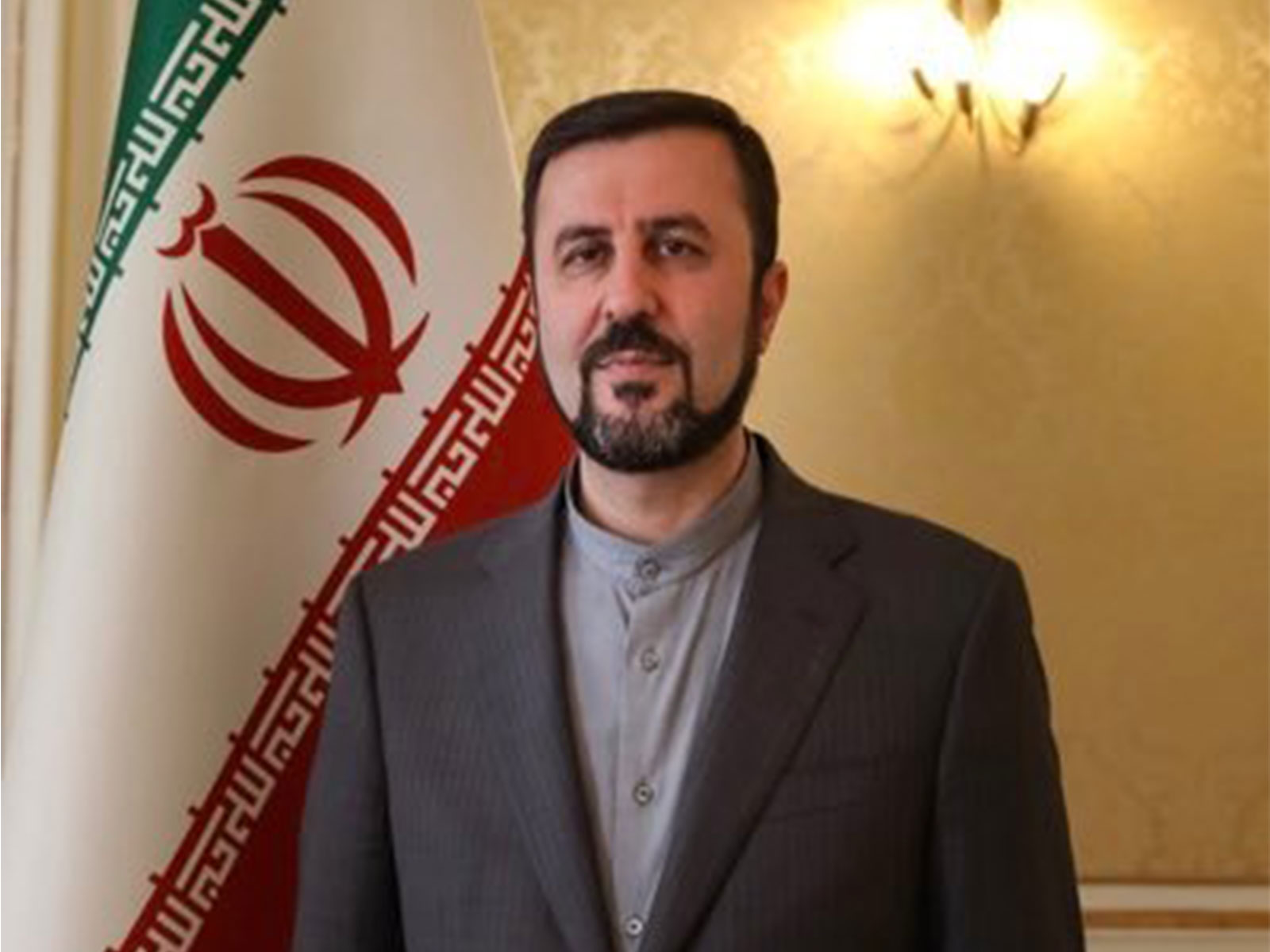
Tehran [Iran], June 24 (ANI): Iran’s Deputy Foreign Minister Kazem Gharibabadi on Wednesday rejected comments made by the head of the International Atomic Energy Agency (IAEA), asserting that inspections of Tehran’s nuclear sites would only be feasible following the final US-Iran deal.
Deputy Foreign Minister Kazem Gharibabadi made the remarks on the social media platform X in response to statements made earlier in the day by the United Nations nuclear watchdog chief, Rafael Grossi, in Japan, indicating that UN inspectors would soon visit Iranian nuclear enrichment facilities.
Dismissing these claims, Gharibabadi wrote, “No meeting was held with Grossi in Switzerland, despite his request. Nor is there any plan for access to the facilities that were attacked or to nuclear material.”
Elaborating on Tehran’s position, the Iranian Deputy Foreign Minister asserted that granting UN inspectors entry to compromised atomic facilities and substances will “solely be examined and resolved within the framework of a final agreement” with Washington.
He stated, “These issues will be reviewed and decided only within the framework of a final agreement and as a result of practical action by the other side to end all sanctions and other measures.”
Maintaining that the resumption of UN monitoring remains contingent upon “the other party’s practical action in terminating all sanctions”, Gharibabadi added, “You cannot advance the ‘stir up and take over’ policy with media hype.”
This sharp rebuttal stands in direct contrast to Grossi’s earlier briefing in Japan.
Addressing journalists at a press conference at the tsunami-hit Fukushima Daiichi nuclear power plant, the IAEA chief noted that he acknowledged the geopolitical rhetoric.
“I can understand political statements; they are part of the reality, but the fundamental thing I would like to remind you and draw your attention to is that there has been a Memorandum of Understanding, signed by both presidents,” Grossi said.
Grossi pointed out that the accord “says explicitly that the nuclear activities that are going to be carried out with regard to the nuclear material facilities will be supervised by the IAEA — in all letters”.
The IAEA chief further added, “Obviously, to do that, we will have to inspect. Whether this happens the day after tomorrow or in one week or in 10 days, it’s important, but not essential. This is going to happen.”
The execution of these inspections remains a vital component of the proposed diplomatic framework, which mandates that Iran’s inventory of uranium must be “downblended” from highly enriched thresholds.
The statements from Grossi represent the most definitive stance yet from the UN agency, which holds a critical role in verifying the exact status of Tehran’s nuclear inventory.
The verification process has faced a prolonged impasse.
Following a 12-day military conflict launched by Israel against Iran in 2025, Tehran has restricted the IAEA from accessing enrichment locations.
The Islamic Republic is suspected of harbouring a sufficient stockpile of uranium enriched to high levels to theoretically assemble up to 10 nuclear weapons if a decision to pursue a breakout capability is made.
While Tehran has consistently maintained that its atomic ambitions are entirely peaceful, it remains the sole nation globally to enrich uranium up to 60 per cent purity without actively running a declared military weapons programme.
These latest developments come amid conflicting narratives from both Washington and Tehran on Tuesday regarding the timeline and scope of the inspections.
Grossi acknowledged the current diplomatic friction, describing the back-and-forth as a “war of words” at the moment. (ANI)