


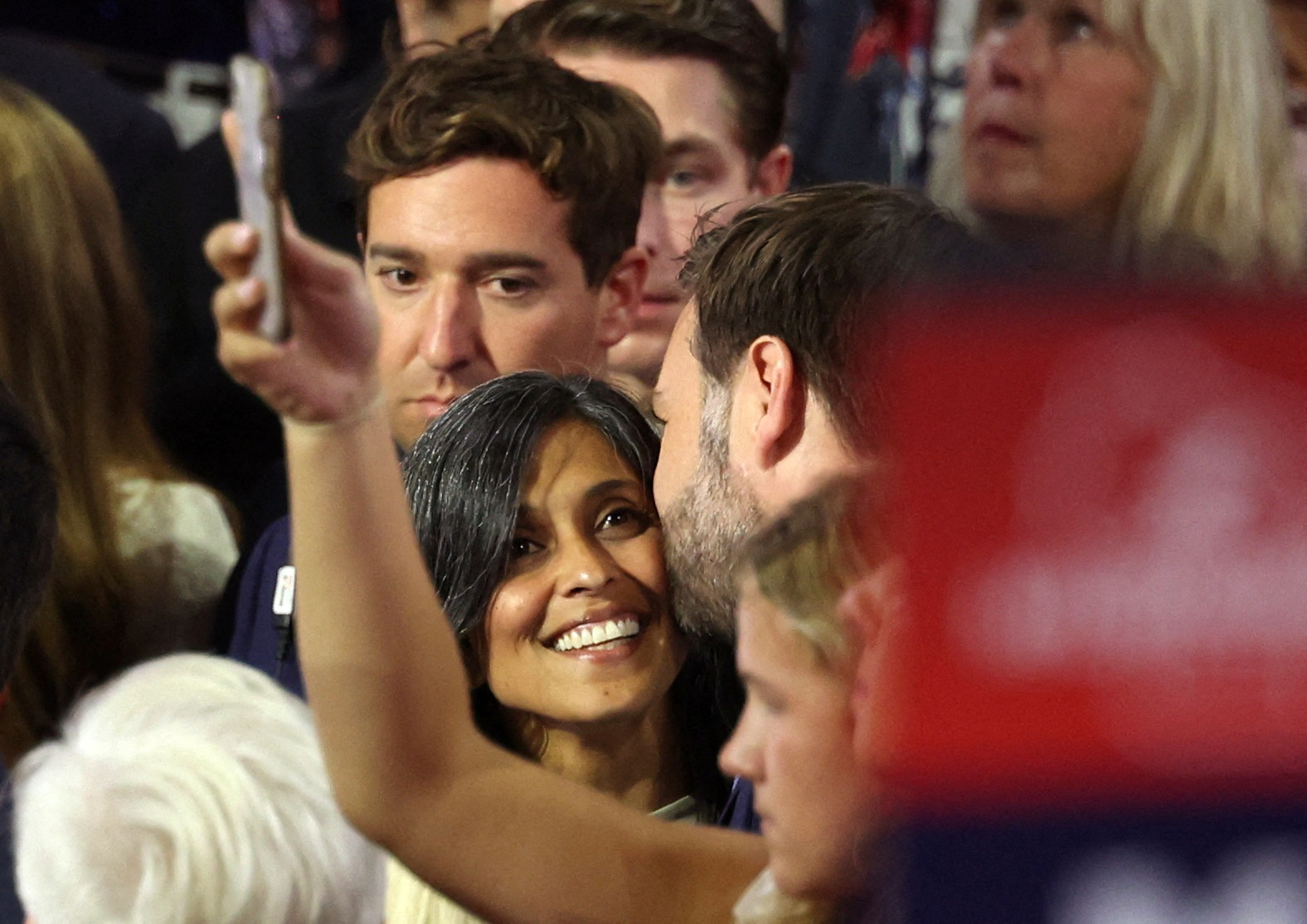
Vice President JD Vance, in an interview with “CBS Sunday Morning,” said he and his wife, Usha Vance, will discuss a 2028 presidential run after this year’s midterm elections.
“Usha and I will absolutely sit down and talk about what comes next for our family,” Vance told CBS. “The way I make decisions is I try not to make them until I absolutely must.”
He said he expects President Donald Trump to be “very supportive” of his eventual decision.
“I have no doubt that the president of the United States is going to be very supportive of anything that I ultimately decide to do,” Vance said. “But we really just haven’t talked about what that thing will be.”
ADVERTISEMENT

A person close to Vance who spoke on the condition of anonymity to comment on private discussions has cited the expected birth of the vice president’s fourth child in late July as a reason he has not yet made a decision on a 2028 run, The Post reported in March.
Vance, 41, represented Ohio in the Senate for two years before becoming vice president. He is a Marine Corps veteran and a Yale Law School graduate who gained prominence for his memoir, “Hillbilly Elegy.”
Once a critic of military interventions overseas, Vance has become a staunch defender of the war in Iran and other Trump policies.
Vance is the most high-profile of the potential 2028 contenders in the Trump administration, including Secretary of State Marco Rubio. Vance and Rubio have recently appeared in the White House briefing room, further fueling 2028 speculation as they raised their profiles. While Trump has stoked a rivalry between the two, he has also suggested that they could be running mates.
In his interview with CBS, Vance said he doesn’t initiate conversations about his political future with Trump.
“I never bring it up. But sure, the president brings it up a lot, sometimes publicly, sometimes privately,” Vance said. “The president’s a political animal. He loves this stuff. He’s very fascinated by it.”
Vance wouldn’t say whether Trump is pushing him to seek the party’s nomination but noted that the president “kind of talks about it, like, ‘What’s gonna happen,’ you know? ‘How do we make sure that we’re successful? What does that mean for the future?’”
“So, we talk about it, but not in any great detail,” Vance said.