

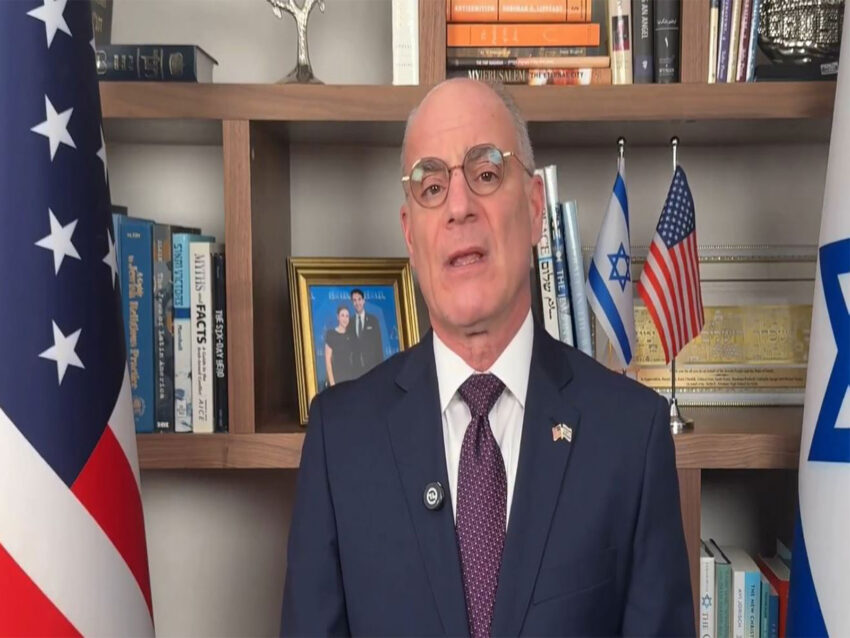
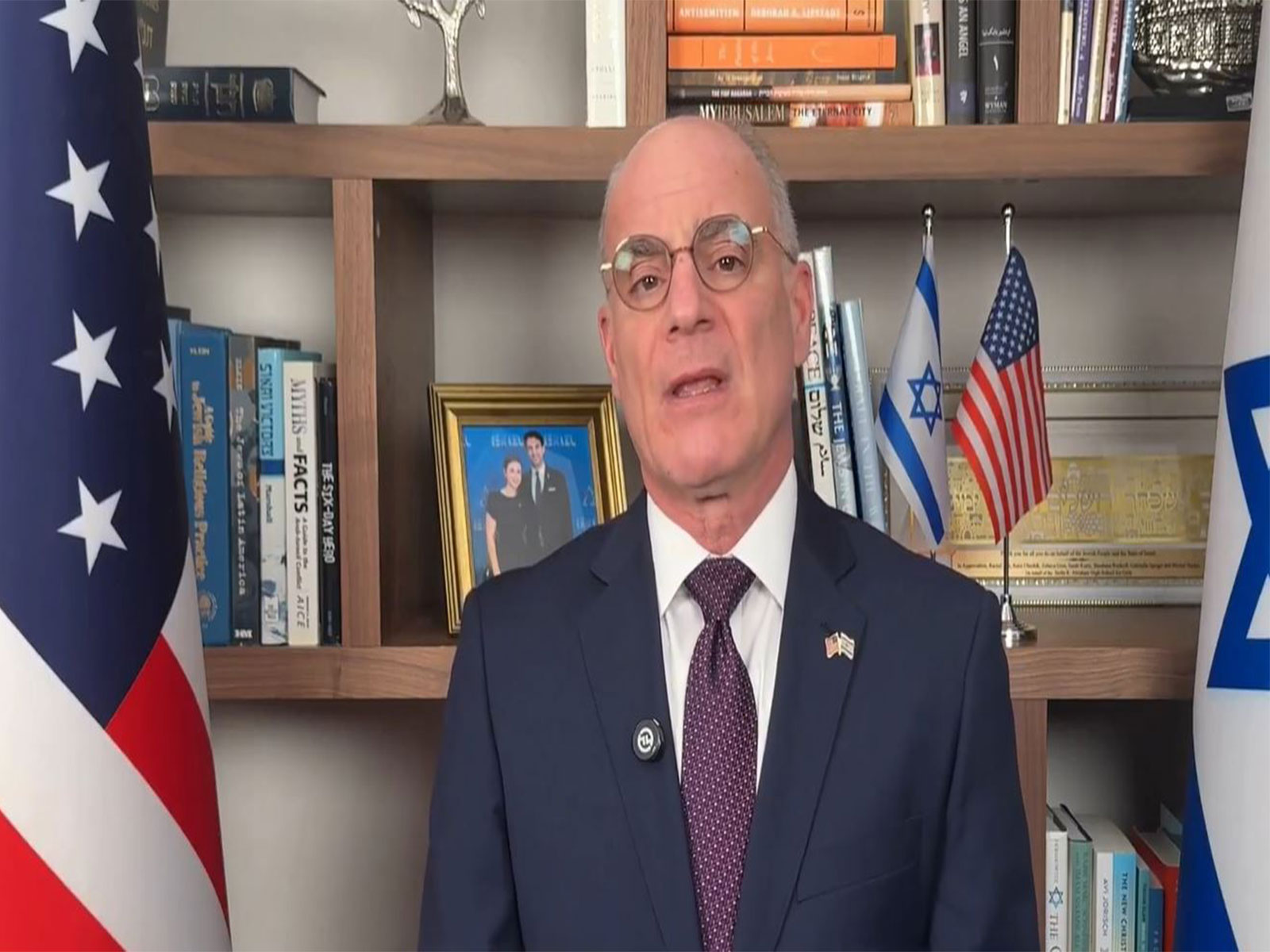
Washington, DC [US], June 8 (ANI): The Israeli Ambassador to the United States, Yechiel Leiter, has robustly defended his country’s kinetic operations inside Iranian territory, asserting that “no self-respecting country” would tolerate the repeated missile barrages launched by Tehran against Israeli citizens.
Elaborating on the scope of the operation via a statement on social media platform X, the diplomat clarified that Israel’s cross-border airstrikes are strictly targeted at specific surface-to-surface missile launch sites and non-energy infrastructure installations across Iran.
Iran fired 11 ballistic missiles at Israel today. Each one of those missiles can level an entire neighborhood and kill hundreds. No self-respecting country in the world would tolerate such an attack, and neither will Israel.
Israel is now targeting Iranian surface-to-surface…
ADVERTISEMENT
— Ambassador Yechiel (Michael) Leiter (@yechielleiter) June 8, 2026
Connecting the ongoing regional operations to the wider multi-front theatre, Leiter pointed out that popular sentiment in neighbouring Lebanon has shifted heavily against Tehran’s influence. He stated, “The people of Lebanon have rejected Iran’s proxy, Hizballah, and have told Iran to get out of their country.”
Addressing the sustained cross-border friction along the northern front, the ambassador issued a stern warning regarding any continued hostilities initiated by the Lebanese militia group.
“If Hizballah fires at Israel, its command centres in the Dahiya will be hit hard,” Leiter said, referring to a southern district of Beirut that is widely recognised as a Hezbollah stronghold.
The ambassador explicitly decoupled the localised military responses in Lebanon from the broader, direct engagements against the political establishment in Tehran.
“This has nothing to do with Iran. Everyone has had enough of this maniacal Iranian regime,” Leiter stated, underscoring the deep global and regional frustration with the continuous instability generated by the administrative structure in Tehran.
This diplomatic defence from Washington unfolded precisely as the fragile West Asian ceasefire faltered completely early Monday after Iran struck Israel for the first time since the April 8 truce, drawing sharp retaliatory strikes from the Jewish state as loud detonations resonated across central and western parts of Iran.
The sudden re-eruption of hostilities has cast a foreboding shadow over diplomatic efforts to permanently end the war, which originally commenced on February 28. This kinetic escalation severely threatens to derail US President Donald Trump’s last-ditch efforts to establish an off-ramp by negotiating a comprehensive nuclear deal with Tehran.
Trump, who had been actively pressuring Israeli Prime Minister Benjamin Netanyahu to exercise maximum military restraint, recently affirmed his supreme authority over the ongoing international mediation, stating that he “calls the shots” and indicating that Netanyahu would ultimately have to accept the negotiated terms to stop the conflict.
The US President had previously expressed strong optimism regarding the diplomatic channel, claiming Washington was “very close” to finalising a peace pact with Iran, while simultaneously urging Netanyahu to avoid any counter-escalation that could break the process.
Detailing his concerns, Trump warned that a continuous cycle of retaliation would trap the region in a perpetual state of violence. “If Bibi strikes them back, it’s just going to keep going like the last 47 years, or the last 3,000 years,” Trump stated in an interview.
Expressing an urgent desire to halt further kinetic exchanges, the US President added, “Each of them had their fun. Israel had its strike, and Iran had its strike. We don’t need another one.”
The immediate operational breakdown began on Sunday evening when Iran launched a volley of ballistic projectiles towards northern Israel, shattering two months of relative calm under the US-brokered truce framework. Iranian state media quickly confirmed the missile launches, and aviation authorities subsequently closed off airspace across the country’s western provinces in anticipation of the inevitable Israeli counter-strike.
Tehran maintained that its projectile barrage was executed in direct retaliation for intense Israeli airstrikes targeting Hezbollah’s command centres in the southern suburbs of Beirut earlier that day, which proceeded despite specific calls from Washington to avoid regional escalation. Concurrently, the Israeli military stated that the Iranian-backed Hezbollah movement had initiated rocket and drone operations against northern Israel earlier on Sunday.
Following the Sunday night exchange, the Islamic Revolutionary Guard Corps issued an explicit warning designed to deter further countermeasures, threatening that “should these acts of aggression be repeated, the responses will be broader in scope and will encompass all American and Zionist targets throughout the region.” The statement specifically referenced potential operations stretching across Lebanon, the Iranian coast, and maritime assets navigating the Strait of Hormuz.
The initial Iranian salvo activated air raid sirens across several municipal sectors in Israel, forcing millions of civilians to seek immediate emergency shelter as integrated air defence systems engaged the incoming threats. While residents in northern areas reported hearing multiple overhead explosions, military officials confirmed the projectiles were successfully intercepted before causing casualties or structural damage.
Reacting sharply to the bombardment, Israeli military spokesperson Brig Gen Effie Defrin stated, “Iran has made a grave mistake.” Concurrently, Israel’s Chief of the General Staff, Lt Gen Eyal Zamir, signalled an immediate operational readiness to retaliate, affirming that the armed forces would “strike the enemy with determination as soon as the order is given.”
True to that posture, the Israeli Air Force carried out its targeted airstrikes across central and western Iran early Monday morning. Iranian state television recorded powerful explosions in Isfahan, Karaj, Tabriz and Tehran, prompting authorities to suspend all commercial flights at Tehran’s Imam Khomeini International Airport, the country’s primary international gateway.
While the Islamic Revolutionary Guard Corps noted that Israel utilised air-launched ballistic missiles during the counter-offensive, the Israeli military released a brief, direct statement as the operations commenced, stating: “A short while ago, the Israeli Air Force struck military targets belonging to the Iranian terror regime in western and central Iran.”
The sudden direct confrontation has caused immediate security ripples across neighbouring territories, drawing a fierce warning from the Iraqi Shiite militia Kata’ib Hezbollah. The group published a short declaration on its official website, warning that “if America intervenes in the confrontation, we will target its bases and interests in Iraq and the region.”
The expanding regional volatility materialised precisely as Trump was utilising multiple media channels to urge both state actors to de-escalate. Speaking to Fox News, the US President expressed immense frustration over the timing of the strikes, noting that diplomatic breakthroughs were imminent.
“We’re very close. I would say an agreement would be signed on Monday, Tuesday or Wednesday of this coming week. And now this takes place,” Trump told Fox News, before directly addressing the leadership in Tehran: “You’ve shot your missiles, that’s enough. Get back to the table and make a deal.”
According to Axios, Trump held an immediate phone call with Netanyahu shortly after the initial Iranian salvo in a direct bid to prevent a broader multi-front war from collapsing the talks. Trump publicly minimised the tactical impact of the initial barrage to reduce the political pressure on Israel to retaliate, telling Axios, “The Iranian strikes didn’t hurt anybody. Hopefully Israel is not going to retaliate.”
While talking to the Financial Times, Trump reiterated that Netanyahu would lack the political leverage to block a broader bilateral agreement between Washington and Tehran, confidently asserting, “He won’t have any choice.” (ANI)