

New Delhi [India], May 26 (ANI): A 65-year-old woman from Faridabad, who was suffering from end-stage Interstitial Lung Disease caused by scleroderma, has completed one year after undergoing a bilateral lung transplant at Indraprastha Apollo Hospital, New Delhi,the release said.
This marks a significant clinical milestone as she is the first patient from a private hospital in Delhi to reach the one-year post-transplant mark following such a procedure.
The patient had been in a critical condition before surgery, requiring continuous oxygen support of 4-5 litres per minute. Her condition had deteriorated to the point where even basic activities and conversations had become extremely difficult due to severe lung damage caused by the rare autoimmune disorder.
Despite medical management, her disease had progressed to an advanced stage of respiratory failure.
The transplant became possible after a 48-year-old patient in Noida was declared brain-dead, following which his family made the compassionate decision to donate his organs.
The surgical team at Apollo Hospital acted swiftly, performing a seven-hour bilateral lung transplant with the patient supported on ECMO to maintain oxygenation during the procedure.
The patient required ventilatory support, a tracheostomy, and more than 15 bronchoscopies before her breathing functions stabilised. Gradually, all external supports were withdrawn, and she was transitioned to oral medications and structured rehabilitation.
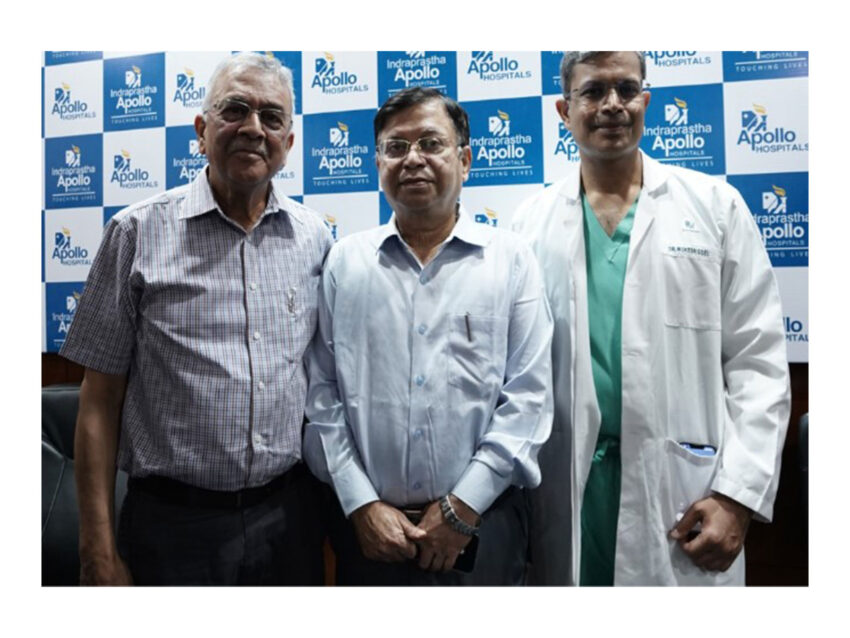
According to the release, Dr. Mukesh Goel, Senior Consultant, Cardiothoracic Surgery, Indraprastha Apollo Hospital, said the case reflects a shift in advanced transplant care access in Delhi-NCR.
“This case changes what patients in Delhi, and the wider NCR region can expect. For years, a lung transplant meant travelling to Chennai or Hyderabad. With NOTTO now recognising Apollo Delhi for lung allocation, that is no longer the case. Our focus is on building a programme that consistently delivers long-term survival. This one-year milestone is where that journey begins,” he said.
Dr. Avdhesh Bansal, Senior Consultant, Respiratory Medicine, said the achievement is particularly significant given the complexity of the case.
“Lung transplant is the most complex procedure as compared to any other transplant. Completing one year after a bilateral lung transplant is a significant milestone, especially in a case as complex as this. When the patient first came to us, her lungs were failing rapidly, and she required continuous oxygen support. Today, seeing her leading a healthier life is incredibly encouraging. This milestone reflects not just the success of the transplant, but also the role of sustained rehabilitation and multidisciplinary care in helping patients recover and regain quality of life,” Bansal said.
The patient described her recovery as life-changing, recalling her condition before the surgery. “Before the transplant, I was completely dependent on oxygen 24 hours a day. Even simple daily activities like taking a bath, changing clothes, or going into the kitchen had become extremely difficult. Today, I can do all these things independently and no longer require oxygen support.”
She added that recovery required discipline and continued care. “I feel more energetic and full of life. The journey after the transplant was also not easy. I had to take medicines regularly and undergo frequent medical and blood check-ups. Maintaining proper nutrition was also important. But now things have become much easier. I am slowly getting back to normal life and can step out while following precautions like wearing a mask and avoiding crowded places”.
Lung transplantation is one of the most complex procedures in medicine, with the first year after surgery being the most critical. It is especially challenging due to the shortage of viable donor lungs, as only 15-20 per cent are suitable for transplant, while 25-30 per cent of patients on waiting lists do not survive long enough to receive one.
In such high-risk cases involving advanced lung disease and autoimmune complications, reaching a healthy one-year outcome reflects precise coordination of surgery, organ allocation, and long-term rehabilitation. (ANI)