

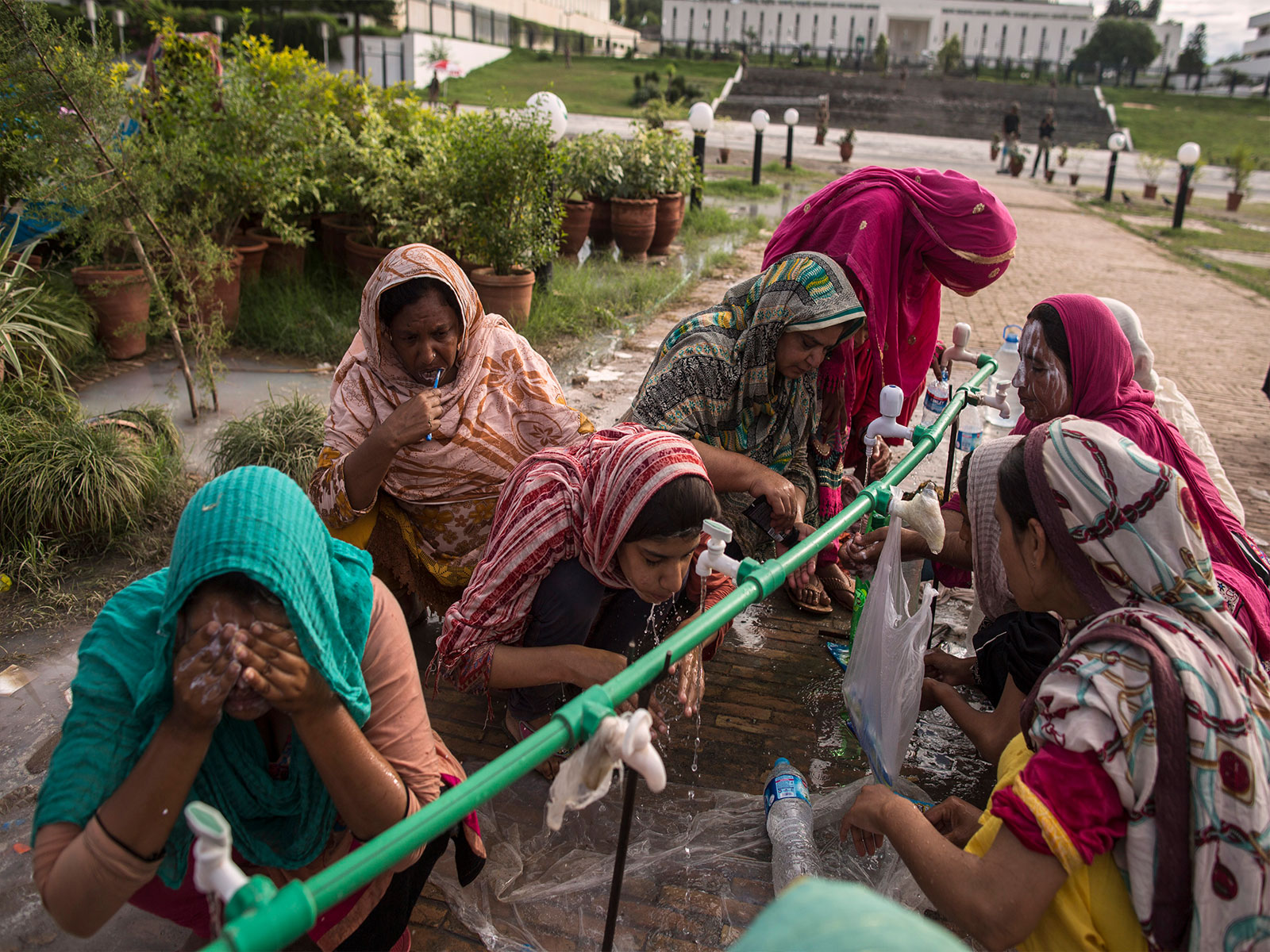
Rawalpindi [Pakistan], May 23 (ANI): Pakistan’s worsening governance failures have deepened the water emergency in the twin cities of Rawalpindi and Islamabad, where residents are now facing severe shortages as summer temperatures rise. The daily water deficit in Rawalpindi city and cantonment areas has climbed to more than 60 million gallons, while officials fear the situation could worsen further in the coming months, as reported by The Express Tribune.
According to The Express Tribune, the combined daily water demand in Rawalpindi and its cantonment zones has reached approximately 130 million gallons. However, authorities are currently able to provide less than 70 million gallons per day, leaving a massive gap between supply and consumption. Officials continue to pin hopes on long-delayed infrastructure schemes, including the Chahan Dam, Daducha Dam and Cherah Dam projects.
Once completed, these projects are expected to add nearly 80 million gallons of water to the system each day. Yet water experts warn that the increasing population of the twin cities may outpace these additions before the projects even become operational. Broader plans aimed at supplying 200 million gallons of water daily to Rawalpindi and Islamabad through the Ghazi Water Channel from the Indus River have remained stalled for years. The project was originally envisioned to expand gradually to 500 million gallons in multiple phases, but little meaningful progress has been achieved.
The crisis has become especially severe in cantonment areas. The Rawalpindi Cantonment Board reportedly requires around 50 million gallons of water every day, but currently receives only about 12.78 million gallons through Khanpur Dam allocations and tube wells. This has created a shortage exceeding 37 million gallons daily, leaving residents struggling to secure basic water access, as cited by The Express Tribune.
Meanwhile, Rawalpindi city, managed by the Water and Sanitation Agency (WASA), faces a daily requirement of nearly 70 million gallons. Supplies from Khanpur Dam, Rawal Dam and underground tube wells together provide only 51.5 million gallons, resulting in an additional shortfall of 18.5 million gallons, as reported by The Express Tribune. (ANI)