


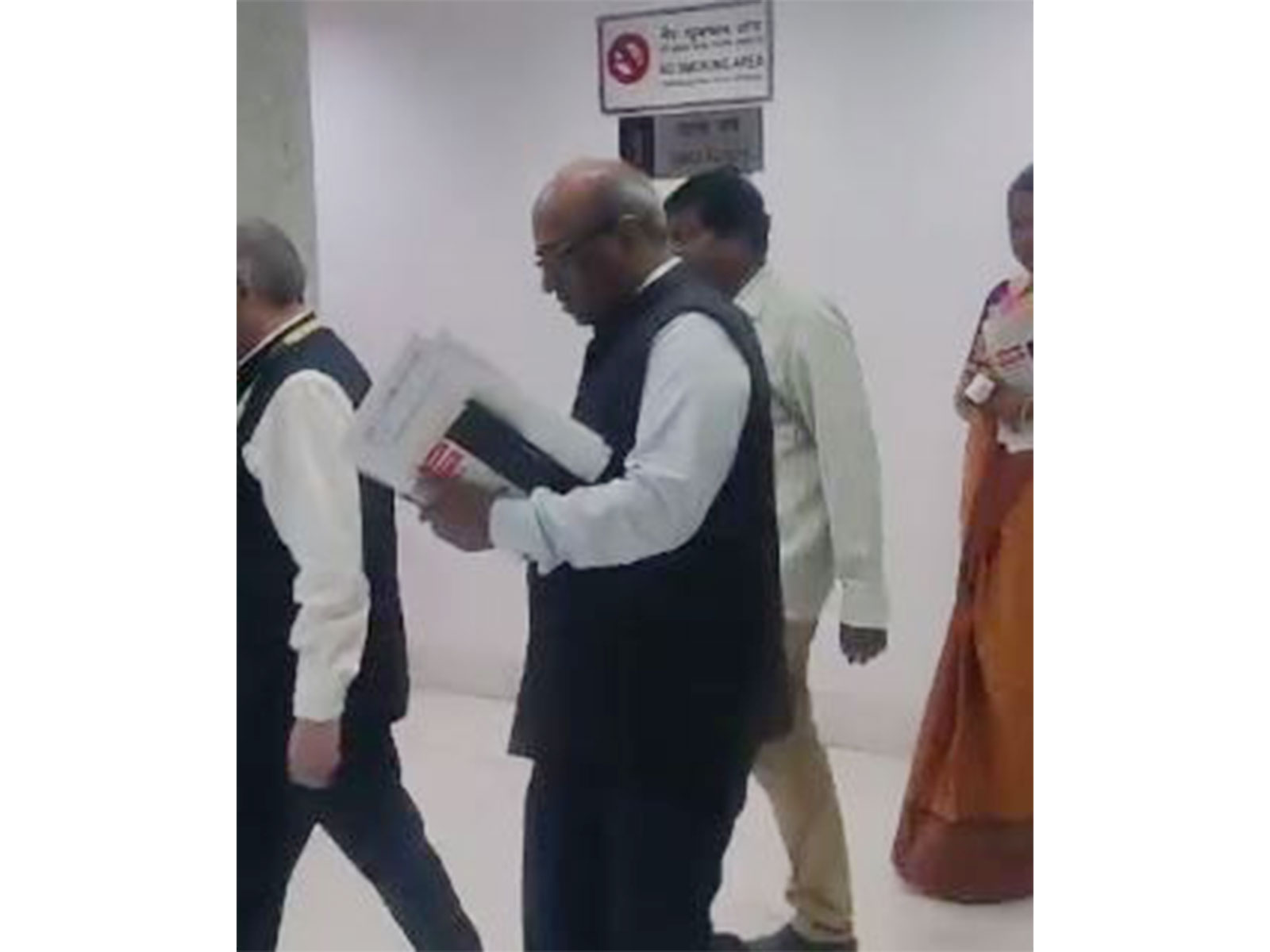
New Delhi [India], May 21 (ANI): Amidst growing concerns over alleged irregulaties in the NEET, examination process, triggered by the recent paper leak, the Director General (DG) of the National Testing Agency (NTA), Abhishek Singh on Thursday appeared before a Parliamentary committee to provide a detailed briefing on the NEET-UG paper leak and the steps being taken to reform the examination process.
Education Secretary Vineet Joshi was also present during the deliberations that began at 11 am and went on for about 5 hours.
Sources said the standing committee members asked about the NEET-UG paper leak and ways to make the NTA test process more robust. They asked about the computer- based test infrastructure, frequency, duration of test and other parameters as NEET-UG, one of India’s most important entrance examinations. shifts to computer-based testing from next year.
Speaking to ANI, Digvijaya Singh, Chairman of the Parliamentary Standing Committee on Education, Women, Children, Youth and Sports, stated that the meeting went off very well and that they received input from all the members.
Noting that all members are “very concerned” about issues discussed, such as the NTA exam, and mentioned he “can’t go into details” regarding specifics at this time.
Regarding future plans and when the findings would be presented, that “it depends” and concluded by saying “let’s see” when asked about the date of the next meeting.
Sources familiar with the development stated that the NTA Director General gave replies to the committee regarding the current status of investigations and future protocols.
According to sources, committee members raised sharp queries regarding the NEET-UG Paper Leak 2026 and sought clarity on measures to make the NTA’s testing mechanism more robust.
NTA holds centralised admission tests to various undergraduate courses.
As NEET-UG is set to transition from a pen-and-paper format to computer-based testing (CBT) starting next year, the members of the Parliamentary panel inquired about computer- based test infrastructure, frequency, duration of test and other parameters to ensure a seamless transition.
The committee also reviewed the implementation status of the K. Radhakrishnan Committee Report on NTA reforms.
According to sources, members asked about lapses and responsibility for the paper leak and officials said that a CBI probe is being conducted and will also help identify any loopholes and that efforts are being made to make the system foolproof
Beyond the examination reforms, the meeting also focused on the impact of Artificial Intelligence (AI) on the education sector and discussed strategies to maximise the employability of students in the wake of technological advancements.
In the same session, the committee considered and adopted two significant reports: the 379th Report on Action Taken by the Government regarding the Demands for Grants 2025-26 of the Ministry of Women & Child Development, and the 380th Report on the functioning of the National Council for Teacher Education (NCTE) in light of the National Education Policy (NEP) 2020’s focus on teacher capacity building.
The panel further deliberated on the major achievements and challenges faced by Aligarh Muslim University (AMU) and the National Commission for Minority Educational Institutions (NCMEI).
Discussions covered critical areas such as financial constraints, the implementation of reservations, filling of administrative vacancies, and the challenges associated with the implementation of the NEP, sources added.
Political tensions heightened amid protests over NEET UG 2026, which was cancelled on May 12 following allegations of a coordinated paper leak. The exam, conducted on May 3 across 551 cities in India and 14 cities abroad, saw participation from over 22 lakh candidates.
The Union Education Ministry has ordered strengthened security measures for the upcoming re-examination scheduled on June 21. Officials have also indicated that NEET-UG will be conducted in computer-based test (CBT) mode from next year to prevent such irregularities. (ANI)