

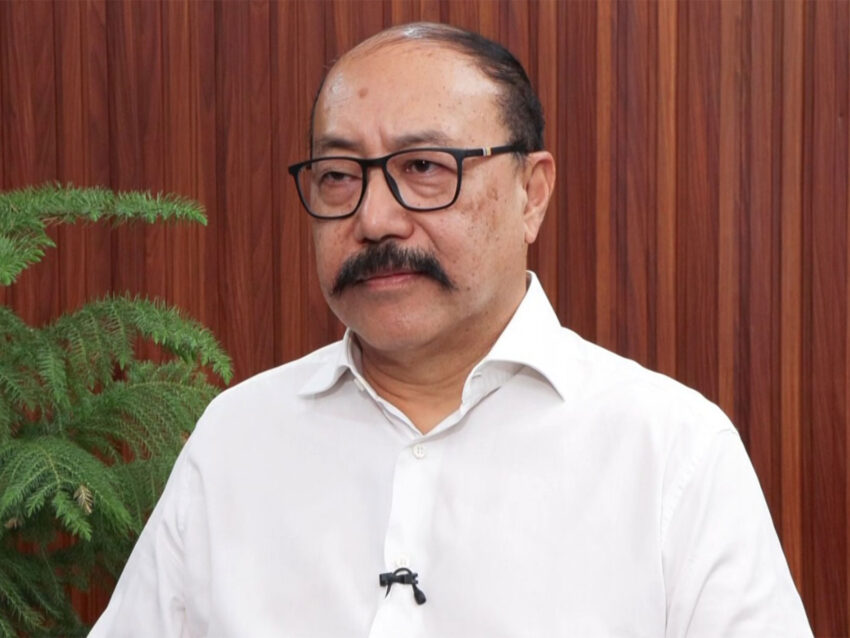
New Delhi [India], May 20 (ANI): Rajya Sabha MP and former Foreign Secretary Harsh Vardhan Shringla praised the Centre’s handling of the ongoing energy crisis triggered by tensions in West Asia, stating that the impact on India has remained comparatively limited due to effective planning and timely intervention by the government.
In an interview with ANI, Shringla said on Wednesday that energy prices across several regions, including the United States, Europe and parts of Asia, have witnessed steep increases ranging between 20 and 50 per cent. However, he noted that India has managed to cushion the impact through “good management, good planning and foresight.”
“So there has to be some impact. I would say the impact on India has been less in actual terms. It should have been more but it is actually less because of good management, good planning and foresight exercised by the government. Many countries have seen worse collateral effects. In other words, if you see the cost of energy from the United States to Europe to our own region, energy prices and the cost of buying fuel, cost of energy at home that you consume has really skyrocketed. Anything from between 20% and 50% is the sort of increases that we are seeing,” Shringla said.
The former Foreign Secretary said the crisis in West Asia was bound to have global repercussions given the Gulf region’s strategic importance in energy security, trade and international connectivity.
“Well, whenever you have a crisis of this proportion, it is bound to have an impact not just in the region that it emanates from but across the world. And the Gulf area is very important from the point of view of energy security, is very important from the point of view of trade, its strategic location,” he said.
Shringla further highlighted India’s deep economic and people-to-people ties with the Gulf region, noting that nearly nine million Indians live and work there while a significant portion of India’s energy imports also come from the region.
“And, of course, it is a crossroads in many senses of exchanges between cultures, regions. And the impact has been more severe on us because we are an extended neighbour of that area. We have good relations with all concerned. We also have close to 9 million people working in the Gulf area. We have a lot of our energy that comes from there. And our trade with countries in the region, in the West Asia region is quite significant,” said Shringla.
He said the government responded swiftly by diversifying India’s energy imports beyond the Gulf region, including sourcing oil and gas from Russia, Australia and several other countries.
“In our case, the increases have been marginal. And it has taken at least three months before that impact has been there. So whatever increases are there have been very, very incremental. Government has taken many mitigation measures and I think that’s very important. That first and foremost, I think we have tried to immediately diversify even from what we were taking from the Gulf region and which came across the Strait of Hormuz. The effort has been to diversify immediately by buying whatever Russian energy that is on the high seas, buying oil and gas from Australia, from many other countries which we never bought from,” Shringla said.
He added that India is currently importing oil and gas from nearly 38 to 40 countries and that the government also reduced customs and excise duties on gas imports to ensure an uninterrupted supply and maintain consumer confidence.
“If you saw the Ministry of Petroleum list, we cover some close to 38-40 countries that we are actually buying oil and gas from today. I think that’s important. We immediately reduced customs duties and excise duties on the import of gas. We have also made sure that supplies across the country are not affected. Confidence of the consumer is there. So if you’re getting pipe gas at home, you continue to get it,” he said.
Shringla further stated that there has been no shortage of fuel or panic buying in the country, adding that oil distribution companies have also absorbed part of the burden arising from rising crude prices.
“If you’re looking to fill your scooter with petrol, it is there. So whatever you need is available. There is no shortage and there is no situation where panic buying has been induced. So I think many measures have taken place, including the fact that the oil majors, the major oil distribution companies have been asked to take on some of the, I would say, excess payments that have arisen because of the increased price of oil. They have the cushion because earlier when prices were low, they continued to charge the same prices. So that cushion has come in handy,” he said.
He said, “So I think government has been very, very conscious of the fact that the impact of this geopolitical crisis in West Asia should not fall on the common man in our country.” (ANI)