

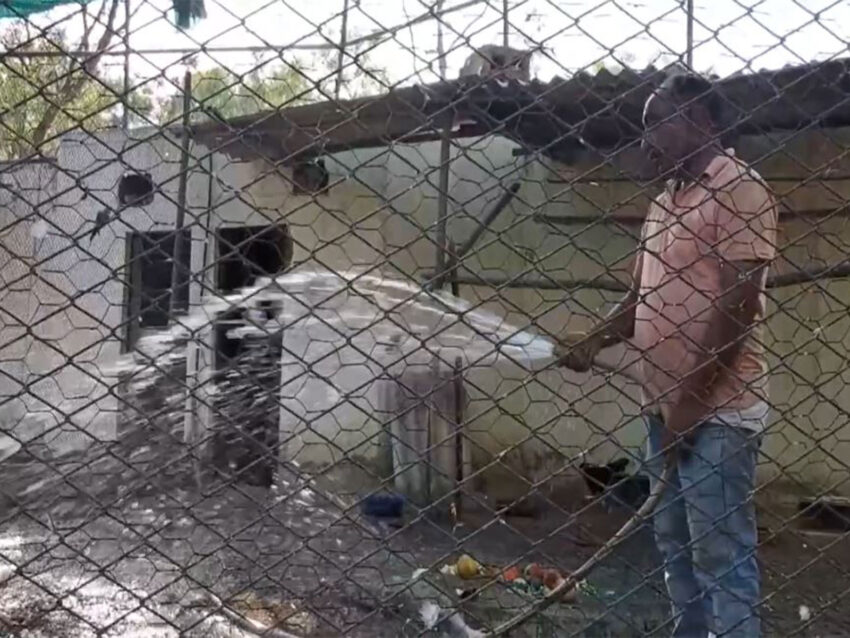

Bathinda (Punjab) [India], May 17 (ANI): As the India Meteorological Department (IMD) issued a five day yellow alert for heatwave conditions in Punjab and Haryana starting from Monday, special arrangements have been made at Bathinda Zoo to protect animals from the rising heat, an official said on Sunday.
Bathinda Animal Husbandry Department Assistant Director Dr Vijay Kumar said that advisories have been issued in view of the rising heat.
“Our department is responsible for the health services of the animals. We have issued advisories regarding the adverse effects of heatwaves. The Forest Department strictly follows all protocols, including quarantine procedures for new animals to acclimate them to the environment before integrating them into the general wards. The constant access to water and that feeding times are in the morning and evening to conserve energy during hot weather. Veterinary officers are stationed at the zoo to ensure the safety and timely treatment of sick wildlife,” Dr Kumar told ANI.
The IMD has forecast heatwave conditions over Punjab and Haryana during the period starting from May 18 to 22.
According to the department, mainly dry weather is likely to continue over Punjab, Haryana, and Chandigarh during the next 5-6 days.A gradual rise in maximum temperatures by about 4-5°C is expected during the next 5 days, leading to isolated heatwave conditions over southern and south-western parts of Punjab and Haryana.
Maximum temperatures over northern and eastern parts of Punjab, Haryana, including Chandigarh, are also likely to be above normal during this period.The highest maximum temperature observed over Punjab was 41.0°C at Bathinda, though temperatures across the state are currently below normal with departures in the range of -1.6 to -3.0°C. In Haryana, Rohtak recorded the highest at 40.8°C, with temperatures remaining normal.
Issuing advisory, IMD said the moderate temperatures are tolerable for the general public but pose a moderate health concern for vulnerable groups including infants, elderly, and people with chronic diseases.
It has also been advised that the public avoid prolonged exposure to the sun, especially during peak hours, stay hydrated, wear lightweight, light-coloured loose cotton clothes, and cover heads using cloth, hats, or umbrellas.
For agriculture, the IMD recommended applying irrigation in the evening or early morning hours to avoid heat stress in crops. (ANI)