

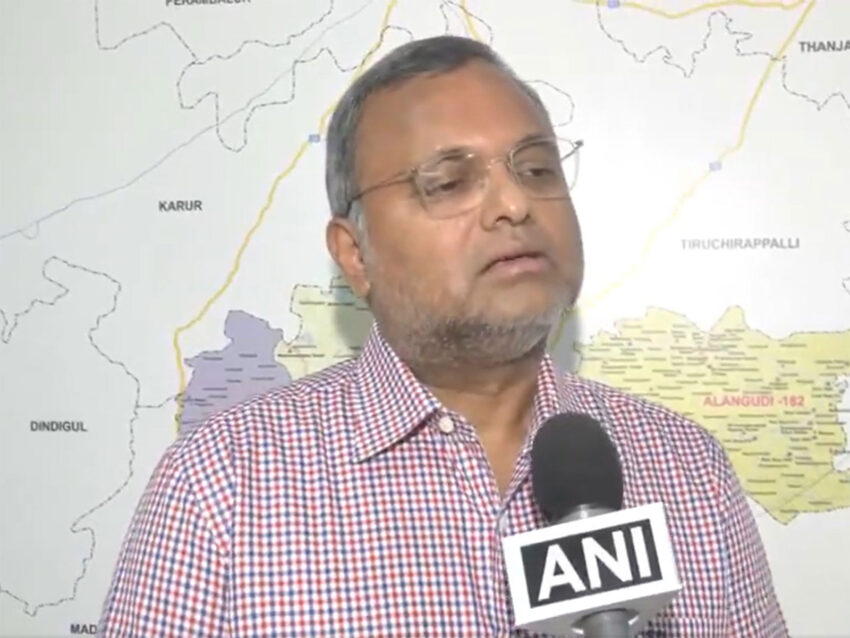
New Delhi [India], May 11 (ANI): Congress MP Karti P Chidambaram on Monday said that the government immediately convene Parliament to brief the nation over “seven appeals” made by the Prime Minister Narendra Modi to make India stronger and self-Reliant.
Calling this appeals “very serious directives” from the Prime Minister’s Office, Congress leader wrote on X, “What are the triggers for this? The Government must convene Parliament immediately & take the nation into confidence & inform us about the true state of affairs which has necessitated these ‘appeals’.”
He was responding to a post by MyGov on X that listed seven appeals from Prime Minister Narendra Modi “to strengthen India during challenging global times.”
The MyGov post, titled “Nation First Duty Above Comfort!”, mentions PM Modi’s appeal to citizens to prioritise work from home wherever possible, reduce fuel consumption, avoid foreign travel for a year, adopt Swadeshi products, cut down cooking oil usage, move towards natural farming and reduce unnecessary gold purchases.
“A collective spirit of responsibility can make India stronger and more self-reliant,” the post added.
India’s Parliament usually meets for three sessions each year: the Budget Session from January to May, the Monsoon Session from July to August, and the Winter Session from November to December. The 2026 Budget Session ended in late April and included a special sitting between April 16 and 18, 2026, to take up major bills such as a constitutional amendment to the law on reservation of seats for women in parliament and state assemblies- the Constitution (131st Amendment) Bill- which was defeated in Lok Sabha.
The Congress leader’s remarks come amid reports that Tehran has formulated a “14-point plan” intended to counter the US-supported “nine-point peace plan”.
According to media reports, the Iranian proposal outlines a three-stage roadmap, which includes a 30-day phase designed to transition a temporary ceasefire into a permanent end to hostilities. As part of the negotiations, Tehran has reportedly sought sanctions relief, the removal of restrictions on Iranian ports, the withdrawal of US troops from the region, and a halt to Israeli military operations in Lebanon.
Earlier on Sunday, Prime Minister Narendra Modi in Hyderabad redefined the modern meaning of patriotism and called on every Indian citizen to join a collective movement for economic resilience.
Speaking against a backdrop of global supply chain disruptions and rising costs fueled by international conflicts, the Prime Minister framed the current crisis not just as a government challenge, but as a test of national character.
“Patriotism is not only about the willingness to sacrifice one’s life on the border,” the Prime Minister remarked. “In these times, it is about living responsibly and fulfilling our duties to the nation in our daily lives.”
The Prime Minister’s speech served as a tactical manual for “economic self-defence,” urging citizens to change their consumption habits to protect the nation’s financial health.
To combat the volatility of fuel prices, PM Modi urged a shift in how India moves. He urged citizens to reduce petrol and diesel consumption by using the metro and public transport wherever available, opting for car-pooling when private vehicles are necessary, preferring railway transport for the movement of goods, and increasing the use of electric vehicles wherever possible.
Reflecting on the efficiency gained during COVID-19, the PM called for a revival of virtual infrastructure to reduce the national carbon footprint and energy bill. In one of the most direct appeals of his tenure, PM Modi asked citizens to act as “guardians of the Rupee” by being mindful of foreign exchange outflows.
He appealed to citizens to help conserve foreign exchange reserves by avoiding unnecessary foreign travel, overseas vacations and foreign weddings, while encouraging people to choose domestic tourism and conduct celebrations within India. He also requested people to avoid non-essential gold purchases for one year to reduce pressure on foreign exchange outflows.
The Prime Minister encouraged citizens to prioritise Made-in-India and locally manufactured products, including daily-use items such as shoes, bags, and accessories. He also asked families to reduce edible oil consumption, stating that it would benefit both national economic health and personal health.
Addressing the farming community, PM Modi championed a transition to natural farming. By urging a 50% cut in chemical usage, he positioned the Indian farmer as a front-line soldier in the fight for environmental sustainability and economic independence.
The Prime Minister concluded by emphasising that while global winds may be turbulent, India’s strength lies in the “micro-efforts” of its 1.4 billion people. The message was clear: the next chapter of India’s growth will be written not just in policy documents, but in the choices made at the petrol pump, the jewellery store, and the dinner table. (ANI)