

New Delhi [India], April 17 (ANI): India has set a target to scale up its nuclear power capacity from the current 8.8 gigawatt (GW) to 100 GW by 2047, implying an over ten-fold increase, Central Electricity Authority (CEA) Chairperson Ghanshyam Prasad said on Friday.
“A report was made on how do we really achieve 100 gigawatts of nuclear energy by 2047. Today, there is a capacity of 8.8 gigawatt. We have to increase it to 100 gigawatt. That means more than 10 times we are going to increase. It’s going to be a good pace at which it has to be developed,” Prasad said.
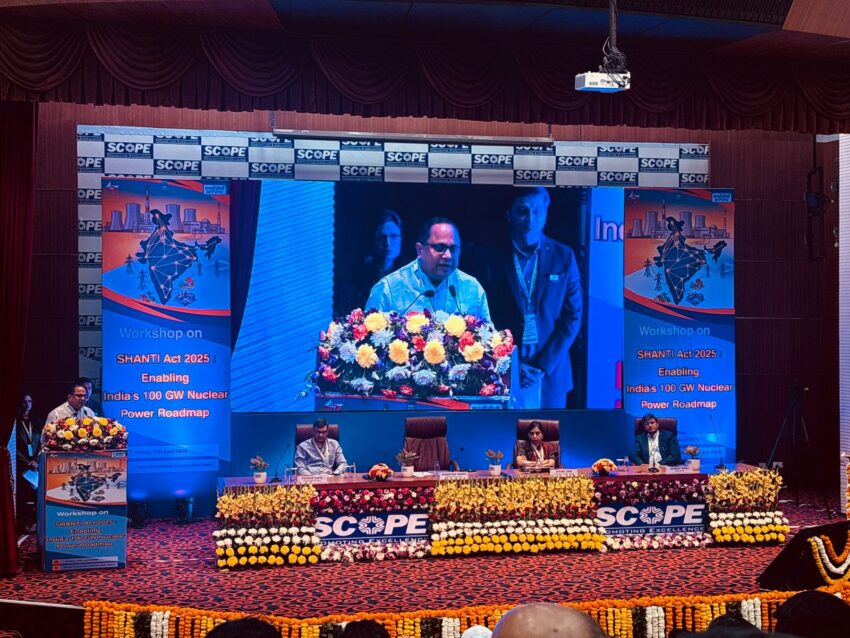
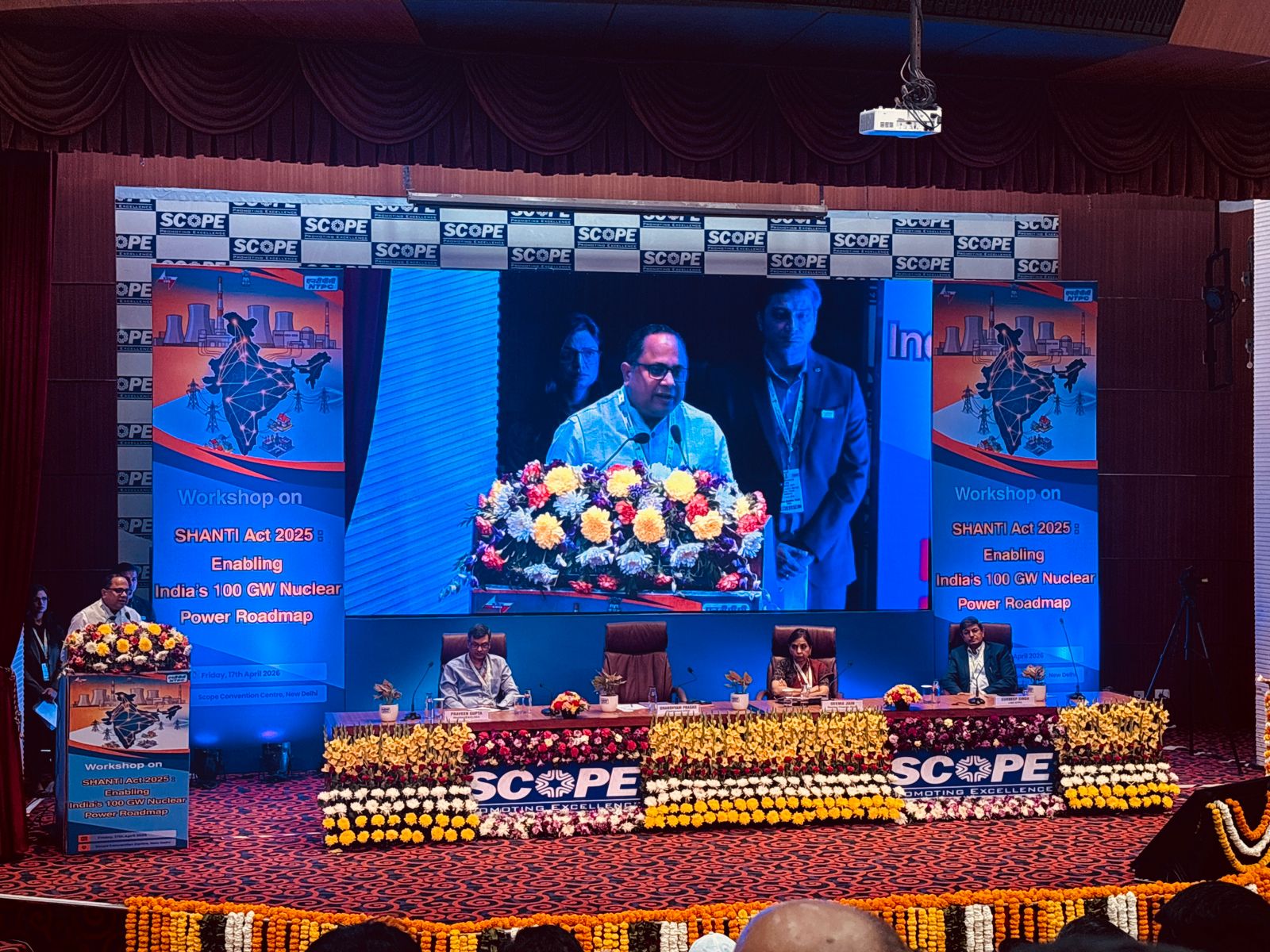
Prasad stated this on the sidelines of the Inaugural Session to Focus on India’s 100 GW Nuclear Power Roadmap held on the national capital.
He said that when the roadmap was prepared, several requirements were identified, including legislative changes, and added that further work is underway to operationalise the framework.
He said that when this roadmap was made, several things were envisioned with achieving 100 GW of energy at the core. The Shanti Act was one of them, and this has already been done.
“But after the Act, more things have to be done. The rules have to be made, the procedures have to be made, the guidelines have to be made. All these things are being made now,” he said.
Prasad said the ongoing deliberations are focused on incorporating stakeholder feedback and accelerating implementation.
“Today’s deliberation is based on that. How quickly we can forward the money. We have to take the views of the stakeholders. We have to take the suggestions. After the suggestions, all these things will be formed,” he said.
He added that efforts are also being made to simplify and standardise processes to reduce costs and improve execution.
“There are some procedures that we have to shorten. We have to standardize it so that the tariff is less. We have to talk about fuel security. We have to talk about site selection. We have to talk about human resources,” he said.
Highlighting the expected expansion in participation, the CEA Chairperson said the sector is likely to see multiple players going forward.
“Right now, only one company is doing it. Tomorrow, 10-12 companies will start doing it. The pace of development is going to be very fast,” he said, adding that relevant entities and other players may join as the programme progresses.
On grid resilience, Prasad highlighted the reliability of nuclear power. “Nuclear is a very stable power. When it starts working, it keeps working for years without stopping. The plants keep tripping. Normally, there shouldn’t be any problem. It’s one of the safest, I’ll say. And very, very stable. Very, very stable power,” he said.
He also pointed to emerging technologies as a key challenge, particularly Small Modular Reactors (SMRs).
“If we look at the challenges now, the whole world is talking about small modular reactors, whose technology is still being developed. So, definitely new technology is a challenge as of now,” he said, adding that such technologies could support cleaner energy solutions.
On future capacity addition, he clarified that the planned expansion will primarily come from new plants.
“We are talking about new nuclear plants only… All the existing ones will be there, the rest will be new,” he said.
Prasad further said that states are being encouraged to identify land for upcoming projects. “We are pursuing the states to identify the site, so that we can’t go there until they identify the land,” he said, adding that tariff decisions will be based on demand. (ANI)