

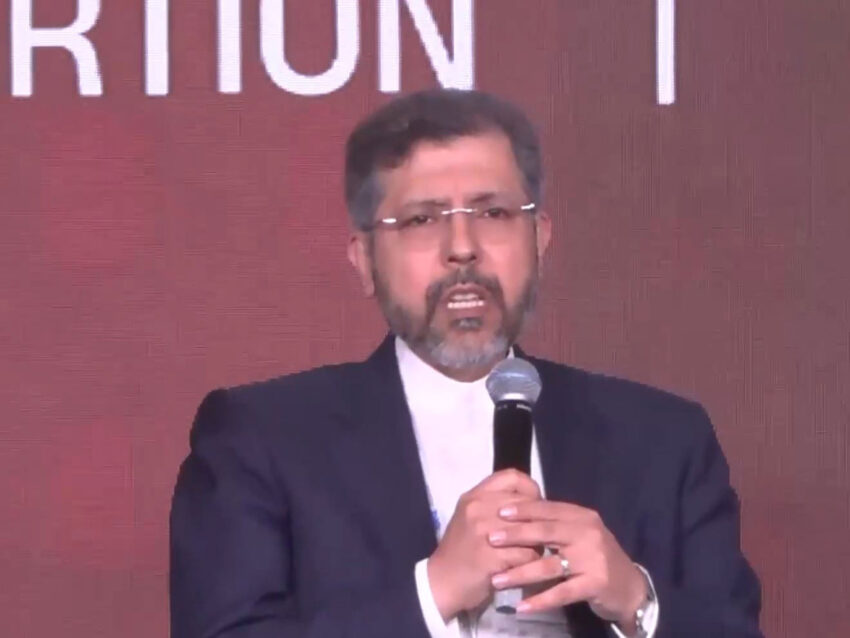
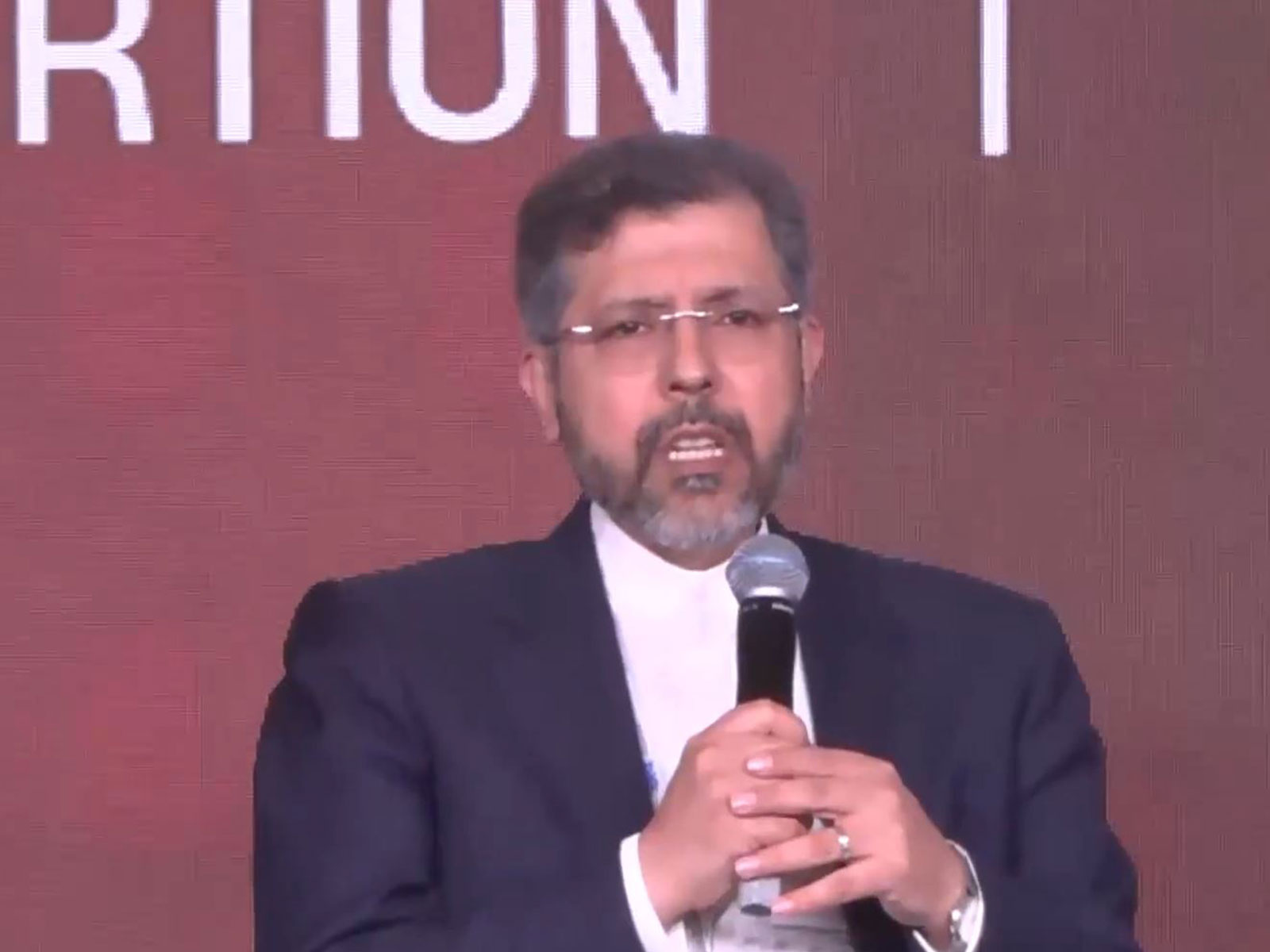
London [UK], April 9 (ANI): Iran’s Deputy Foreign Minister Saeed Khatibzadeh has signalled Tehran’s cautious readiness to proceed with peace negotiations, despite a night of intense military escalation. Speaking to ITV News, a British broadcasting television network, Khatibzadeh emphasised that recent Iranian military actions were a necessary response to ongoing provocations.
Reflecting on the immediate lead-up to the current truce, the Deputy Foreign Minister described the volatility of the situation. “Last night was a very critical night because we had no option but to respond to these new atrocities,” he stated, adding that subsequent diplomatic efforts mediated by Islamabad helped stabilise the situation.
“Then there were a few back and forth exchanges and a few messages through Pakistanis, and we hope that America could control its ally and this time honour their words, actually, and be committed to what we agreed,” Khatibzadeh remarked, placing the onus on Washington to restrain Israel.
Despite the fragile nature of the ceasefire, the Iranian official confirmed that plans for high-level talks remain on track. “So at this moment that I’m talking, I hope that we can proceed to go to Pakistan, and this is the programme and the agenda that we are working on,” he said, noting that the American side appeared to be moving in the same direction.
Looking ahead to the summit, Khatibzadeh expressed a desire for a comprehensive resolution. “As my understanding, the American side also is working on that, so we hope that we can meet soon in Pakistan to reach a settlement and agreement for permanent peace in the whole Middle East,” he told ITV News.
When questioned about Tehran’s commitment to Lebanon and whether further Israeli strikes would cause Iran to withdraw from the agreement, the Deputy Foreign Minister insisted that Iran stands by its diplomatic word. “Iran has shown to everybody that it hardly negotiates, but when it negotiates, it honours its words and tries to commit to what has been agreed upon,” he asserted.
However, he warned that lasting stability is impossible if certain regions are excluded or if the underlying causes of conflict are ignored. “And Iran is very much committed to what is happening in the whole Middle East. The root cause of all the problems in the Middle East for many decades has been this wreck and rogue behaviour of the Israeli regime,” Khatibzadeh claimed.
The Deputy Foreign Minister further argued that a selective peace would be unsustainable, stressing that all regional stakeholders must be considered. “And nobody can think of peace in the Middle East, lasting peace in the Middle East, unless there is an inclusive agreement for everyone involved,” he added.
Khatibzadeh reiterated that the inclusion of Lebanon is a collective obligation rather than a solitary demand from Tehran, stating, “So this is not just for Iran; it is the responsibility for everybody to make sure that Lebanon is included in any peace settlement that is going to happen.”
This insistence on Lebanese inclusion highlights the current friction, as Israel’s continued operation in Lebanon has threatened the temporary ceasefire, with Iran accusing the US-Israel side of violating the agreement.
Consequently, Tehran has threatened to leave the negotiations set to take place in Islamabad this weekend.
Iran’s Parliament Speaker Mohammad Bagher Ghalibaf, who will lead Tehran’s delegation for talks in Islamabad, has accused the Israeli side of violating three key clauses of the “10-point proposal” on which the temporary ceasefire was agreed.
The three clauses that Ghalibaf accused the US and Israel of breaching include the violation of the ceasefire in Lebanon, the violation of Iranian airspace, and the denial of Iran’s right to enrich uranium.
“The deep historical distrust we hold toward the United States stems from its repeated violations of all forms of commitments, a pattern that has regrettably been repeated once again,” Ghalibaf said in a statement.
Listing the violations, Ghalibaf cited non-compliance regarding the ceasefire in Lebanon, a commitment he noted Prime Minister Shehbaz Sharif explicitly declared as “an immediate ceasefire everywhere, including Lebanon and other regions, effective immediately.”
He also cited the “entry of an intruding drone into Iran airspace,” which was destroyed in the city of Lar in Fars Province, and the “denial of Iran’s right to enrichment,” included in the sixth clause of the framework.
Ghalibaf added that “bilateral ceasefire or negotiations are unreasonable” as the clauses have been violated before the talks began.
On the other hand, Israeli PM Benjamin Netanyahu has insisted that the ceasefire in Lebanon was not included in the temporary agreement.
“I insisted that the temporary ceasefire with Iran not include Hezbollah. And we continue to strike them forcefully,” Netanyahu said.
He further detailed recent military successes, stating, “Today, we dealt Hezbollah the greatest blow it has suffered since the pagers. We attacked 100 targets in 10 minutes, in places that Hezbollah was certain were immune.”
Netanyahu expressed determination to achieve Israel’s objectives through negotiation or by “resuming the fighting.” Israel’s primary objective is to prohibit Iran from enriching uranium, which Tel Aviv believes will be used to make a nuclear weapon.
“I want to make this clear, We still have goals to complete, and we will achieve them either by agreement or by resuming the fighting. We are prepared to return to combat at any moment required. Our finger is on the trigger,” he warned, noting the ceasefire is a “milestone on the path to achieving all goals.”
Despite these tensions, the diplomatic engagement between the US and Iran is still set to take place in Islamabad this weekend, where both sides are expected to hold direct talks aimed at ending weeks of intense hostilities.
The US delegation will be led by Vice President JD Vance, and the Iranian delegation will be led by Speaker Mohammad Bagher Ghalibaf. (ANI)