

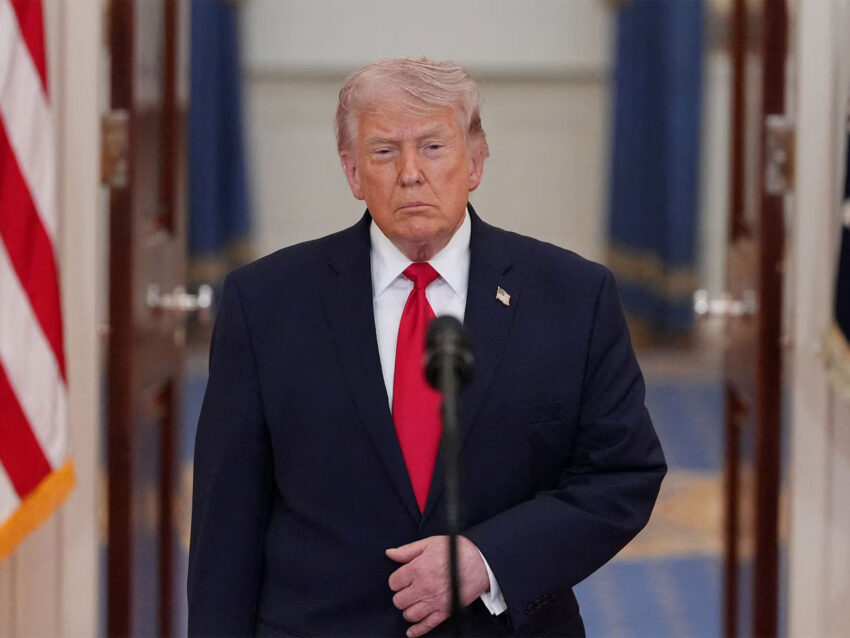

The United States has announced sweeping new trade measures targeting patented
pharmaceutical imports and metals, as President Donald Trump signed two significant
executive actions.
Under the new framework on Thursday, a 100% tariff will apply to patented drug imports
from countries, including India, that have neither signed a reshoring agreement with the
US Commerce Department nor a Most Favoured Nation (MFN) pricing deal with the
Department of Health and Human Services (HHS).
A senior White House official said the measure was designed to reduce America’s
dependence on foreign nations for essential medicines. The official further told ANI,
“100% tariff is on patented products. Any patented drug imports from India made by
companies that do not get approved for a reshoring plan will be subject to a 100% tariff.”
Generic medicines are currently exempt, though officials cautioned this could change if
the generics industry does not move production back to the United States swiftly enough.
“Generics, which are the majority of Indian pharma exports, are exempt from tariffs, but
the Commerce Department will evaluate the state of generics reshoring and re-evaluate
generics tariffs accordingly,” the official further told ANI.
The tariff comes into effect on July 31 for larger companies and September 29 for smaller
ones.
Five country groupings have been offered preferential rates. The European Union, Japan,
South Korea, and Switzerland will each face a 15% tariff. The United Kingdom, whose
major pharmaceutical companies, including GSK, have already signed reshoring and
MFN agreements, will face a lower rate of 10%, with the expectation that this could
eventually reach zero.
The administration also announced changes to how existing tariffs on steel, aluminium,
and copper are calculated, a revision that will have direct implications for Indian metal
exporters.
For products that contain these metals, the rules have been simplified. Goods where the
metal content accounts for less than 15% of the product’s weight will attract no separate
metals tariff, facing only the standard country-level duty. Where metal content exceeds
15% by weight, a flat 25% tariff will apply to the full product value, irrespective of the
precise metal composition.