

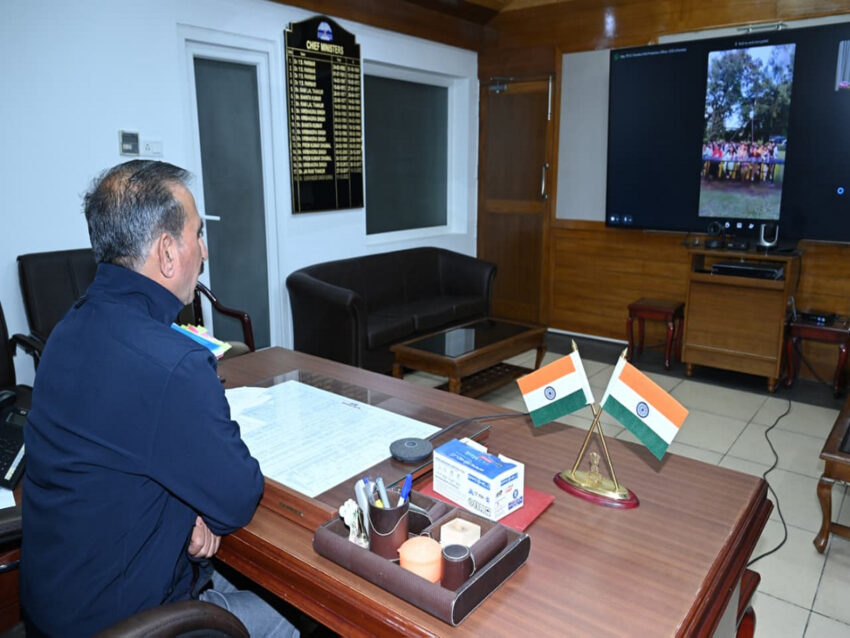
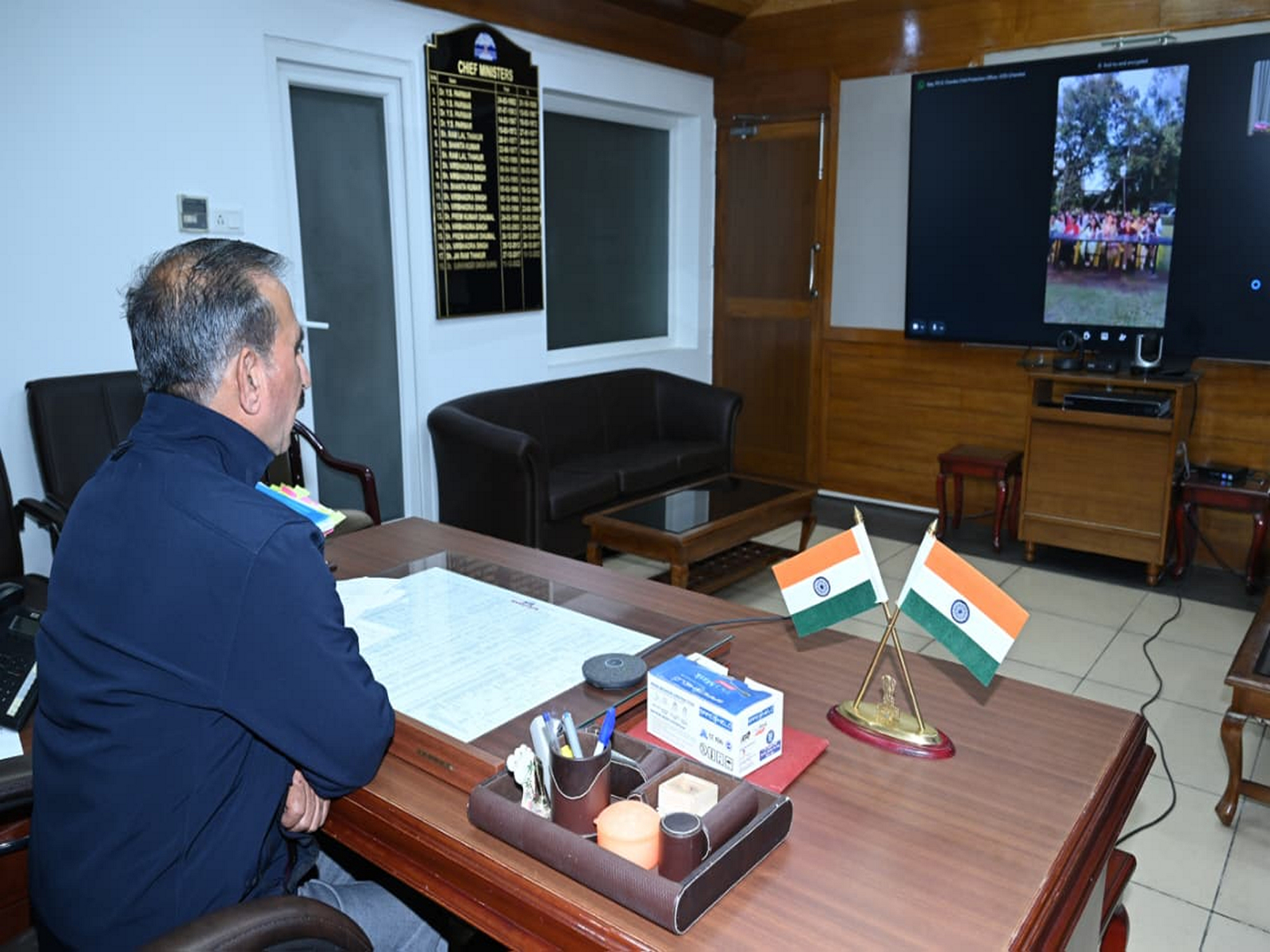
Shimla (Himachal Pradesh) [India], April 4 (ANI): Himachal Pradesh Chief Minister Thakur Sukhvinder Singh Sukhu on Friday interacted virtually from here with 35 ‘Children of the State’ from Chamba district, who are currently on an exposure visit to Daman and Diu.
The Chief Minister enquired about their experiences and asked what they had learned from the tour. He also enquired about the facilities being provided to them during the visit.
The children expressed their gratitude to the Chief Minister, saying that it was because of him that they got the opportunity to travel. They said, “Thank you, CM sir. We travelled to Daman by air and are really enjoying exploring the place. It feels good that the government has thought about us”.
The Chief Minister said that the Mukhyamantri Sukh Ashray Yojana has been started for orphaned children, as they have an equal right to the resources of the state. He said that under this scheme, the state government bears the cost of their education and coaching, and also provides financial assistance for their marriage and helps them become self-reliant.
These children belong to Child Care Institutions of Saho, Pangi, Chamba and Chilli (Tissa) in Chamba district and include 24 girls and 11 boys.
Their tour commenced on 31st March and will continue till 7th April. Their first halt was in Delhi, where their stay was arranged at Himachal Bhawan. Thereafter, they travelled by air to Surat and then proceeded to Daman.
Earlier, on Tuesday, students of JCB Government Senior Secondary School, New Shimla, called on Himachal Pradesh Assembly speaker Kuldeep Singh Pathania and interacted with him on subjects related to the parliamentary system and the functioning of the Assembly.
During the interaction held at the Himachal Pradesh Vidhan Sabha Secretariat in the forenoon, the students sought information about the parliamentary system, the structure of the Assembly, and the process of electing the Speaker, to which the Speaker responded in detail.
Addressing the students, Pathania said that India’s parliamentary system is based on a federal structure comprising the Centre and the states. He noted that the country follows a multi-party system in which political parties field their candidates in elections, and the people elect them through voting. (ANI)