



The current tensions involving the United States, Israel, and Iran have escalated beyond a regional dispute. What we are witnessing is a dangerous buildup that could draw multiple global powers into a broader conflict. At its core, this is no longer just about strategy or influence; it is about preventing further loss of human life and restoring a sense of balance in an increasingly polarised world.
A Conflict at the Edge
The situation has reached a point where further escalation offers little strategic benefit but causes large human and economic damage. Long-lasting hostilities have stretched military resources, disrupted global energy markets, and increased insecurity throughout the Middle East/West Asia The involvement, directly or indirectly, of other major players like Russia and China adds another layer of complexity.
If left unchecked, the alignment of the United States and Israel as a dominant military bloc risks being seen as an axis of power. This perception alone could lead to counter-alignments, drawing more nations into a conflict that no one can fully control.
ADVERTISEMENT
The Humanitarian Imperative
Beyond geopolitics, the most urgent concern is humanitarian. Civilians continue to bear the brunt of the conflict. Families are displaced, infrastructure is damaged, and a generation grows up under the shadow of violence. Reports of the militarization of youth and prolonged psychological stress highlight the long-term damage already in progress.
This cycle of retaliation must stop. Persisting on this path only widens divisions and makes peace more difficult to attain each day.
India’s Historical Responsibility
Since independence, India has consistently positioned itself as a voice for those affected by expansionism, coercion, and isolationist policies that lead to widespread suffering. It has championed sovereignty, non-alignment, and the protection of civilian lives, especially in regions where conflicts have disproportionately impacted women and children.
This legacy is not symbolic. It provides the moral foundation for India to speak clearly at a time when narratives are increasingly influenced by power rather than principle. The current crisis requires that such a voice be heard again.
Questioning Dominant Narratives
A crucial aspect often overlooked is how conflicts are framed. The justification of military action through the loss of service personnel, while real and tragic, cannot become a blanket rationale for sustained violence that extends far beyond battlefields.
History shows that such narratives can sometimes obscure deeper strategic motives. In the current context, it is difficult to overlook the role of energy security, especially control over petroleum resources, as a crucial factor. The Middle East remains vital to global energy needs, and competition for these resources continues to shape geopolitical decisions.
Focusing solely on security issues risks hiding these underlying interests and making real resolution more difficult.
India’s Independent Voice
India’s initiative in seeking de-escalation must be understood on its own terms. It is not, and should not be perceived as, a response to the role of any intermediary, including Pakistan, acting as a facilitator between conflicting parties. Nor is it driven by any fear of being left out of diplomatic processes.
India’s position derives from its identity as a democratic nation with global responsibilities. It has both the capacity and obligation to act independently, guided by its principles and long-term interests. By taking the lead, India is not just asserting its presence but also fulfilling its role as a voice for stability, for its own people, and for those across regions who depend on it to voice concerns that might otherwise go unheard.
Why India Must Step Forward
India is uniquely positioned to serve as a credible and balanced mediator. As the world’s largest democracy, it holds both moral authority and diplomatic influence. Its long-standing relationships with the United States, Iran, Israel, and the Gulf nations provide it with access that few other countries have.
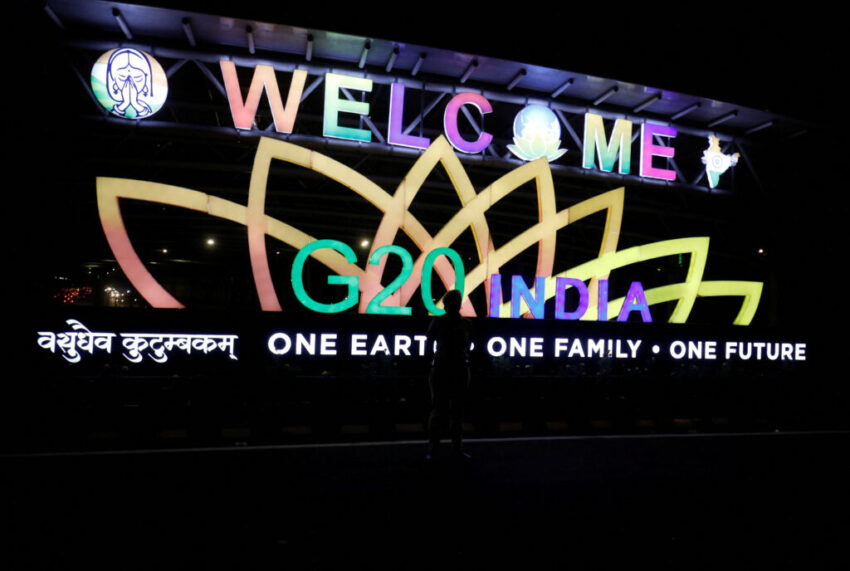
India’s leadership in global forums such as BRICS and the G20 further enhances its ability to bring together diverse stakeholders. Simultaneously, its role as a prominent voice of the Global South enables it to advocate for peace without appearing aligned with any specific bloc.