

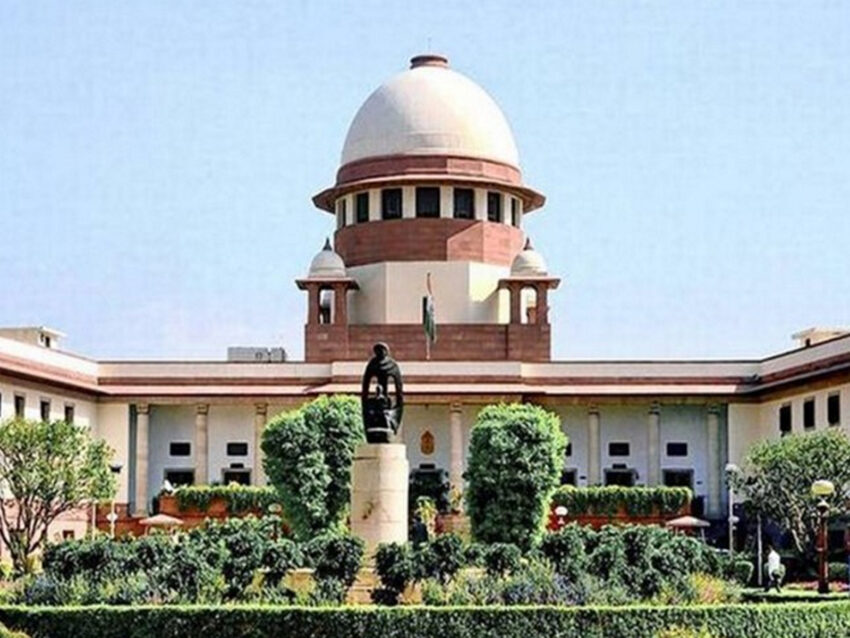

New Delhi [India], April 2 (ANI): The Supreme Court on Thursday cancelled the bail it had earlier granted to the promoter of Bhasin Infotech and Infrastructure Private Limited (BIIPL), Satinder Singh Bhasin, in the case pertaining to alleged non-delivery of units and funds syphoning linked to the “Grand Venice” project in Greater Noida.
A bench of Justices Sanjay Karol and N Kotiswar Singh reasoned that Bhasin had not complied with the conditions it imposed on him while granting him bail earlier in November 2019. Thus, it cancelled his bail and gave him one week to surrender to authorities.
Accordingly, the conduct of the petitioner, as emerging at this stage, is not fully consistent with the obligations attached to the grant of bail.
“The cumulative result of the above discussion is that the petitioner has not complied with the conditions of bail imposed upon him vide order dated November 6, 2019. Resultantly, the bail granted to the petitioner is cancelled. The petitioner is to surrender within one week from the date of this judgment. Needless to add that any observations made hereinabove are only for the purposes of cancellation of bail”, the Court noted.
The case against Bhasin stems from complaints by investors in the “Grand Venice” project in Greater Noida, who alleged that despite paying substantial amounts, they were neither given possession of units nor refunds.
It was further alleged that funds collected for the project were siphoned off and diverted, leaving the project incomplete and causing significant financial loss to buyers. Several FIRs were registered at different points concerning allegations of cheating, criminal breach of trust and diversion of funds in relation to the project and associated entities, including Bhasin Infotech and Infrastructure Private Limited (BIIPL).
The Court noted that the concession of bail was granted to Bhasin after taking note of an ongoing resolution process and the assurances made on behalf of Bhasin with respect to the project and the interests of the investors, including an expectation that steps would be taken to address stakeholders’ concerns.
However, the Court found that the subsequent conduct did not align with those assurances. It noted that despite the opportunity granted, there has been no meaningful progress in securing the interests of the investors and that the continuance of bail on that premise was no longer justified.
The Court in its judgement also noted that insolvency proceedings had already been initiated against the petitioner’s companies under the Insolvency and Bankruptcy Code after the investors filed a case in 2021 due to failure to complete construction and hand over units.
The NCLT admitted the case in December 2023 and appointed an Interim Resolution Professional (IRP), placing the companies under a moratorium. Although the petitioner challenged this, at the appellate tribunal (NCLAT), the Supreme Court later upheld the insolvency proceedings. This meant control of the companies should have shifted fully to the IRP.
However, the Court found that during the moratorium period, Bhasin’s companies carried out questionable financial transactions, including transferring Rs 74 crore to entities linked to close associates.
It noted that Bhasin failed to provide convincing explanations or supporting documents for these transfers. The Court observed that such conduct appeared improper and did not reflect good faith, especially given the restrictions imposed during insolvency proceedings.
“While the legality and nature of these transactions would be examined in appropriate proceedings, for the present purpose, it is sufficient to note that the transfer of Rs 74 Crores to the entities in question is an admitted position. These entities are prima facie shown to be controlled by persons closely related to the petitioner. The explanation offered that the said transfers were made as ‘commercial advances’ or towards ‘repayment of dues’ remains unsatisfactory. The absence of supporting material makes us wonder about the manner in which the affairs of the corporate debtor were managed. Accordingly, the conduct of the petitioner, as emerging at this stage, is not fully consistent with the obligations attached to the grant of bail”, the Court noted.
The Court also noted that it had earlier considered efforts to settle the dispute and protect investors. It suggested that the petitioner should infuse funds, complete the project, clear dues and hand over possession. But it noted that Bhasin offered only Rs 5 crore, which the IRP said was far too little compared to claims exceeding Rs 1400 crore from around 670 creditors.
As a result, no meaningful settlement could be reached, the Court observed.
Thus, the Court held that Bhasin did not comply with the conditions of bail and acted inconsistently with his obligations. Therefore, it cancelled his bail and directed him to surrender within one week. (ANI)