

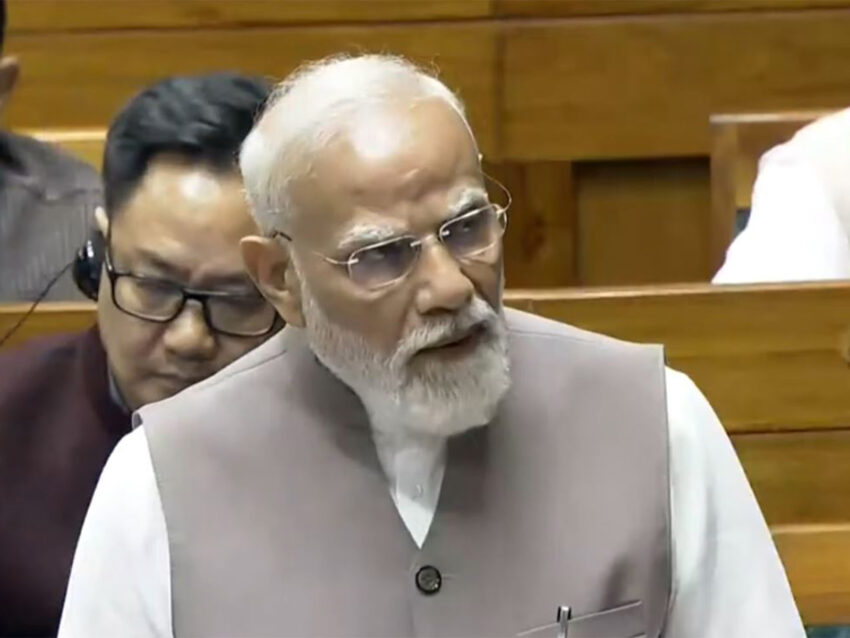
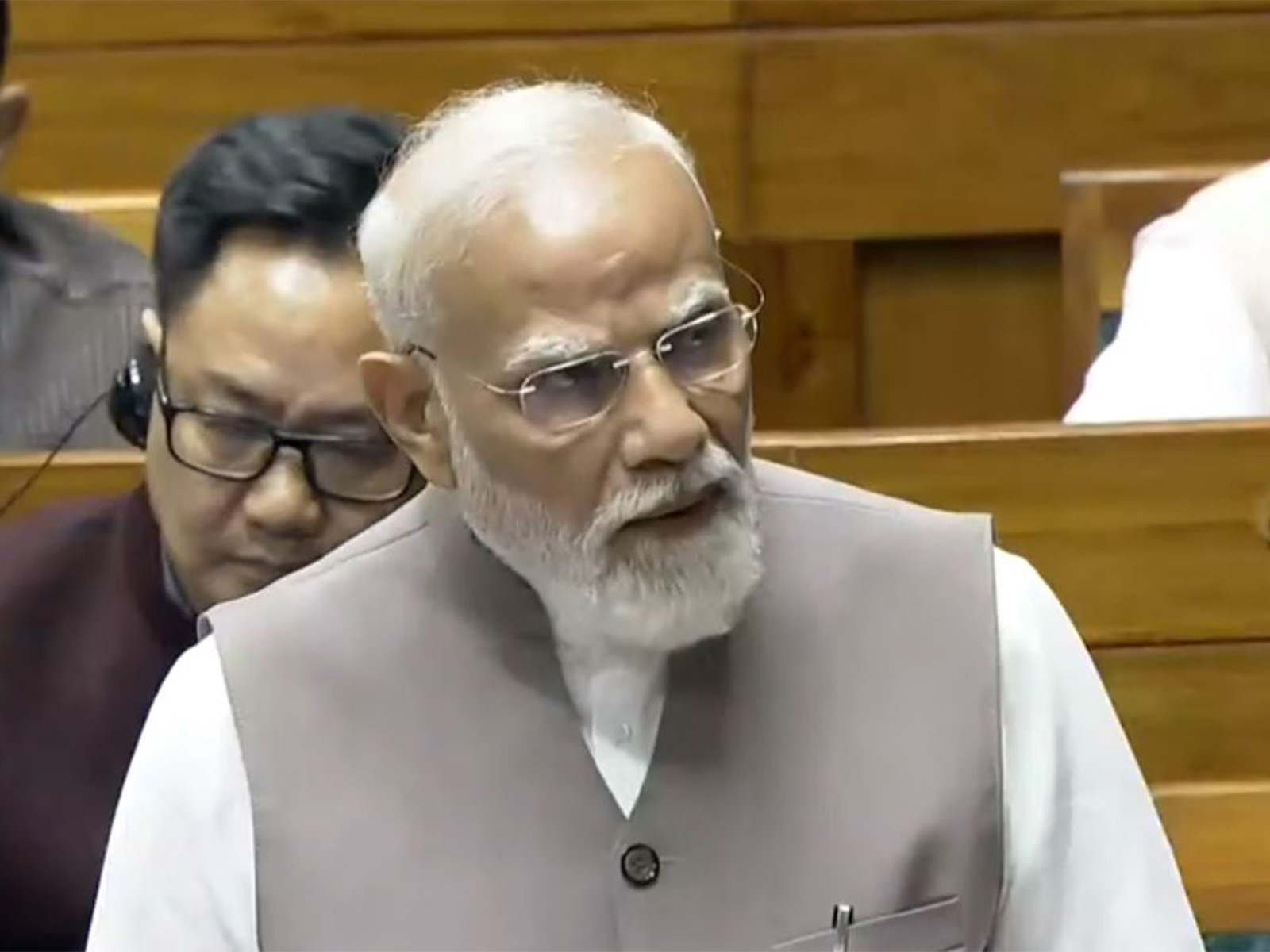
New Delhi [India], March 23 (ANI): Prime Minister Narendra Modi on Monday highlighted that the situation in West Asia amid the ongoing US-Israel-Iran conflict was “worrisome” and had a severe impact on the global economy and people’s lives.
As India witnesses challenges with the ongoing conflict entering its fourth week, PM Modi addressed the Lok Sabha and stated that these challenges were related to national security. He highlighted that “unprecedented challenges” due to the conflict were humanitarian as well.
“The situation in West Asia is worrisome. This conflict has been going on for more than three weeks. It has a severe impact on the global economy and the lives of the people, and that is why the world is urging all sides for an early resolution to this conflict,” PM Modi said.
The Prime Minister informed of India’s trade relations with countries in the West Asian region that were witnessing war, stating that a large part of the country’s need for crude oil and gas was met by the war-affected region. He informed that the region also remains crucial as it provides a route for India’s trade with other countries as well.
“This war has also posed unprecedented challenges for India. These challenges are economic, related to national security, and humanitarian as well. India has extensive trade relations with the warring and war-affected countries. The region where this war is taking place is also an important route for our trade with other countries of the world. In particular, a large part of our needs for crude oil and gas is met by this very region,” he added.
Highlighting that at least one crore Indian nationals reside in the Gulf countries, PM Modi said that India’s concern over the ongoing war between US-Israel and Iran was “naturally greater”. He emphasised the need for a unified voice regarding the conflict.
“Nearly 1 crore Indians live and work in the Gulf countries. Commercial ships operate there. The number of Indian crew members is also very high. Due to these various reasons, India’s concerns are naturally greater. Therefore, it is essential that a unified voice and consensus reach the world regarding this crisis from the Parliament,” the PM said.
He further said that all Indian nationals stranded in the conflict-ridden countries were being provided assistance by the government. The PM informed that help was being given to families of those who have died during the conflict.
“Since this war began, every Indian in the affected countries has been provided assistance. I have spoken over the phone with the heads of state of most West Asian countries for two rounds. All have assured the safety of Indians. During the conflict, some people have lost their lives, and some have been injured. We are helping their families,” PM Modi said, adding that the Indian government was involved in helping citizens, including tourists.
“The Indian government has been issuing advisories amid the ongoing conflict, with outreach rooms and emergency helplines being operational 24 x 7,” the PM said.
He further stated that over 3.75 lakh Indian nationals have returned safely to the country, with at least 1,000 of them having been escorted from Iran.
“Since the war began, more than 3,75,000 Indians have returned safely to India. From Iran, nearly 1,000 Indians have returned safely so far, of whom over 700 are medical students. In view of the situation, CBSE has cancelled Class 10 and 12 exams in the schools in Gulf countries and is taking necessary steps to ensure students’ education continues without disruption,” the PM said.
He acknowledged that the challenge to the movement of cargo ships through the Strait of Hormuz was one of the effects of the ongoing conflict, informing about the efforts made by the Indian government to ensure that petrol, diesel, and gas supplies were not impacted.
“A large quantity of crude oil, gas, fertilisers and many essential items comes to India through the Strait of Hormuz route. Since the war began, the movement of ships through the Strait of Hormuz has become very challenging. Despite this, our government has made efforts to ensure that the supply of petrol, diesel, and gas is not severely impacted,” PM Modi said.
The PM said that the government has prioritised domestic LPG consumers amid the uncertainty in supply.
“As we all know, the country imports 60 per cent of its LPG requirement. Due to uncertainty in supply, the government has prioritised domestic LPG consumers. At the same time, domestic production of LPG is also being increased. Continuous efforts have also been made to ensure that the supply of petrol and diesel across the country remains smooth. LPG production in the country is also being increased,” he added.
The PM informed about the steps taken by the government in the last 11 years to prioritise the storage of crude oil for times of such crises. He said that India has strategic petroleum reserves of more than 5.3 million metric tons.
“India has strategic petroleum reserves of more than 5.3 million metric tons, and the country is working on arrangements for reserves of more than 6.5 million metric tons. In the past 11 years, there has also been a notable increase in our refinery capacity. The government is also in constant contact with suppliers from different countries. First, we used to import from 27 countries; now we do from 41 nations,” PM Modi said.
“The difficult conditions created in the world by this war are likely to have lasting effects for a long time, so we must be prepared and remain united. We have faced such challenges with unity during the COVID period, and now we need to be prepared again,” he added. (ANI)