

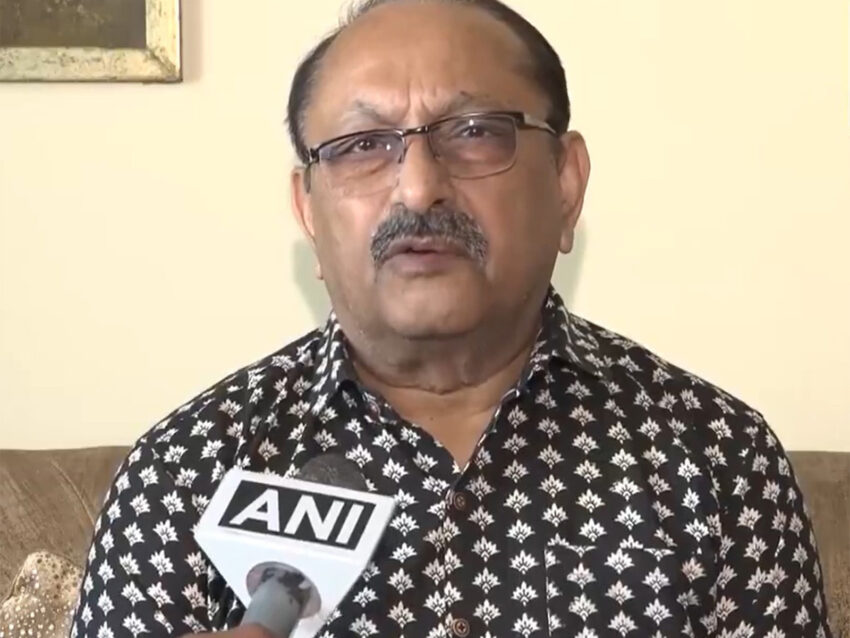

Mumbai (Maharashtra) [India], March 22 (ANI): Federation of Indian Pilots (FIP) President Captain Charanvir Singh Randhawa on Sunday expressed concerns over the Ministry of Civil Aviation’s decision to lift the airfare cap on domestic flights, stating that it could lead to a significant rise in ticket prices and impact common passengers.
He said that removing the fare cap would particularly affect passengers during peak travel seasons, as airlines may increase prices sharply.
“The removal of the capping of the fares will directly affect the passengers… Once the capping is removed, during the peak seasons, the fares increase exponentially, and that affects the common man… It is against the policy of ‘Aam Aadmi Udaan Bhare’… so the government policy has to ensure that common people can afford air travel and encourage them to travel by air,” he said.
Randhawa further stated that instead of removing the cap, the government should focus on making air travel more accessible and affordable for ordinary citizens.
“The government should encourage air travel by ordinary citizens… On the contrary, lifting the cap gives an open opportunity to the airlines… At present, there are only two airlines in the country, Air India and Indigo… Once it is lifted, they will charge any fare… the government should refrain from removing this capping,” he said.
He also pointed out a contradiction in recent government measures, referring to the announcement regarding fare relief on a section of seats.
“Just two days back, they announced 60 per cent price of seat will not be charged… at that time I had also said that, on the contrary, the government has not given any decision on the fares, and within two days they have lifted the cap, so the 60 per cent non-payment of seat fare is absolutely inconclusive,” he said.
Highlighting the inconsistency in policy decisions, he added that while one move aims to reduce costs, removing the cap could negate its benefits.
“It is not understood that on one side you are reducing the fares by seat charges, on the other hand, you have given an open hand with no capping, so it is contradictory. There is a need to cap the fare during peak season and avoid financial burden on passengers,” he added.
Randhawa urged the government to reconsider the decision and ensure that airfare remains affordable, especially during high-demand periods.
The Ministry of Civil Aviation has decided to withdraw the temporary fare caps on domestic airfares starting Monday (March 23). The decision marks the end of a price-control regime that the government initiated several months ago to manage volatility in the aviation market.
The Ministry confirmed the development through an official order, noting that the restrictions on ticket pricing are no longer required under the current operating environment.
“Whereas, vide letter dated 6th December 2025, the Ministry had introduced a temporary fare cap on domestic airfares with a view to contain abnormal surge in ticket prices arising out of large-scale flight disruptions of IndiGo, and with an objective to safeguard passenger interests and ensuring affordability during a period of constrained capacity,” the Ministry of Civil Aviation stated.
In the official communication, the Ministry observed that the “prevailing situation has since stabilised, with restoration of capacity and normalisation of operations across the sector.” Based on this assessment, the government determined that the fare cap imposed in December “shall stand withdrawn with effect from 23rd March, 2026.” This move allows airlines to once again determine ticket prices based on market demand and supply dynamics.
Despite the deregulation, the Ministry issued a clear directive to carriers regarding their pricing strategies. “While withdrawing the fare cap, it is reiterated that airlines are required to exercise pricing discipline and act responsibly. Airlines shall ensure that fares remain reasonable, transparent and commensurate with market conditions, and that passenger interests are not adversely impacted,” it said. (ANI)