

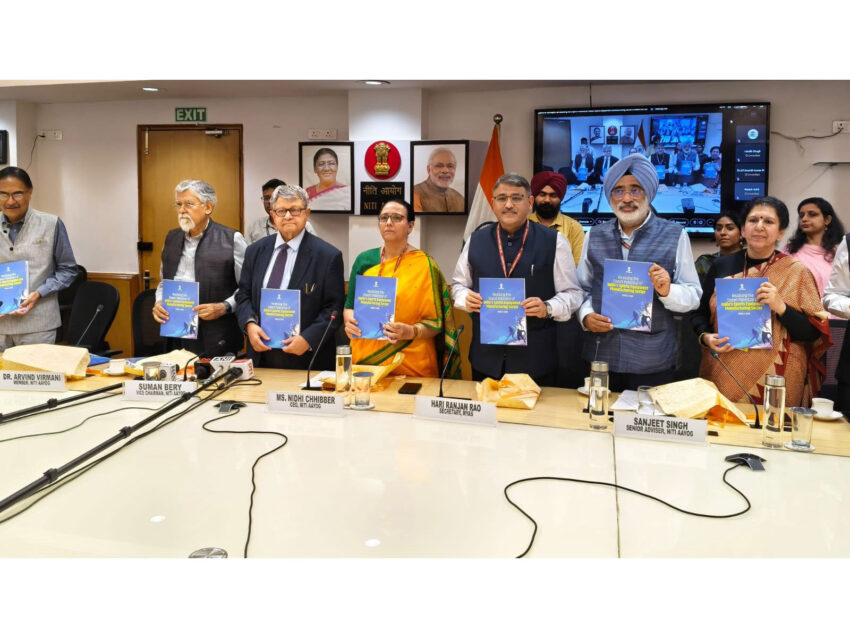

New Delhi [India], March 19 (ANI): India has a significant opportunity to emerge as a global hub for sports equipment manufacturing, but structural challenges continue to limit its export potential, noted a report of NITI Aayog released on Thursday.
The report highlights that the global sports equipment market, currently valued at around USD 140 billion, is expected to expand to nearly USD 300 billion by 2036. Despite this growth, India’s share in global exports remains modest at approximately 0.5 per cent, indicating substantial untapped potential. In 2024, India exported sports equipment worth about USD 275 million, largely concentrated in categories such as cricket gear, inflatable balls, and fitness equipment.
India’s manufacturing ecosystem is primarily driven by micro, small and medium enterprises (MSMEs), with key clusters located in Jalandhar and Meerut. While these clusters have developed strong artisanal capabilities over time, the sector remains fragmented and constrained by limited scale, low technology adoption, and inadequate global integration.
The report identifies a USD 8.1 billion export opportunity for India in sports equipment by 2036, which could generate nearly 54 lakh jobs. However, achieving this target would require addressing both supply-side and demand-side constraints.
On the supply side, high raw material costs, expensive land, and inefficient logistics significantly increase production costs. Indian manufacturers also face challenges due to limited access to advanced machinery, high certification costs, and gaps in testing infrastructure. These factors result in a cost disadvantage of around 10-20 percent compared to competitors such as China and Pakistan.
Demand-side issues further constrain growth. The report notes weak global brand visibility, limited partnerships with international sports brands, and insufficient athlete endorsements for Indian-made products. Additionally, trade barriers and lack of targeted provisions in free trade agreements restrict market access.
The report also underscores the importance of leveraging upcoming global sporting events, including the Olympics and Commonwealth Games, as a demand catalyst. India’s ambition to host the 2036 Olympics presents an opportunity to boost domestic manufacturing and integrate into global supply chains.
To unlock the sector’s potential, the report recommends a multi-pronged strategy. Key measures include rationalising import duties on raw materials, investing in shared testing and certification infrastructure, and promoting cluster-based manufacturing. It also calls for targeted fiscal support, estimated at around Rs 2,000 crore, to enhance competitiveness in the medium term.
In the long term, the report suggests developing new manufacturing clusters near ports, strengthening domestic raw material ecosystems, and building a unified ‘Brand India’ strategy to enhance global visibility. Collaboration between government, industry, and sports institutions will be critical to drive these reforms.
Overall, the report concludes that with coordinated policy action and sustained investment, India can transform its sports equipment sector into a major export engine, contributing to job creation and strengthening its position in global manufacturing value chains. (ANI)