

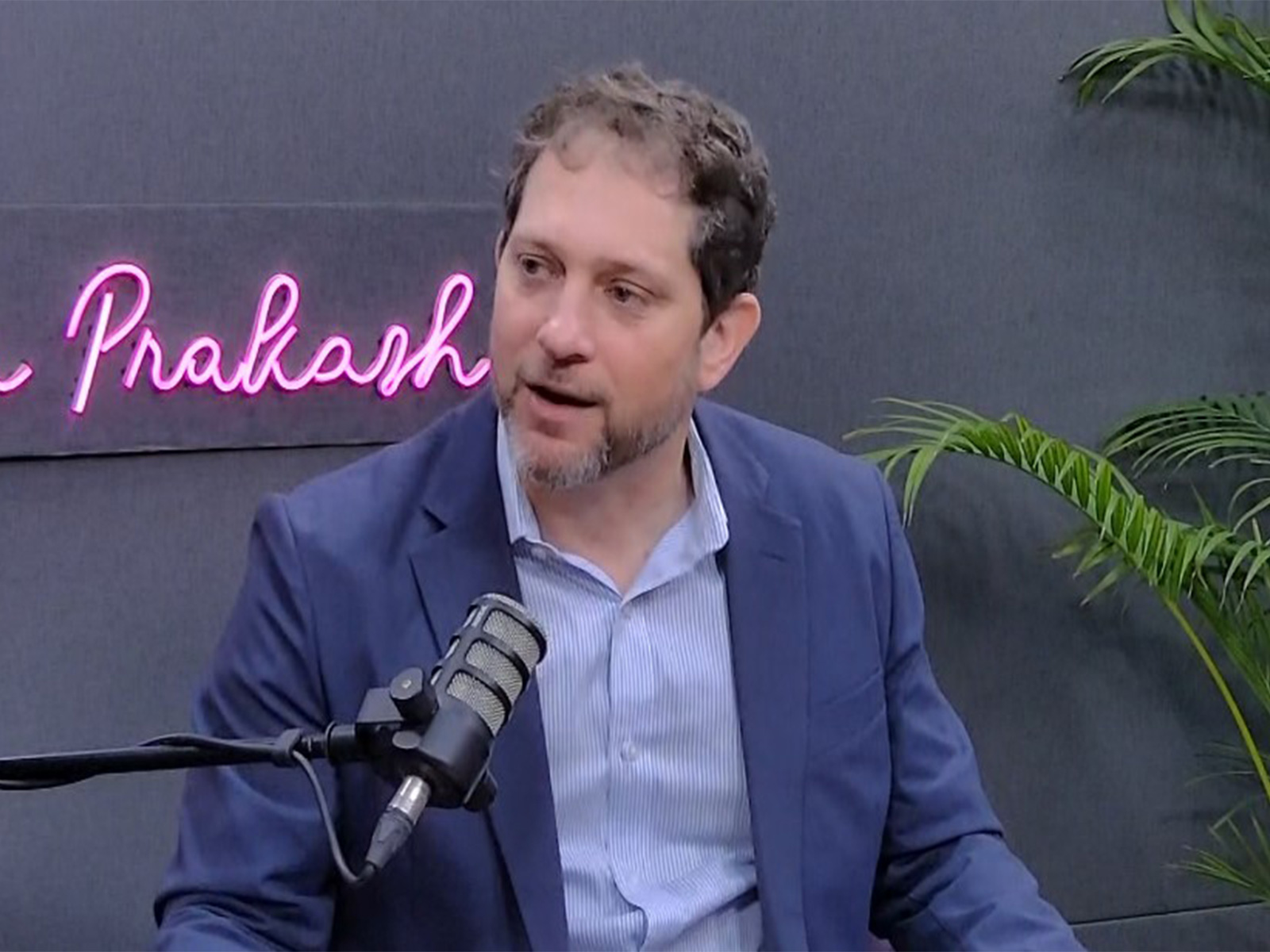
New Delhi [India], March 5 (ANI): Former US Principal Deputy National Security Adviser Jon Finer believes achieving a clear victory for the United States in the ongoing conflict involving Iran will be difficult, noting that the situation has already advanced to a stage where outcomes are increasingly uncertain.
In an interview with ANI, Finer stated, “I think a win at this point is going to be pretty elusive.” Reflecting on how the conflict has evolved, he suggested that the United States may have had a clearer operational success earlier in the campaign, but that opportunity has gradually diminished as the war has expanded.
Finer said that Washington might have been able to claim a limited success if the military action had been contained early on. “There may have been a win of sorts available to the president had he stopped very quickly after the initial salvos. He’s losing that ability by the day here on the Iran war,” he said.
He also questioned the shifting justifications offered for the military action against Iran. According to Finer, several explanations have been put forward by US officials, making it difficult to identify the central rationale behind the operation.
“This is yet another explanation for why we have entered into this war. I think that was either the third or the fourth, depending on how you count,” he said while referring to arguments ranging from Iran’s missile capabilities to broader concerns about the country’s military programmes.
Discussing the possibility of regime change in Iran, Finer said historical precedent does not support the idea that such outcomes can be achieved solely through air power. “I can’t point to a successful example of regime change by air,” he said, adding that even operations involving ground forces have often produced unstable outcomes.
Citing past conflicts, he said the history of regime-change efforts has largely been unsuccessful. “Even with boots on the ground, the regime change history is rightly pretty infamous and unsuccessful for the most part, with Iraq in 2003 being the primary example,” Finer noted.
Finer also warned that once a conflict reaches a certain stage, leaders can fall into what he described as the “sunk cost fallacy.”
“You start to feel what I guess I would call the sunk cost fallacy. We have already done a lot now. And to do a lot and fail feels like an unacceptable outcome. So then you decide, OK, we need to do more and more and more,” he said.
According to him, such thinking could lead to further escalation, including attempts to arm factions within or near Iran. However, he cautioned that these strategies could increase instability.
“That would only escalate the situation with no guarantee that that wouldn’t just lead to a state failure, civil war, or even more violence without success,” he added.
Finer also highlighted the challenges of sustaining prolonged military operations, particularly when advanced interceptor systems are required to counter relatively inexpensive drones and missiles.
He explained that conflicts of this nature often become a matter of “missile math,” involving calculations about the availability of munitions on both sides. “You get into this calculus of missile math, how many interceptors the United States and our allies have,” he said.
The former US official further noted that Iran’s strategic objective in the conflict may simply be survival rather than outright victory.
“Iran’s goal at this point, its strategic objective, is simply to survive the onslaught. If they do and the regime remains to any extent intact, they will claim this as a massive victory,” he said.
Finer added that the political dynamics in the United States could also shape how long the conflict continues. Public support for the war remains uncertain, and he suggested that the sustainability of the campaign may depend on both domestic political calculations and military constraints.
He also said that prolonged instability could encourage more countries to reconsider their security strategies, including the possibility of pursuing nuclear capabilities.
“Sometime over the next five or ten years, you are likely to see the emergence of new nuclear powers because of these dynamics,” Finer said. (ANI)