

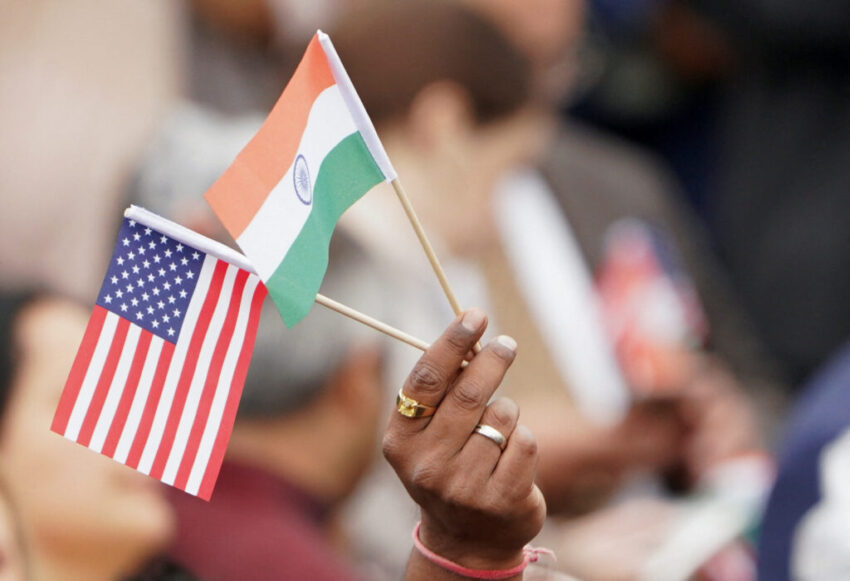

One year into President Donald Trump’s second term, Indian Americans are confronting a convergence of cross-pressures that has recast their position in America’s social and political landscape, a new survey released February 19, 2026, by the Carnegie Endowment says.
Till recently, this cohort of some 5.2 million people of Indian origin, which was the highest earning demographic, with rising political status, and expanding social influence, is now facing antagonism from segments of the general population. Community members have even faced the popular racist trope to “go back home”, with commentators observing a notable rise in online hate speech and discrimination against Indian Americans.
In addition, some of President Trump’s actions had roiled U.S.-India relations bringing into question the once “defining partnership of the twenty-first century,” the study authors point out.
All this despite the fact that there was a “meaningful increase” in the Indian diaspora’s support for Trump in the 2024 presidential election, the Carnegie report notes, though not enough to overturn the community’s long-standing embrace of the Democratic Party.
ADVERTISEMENT

Authors of the report say that “at a moment of unusual political flux” it was a challenge to understand how Indian Americans are navigating the changes that include debates over identity and belonging in the United States.
To address this challenge, the authors conducted the 2026 Indian American Attitudes Survey (IAAS) in partnership with the research firm YouGov. The IAAS is a nationally representative online survey of 1,000 Indian American adults, conducted between November 25, 2025, and January 6, 2026, with an overall margin of error of ±3.6 percent.
The survey builds on earlier IAAS waves conducted in 2020 and 2024 and “provides a systematic portrait of Indian Americans’ partisan identities, vote preferences, policy priorities, evaluations of political leaders, and experiences with discrimination,” the authors say.
They summarize their principal findings below:
- Indian Americans offer a largely negative assessment of Trump’s second term. One year into Trump’s second term, large majorities of Indian Americans disapprove of his job performance, including his handling of the domestic economy, international economic policy, and immigration. Evaluations of Trump’s management of U.S.-India relations are also negative, though many respondents report having no opinion, underscoring the limited salience of foreign policy for electoral decision-making.
- Indian Americans remain disproportionately Democratic, but their attachment to the party has weakened. Indian Americans continue to identify with the Democratic Party by wide margins, yet the share of Democrats has declined since 2020, while Republican identification has increased modestly over that period. Ideologically, the community clusters most heavily at the center of the ideological spectrum, with moderates representing the single largest group.
- Widespread disapproval of Trump’s policies has not neatly translated to clear gains for Democrats. While a clear majority of Indian Americans supported the Democratic presidential ticket in 2024, Trump made notable gains compared to 2020, particularly among young men. In 2026, support for Trump has softened, but Democratic support has not rebounded commensurately, signaling rising dissatisfaction with both major parties.
- Heightened exposure to discrimination is a defining feature of Indian American life. Indian Americans report widespread perceptions of bias, frequent encounters with online racism, and marked levels of personal harassment or discrimination. However, there has been no significant change in the share of respondents reporting direct, personal experience with discrimination.
- Discrimination is reshaping behavior but not prompting widespread exit from the United States. While many respondents report preemptively changing how they live, speak, or participate in public life to avoid harassment, most do not plan to leave the country, and a majority still recommend the United States for employment.
- Reactions to symbolic political events reveal ideological polarization more than identity-based attachment.Indian Americans express substantial enthusiasm for New York City Mayor Zohran Mamdani, driven primarily by ideological concerns rather than shared ethnicity or religion. Conversely, public remarks by Vice President JD Vance regarding religion and marriage elicited strong negative reactions linked to concerns about religious inclusion, representation, and belonging.