

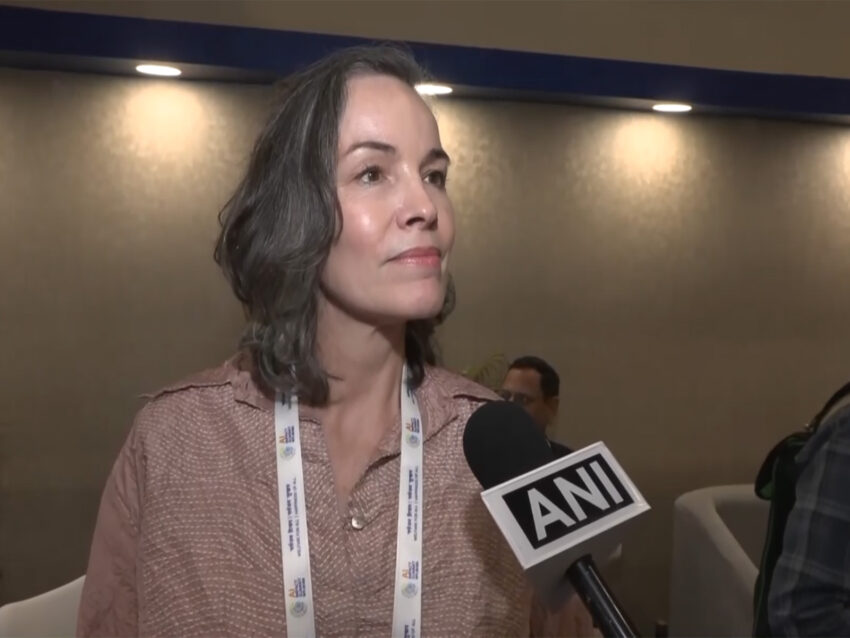
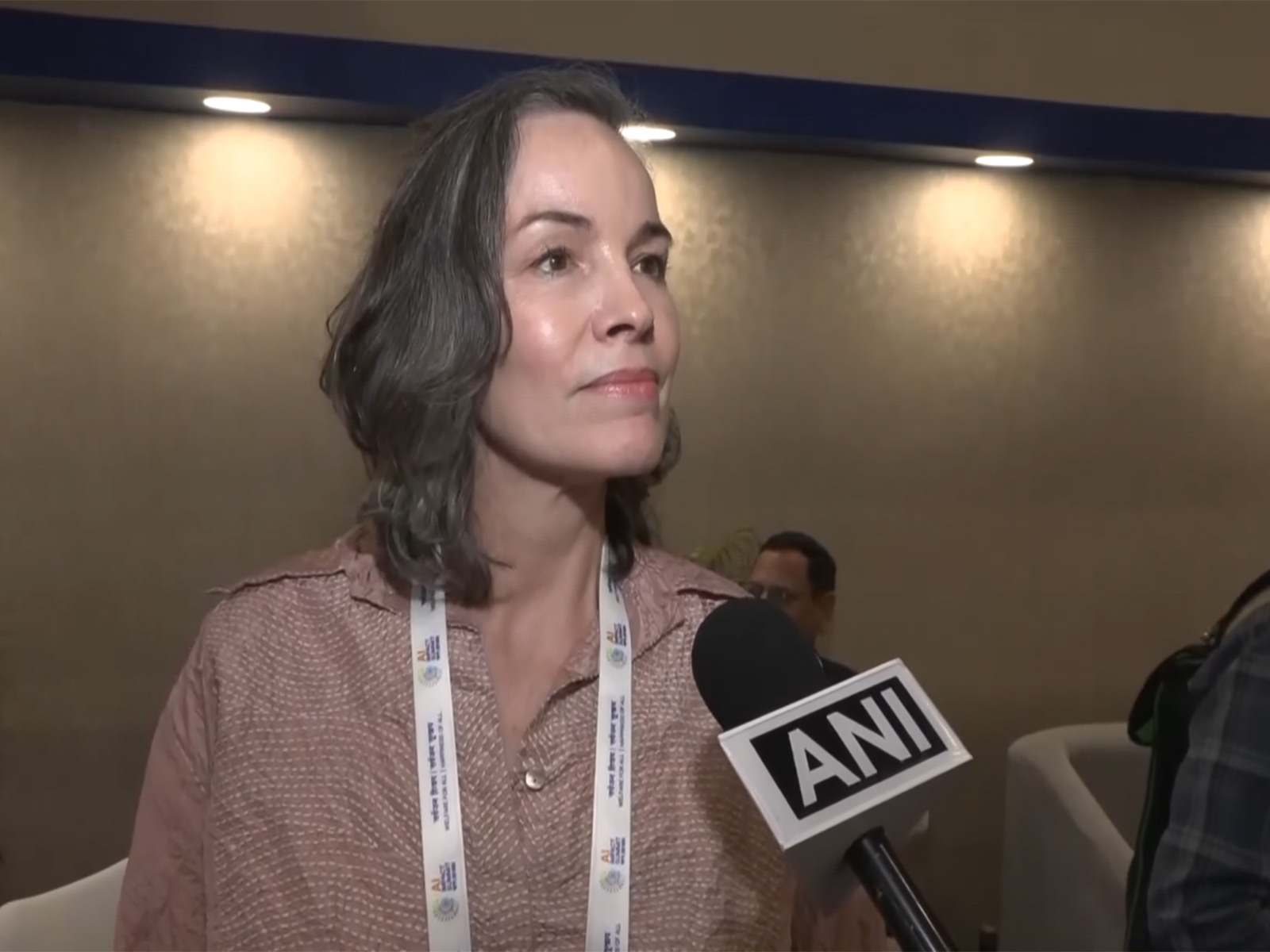
New Delhi [India], February 18 (ANI): Elisabeth Faure, Country Director and Representative, United Nations World Food Programme India said that technology is meaningful when it brings meaning to people’s lives and the summit was doing exactly that.
Faure said that AI is being used to bridge the gaps in the food security that will help prevent losses.
“I think for me technology really only becomes meaningful when it improves people’s lives. So that’s exactly what this space is all about. We’re showcasing joint solutions that enhance the efficiency and effectiveness of the Government of India’s food-based safety net such as the public distribution system, the PM Potion Scheme and the ICDS,” she said.
“You will see as you walk around that we have technology and AI being essentially brought to solve a number of the gaps that still exist when it comes to food and nutrition security in India. So you will see a grain ATM that makes it a lot easier for beneficiaries of the PDS to receive their entitlements quickly and accurately. There’s a robot that measures the quality of food grains in the warehouses that will help prevent food losses. And there’s also an AI enabled tool for route optimization for the public distribution system, which is huge of course,” she added.
She told ANI that the initiatives are also helping reduce the carbon emissions.
“So optimizing the routes has created savings for the government, but it has also created a reduction in carbon emissions. So this is just a snapshot of those solutions. the Department of Food and Public Distribution is a long-standing partner of World Food Program in India,” she said.
Sanjeev Chopra, Secretary of Department of Food and Public Distribution, said that the usage of AI in food sector is innovative, contrary to the popular belief.
“It’s actually a great feeling to be here today and to be able to display what the department has been able to do in the recent past. So normally one would feel that this. The food sector is a very mundane sector. It’s not something that is very amenable to use of AI. But as you would see in the exhibition today, that we have been able to display as to how AI has been a critical component in our functioning for the past couple of years in particular. And what we were trying to do through technology is to bring about transparency. And what AI has done is to add another layer to that particular transparent functioning and to make it more responsive,” he said.
“So in all our operations from the stage of procurement to storage to movement to distribution and the settlement of the subsidy bills of the states, in all these components AI has been used extremely effectively. And this is just the beginning. We’ve probably been more covering the breadth. But now going forward, we’ll be covering each area in more depth as well,” he added.
The Department of Food & Public Distribution (DFPD), Government of India, today showcased a series of AI-enabled and digital innovations transforming the Public Distribution System (PDS) at the India-AI Impact Summit and Expo 2026 being held at Bharat Mandapam, Pragati Maidan, New Delhi.
The exhibition pavilion on “AI-Empowered Innovations for Public Distribution” has been jointly organised by the Department of Food & Public Distribution, Ministry of Consumer Affairs, Food & Public Distribution, in collaboration with the World Food Programme (WFP).
The pavilion was inaugurated by Sanjeev Chopra, Secretary, Department of Food & Public Distribution, in the presence of Stefan Priesner, United Nations Resident Coordinator in India, and Elisabeth Faure, Country Director and Representative, WFP India, along with senior officials of the Government of India and partner organisations. (ANI)