

Munich [Germany], February 15 (ANI): External Affairs Minister S Jaishankar held a series of high-level engagements on the second day of the Munich Security Conference (MSC), reviewing bilateral ties and exchanging views on pressing global developments.
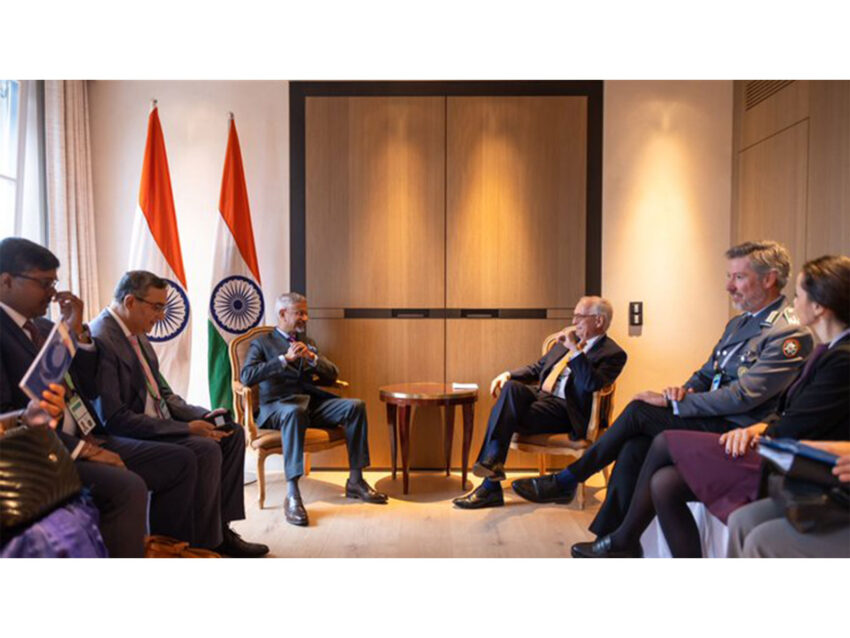
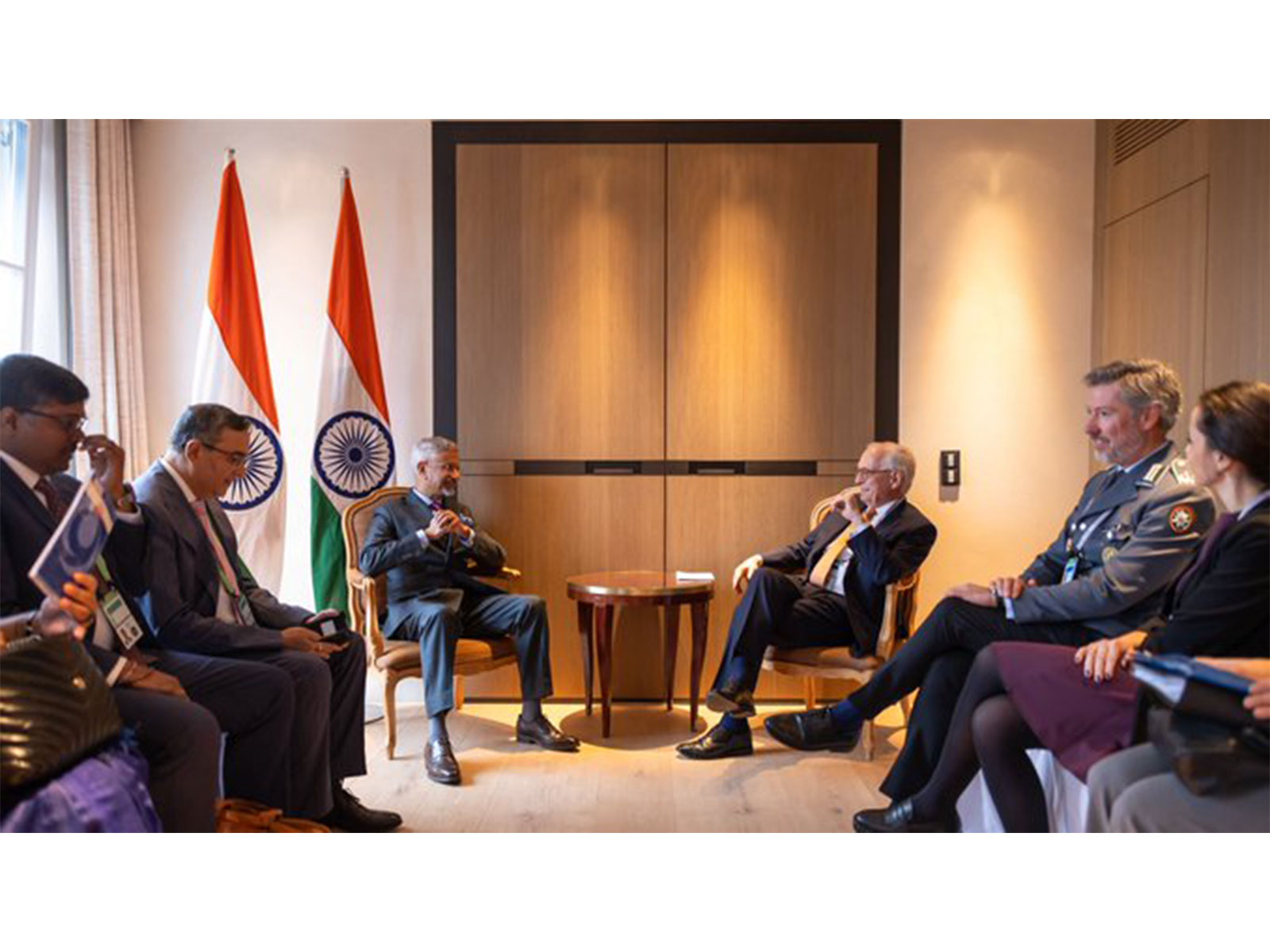
In a post on X on Sunday, Jaishankar said he appreciated his conversation with Ambassador Wolfgang Ischinger, Chairman of the Munich Security Conference (MSC) 2026. He described the interaction as a valuable opportunity to present perspectives and exchange views on key international issues at the 2026 edition of the global security conference.
In the X post, EAM said, “Appreciated the conversation with Amb. Wolfgang Ischinger, Chairman of @MunSecConf #MunichSecurityConference2026, provided a good opportunity to present views and exchange perspectives.”
Appreciated the conversation with Amb. Wolfgang Ischinger, Chairman of @MunSecConf #MunichSecurityConference2026 provided a good opportunity to present views and exchange perspectives. pic.twitter.com/lg5A3gJoim
— Dr. S. Jaishankar (@DrSJaishankar) February 15, 2026
ADVERTISEMENT

Beginning Day 2 of the conference, the minister met with Jens Spahn, Parliamentary Group Leader of the CDU/CSU. Jaishankar appreciated their support for deepening India-Germany relations and said discussions also covered contemporary global developments.
In an X post, EAM said, “Started Day 2 at MSC, meeting with the leader of the CDU/CSU in the Bundestag, @jensspahn, and his team. Appreciate their support to the deepening India-Germany relations. Also exchanged views on contemporary global developments.”
Started Day 2 at MSC, meeting with the leader of the CDU/CSU in the Bundestag, @jensspahn, and his team.
Appreciate their support to the deepening 🇮🇳-🇩🇪 relations. Also exchanged views on contemporary global developments. pic.twitter.com/sn8hND9GI5
— Dr. S. Jaishankar (@DrSJaishankar) February 15, 2026
The CDU/CSU, known as “the Union,” is Germany’s dominant centre-right political alliance, consisting of the Christian Democratic Union (CDU) and the Christian Social Union (CSU).
He also held talks with Romania’s foreign minister, Oana-Silvia Toiu. The two leaders reviewed bilateral ties and agreed to work towards fully realising the potential of India-Romania cooperation.
In an X post, Jaishankar said,” A good meeting with FM Oana-Silvia Toiu of Romania. @oana_toiu. Reviewed our bilateral ties and agreed to realise our potential more fully.”
A good meeting with FM Oana-Silvia Țoiu of Romania. @oana_toiu
Reviewed our bilateral ties and agreed to realise our potential more fully.
🇮🇳 🇷🇴 pic.twitter.com/R4fG6vF5x5
— Dr. S. Jaishankar (@DrSJaishankar) February 15, 2026
External Affairs Minister S Jaishankar on Saturday met with G7 Foreign Ministers and their global counterparts at the Munich Security Conference 2026, reiterating India’s support for the UN80 agenda and underscoring New Delhi’s role in safeguarding global security.
The UN@80 agenda focuses on transforming the organisation to be more “agile, integrated, and equipped” for modern challenges. Key pillars include structural/financial overhauls, strengthening multilateralism, advancing the SDGs, and addressing AI governance and climate change.
The initiative emphasises “Better Together” to enhance efficiency, with 90+ actions focusing on mandate implementation and program realignment.
In a post on X, Jaishankar said, “Pleased to engage with G7 Foreign Ministers today at @MunSecConf. Reiterated India’s support of the UN@80 agenda, particularly meaningful reform of the UN Security Council.”
He added, “Emphasised our role in safeguarding sea lines of communication, serving as a first responder, strengthening port security, and contributing to resilient submarine cable infrastructure.”
He also emphasised India’s role in safeguarding the sea lines of communication, acting as a first responder in crises, strengthening port security, and contributing to resilient submarine cable infrastructure.
“Our conversation brought out the many convergences and shared interests between India and the G7”, he said further.
Jaishankar began his Munich Security Conference 2026 engagements with a roundtable hosted by the Ananta Aspen Centre titled ‘Delhi Decides: Mapping India’s Policy Calculus’.
In an X post, Jaishankar said, “Started my @MunSecConf 2026 engagements with @AnantaAspen’s Roundtable ‘Delhi Decides: Mapping India’s Policy Calculus.’ Highlighted the importance of a nimble and dynamic foreign policy to meet the demands of multipolarity.Noted the significance of the India-EU FTA and the India-US trade deal in that regard.”
He highlighted the importance of a nimble, dynamic foreign policy to address the demands of an increasingly multipolar world, noting the significance of the proposed India-EU Free Trade Agreement and the India-US trade deal.
On the sidelines of the conference, Jaishankar also met with Canadian Foreign Affairs Minister Anita Anand, Japanese Foreign Affairs Minister Toshimitsu Motegi, and French Foreign Affairs Minister Jean-Noël Barrot, describing his interaction with the latter as a “great catch-up” at the start of the conference.
Sunday will be the last day of the 62nd Munich Security Conference, which took place from February 13 to 15, at the Hotel Bayerischer Hof and the Rosewood Munich. Led by MSC Chairman Wolfgang Ischinger, the conference brings together hundreds of decision-makers and opinion leaders from around the world to address pressing security challenges.
Nearly 50 Heads of State and Government confirmed their participation in MSC 2026, including leaders from most European countries and a large delegation from the German Federal Government, led by Chancellor Friedrich Merz.
According to the MSC website, discussions this year took place against the backdrop of mounting instability, questions over longstanding alliances, and an erosion of the rules-based international order. Key topics included European security and defence, the future of the transatlantic relationship, revitalisation of multilateralism, competing visions of global order, regional conflicts, and the security implications of technological advances.
The conference continued to operate under the “Munich Rule,” which encouraged constructive engagement and dialogue on global security issues. (ANI)