

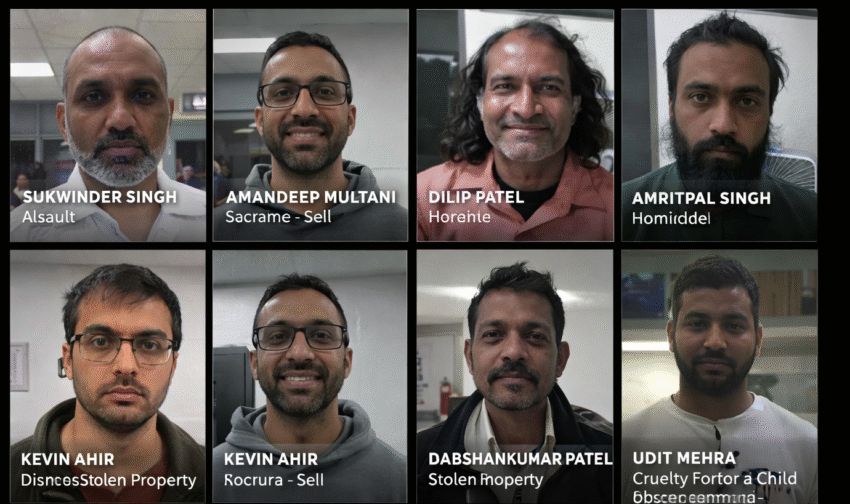

WASHINGTON, DC — The U.S. Department of Homeland Security (DHS) has released a public database naming thousands of undocumented immigrants with criminal convictions as part of an intensified federal deportation drive. While the database includes individuals from dozens of countries, this report focuses specifically on 114 South Asian nationals — 89 from India and 25 from Pakistan — due to its relevance to the South Asian community.
The database, maintained by Immigration and Customs Enforcement (ICE) and U.S. Customs and Border Protection (CBP), identifies individuals arrested for serious offences ranging from sexual assault and drug trafficking to domestic violence, robbery, fraud, and money laundering. DHS has described the list as representing the “worst of the worst” offenders encountered during immigration enforcement operations.
According to DHS, the enforcement actions reflected in the database were carried out under the leadership of Secretary Kristi Noem and are consistent with President Donald Trump’s stated priority of removing undocumented immigrants with criminal convictions from the United States. The database is publicly accessible through the department’s “Worst of the Worst” portal.
DHS recently expanded the portal by adding 5,000 new profiles, bringing the total number of individuals listed to 25,000. The department emphasized that the database is a “snapshot” of arrests made by ICE and CBP and does not represent the entire undocumented immigrant population.
ADVERTISEMENT

“We are not stopping until every single one of these individuals is removed,” DHS said in a statement, adding that the public release is intended to provide transparency into federal immigration enforcement. “Americans should not be victimized by individuals who are not legally authorized to be in our country.”
The announcement comes at a time of heightened debate over immigration enforcement following recent ICE operations in Minneapolis that drew criticism after coinciding with the deaths of two U.S. citizens, Renee Good and Alex Pretti. Despite the controversy, DHS said its focus remains on individuals it characterizes as violent or repeat offenders who are in the country illegally.
DHS officials said the database will continue to be updated as enforcement efforts expand nationwide, underscoring the administration’s broader strategy of prioritizing removals based on criminal history rather than nationality.