

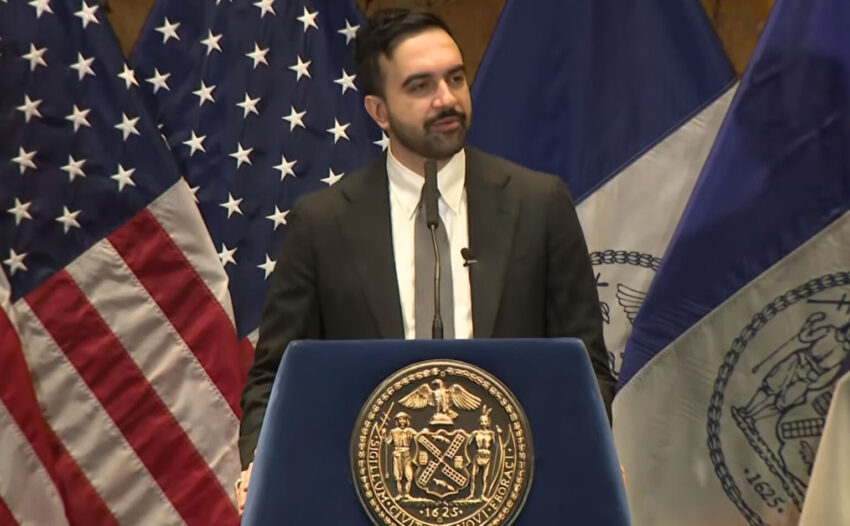

NEW YORK (NIT) – New York City Mayor Zohran Mamdani on Thursday used his administration’s first annual Interfaith Breakfast to reaffirm the city’s sanctuary city status and announce a sweeping executive order aimed at limiting cooperation with federal immigration enforcement.
Addressing nearly 400 faith and community leaders from across the city’s five boroughs, Mamdani framed the city’s immigration policies as a moral responsibility shared across religious traditions, citing Jewish, Christian, Buddhist, Hindu and Muslim teachings during his remarks.
“As ICE fosters a culture of suspicion and fear, let this city of strangers set an example for how to make the sorrows of others our own,” Mamdani said. “Let us offer a new path — one of defiance through compassion.”
During the speech, Mamdani briefly referenced his own faith, Islam, describing it as “a religion built upon a narrative of migration.” He quoted the Prophet Muhammad, saying, “Islam began as something strange and will go back to being strange, so glad tidings to the strangers,” linking the passage to his call for solidarity with immigrants.
ADVERTISEMENT


At the breakfast, Mamdani signed an executive order reaffirming New York City’s sanctuary laws. The order strengthens privacy protections for all residents, restricts federal immigration enforcement on city property without a judicial warrant and requires city agencies to audit policies governing interactions with immigration authorities.
The order also establishes an interagency response committee to coordinate city action in the event of escalated federal immigration enforcement or other major crises.
Mamdani also announced a citywide “Know Your Rights” initiative that will distribute nearly 32,000 multilingual flyers and booklets through faith institutions. The materials outline residents’ rights during encounters with Immigration and Customs Enforcement and include information for the Mayor’s Office of Immigrant Affairs Legal Support Hotline.
The mayor urged faith leaders to help distribute the materials, noting that immigrant New Yorkers often turn first to religious communities for guidance and support.