

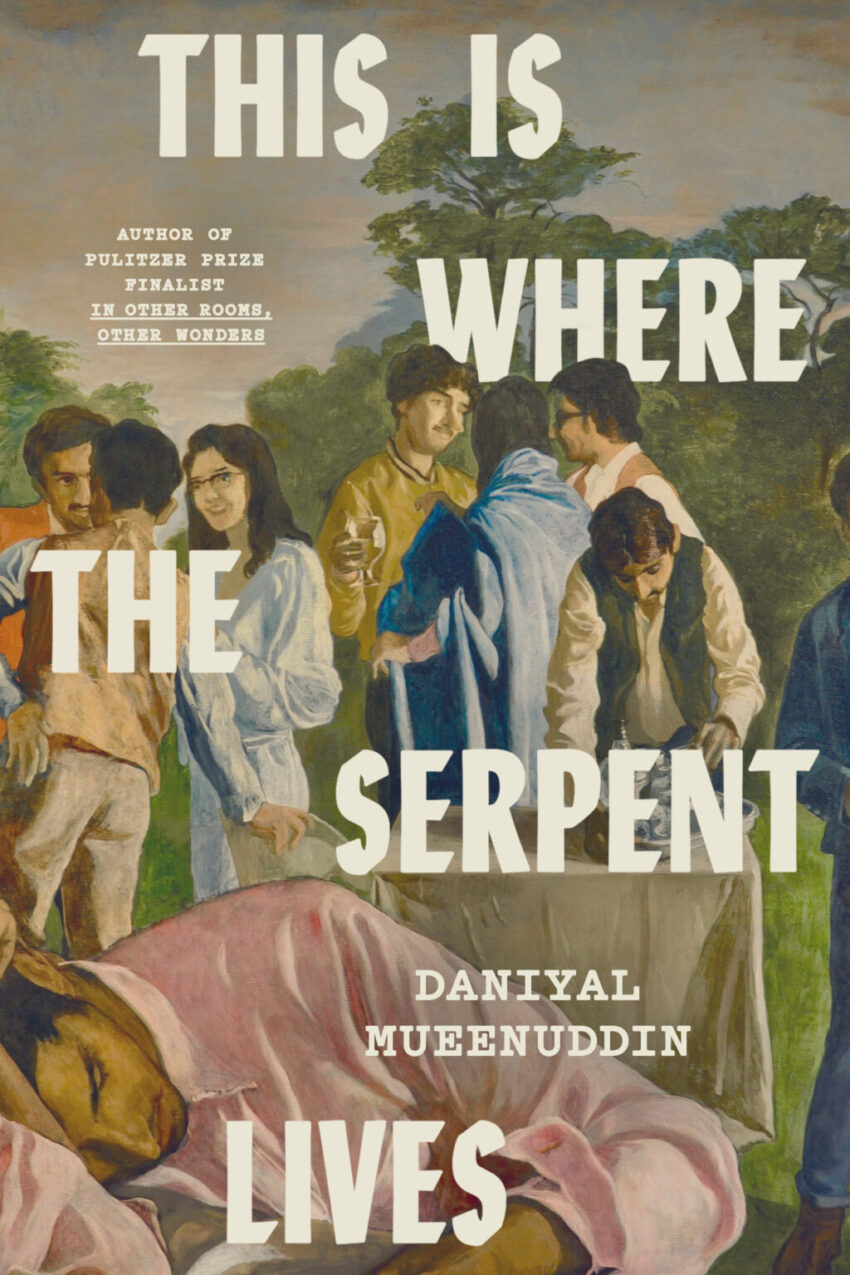
This Is Where the Serpent Lives, By Daniyal Mueenuddin. Knopf. 368 pp. $29

Seventeen years have passed since the publication of Daniyal Mueenuddin’s sensational debut collection of linked stories, “In Other Rooms, Other Wonders.” A finalist for the Pulitzer Prize, the book drew legitimate comparisons to Tolstoy in its depiction of the full range of feudal society in contemporary Pakistan, from wealthy landowners to estate and field workers, and middle managers, schemers and dreamers in between. The structure of the narrative, the depth of the characters, the exquisite prose, the vivid, capacious sense of place were also reminiscent of Edward P. Jones’s sublime stories set in Washington. A new book by a writer who keeps such company is worth any wait.
“This Is Where the Serpent Lives” is a departure in certain ways. Instead of eight individual pieces, there are four, so it’s more of a collection of linked novellas than stories. There are as many complex women characters, but we spend less time in their points of view. The settings range from Rawalpindi to Lahore to New Hampshire to the Kaghan Valley to Dunyapur to Kerala, in India.
The book begins with “The Golden Boy,” the story of a Rawalpindi orphan, Bayazid, who is adopted by a curry stall owner a few years after the 1947 partition of India and its violent aftermath, when “families drifted about, mothers dead, fathers dead, murdered for religion’s sake, for politics, unwelcome children without parents … stuck on the wrong side of the border, on the run.” In exchange for meals and a place to sleep, Yazid serves food all day and perfects a popular recipe for naan. His small bedroom in the back of the stall becomes a hot spot for carrom players, and Yazid has a penchant for winning that gets under the skin of the local bully but impresses another boy, Zain, whose family runs the best grocery in town. A series of events leads Yazid to fold in with the grocer’s family, but a treacherous household servant, “bedamned that the family’s status should be fouled by this jumped-up tea stall boy,” sets out to undo him. And, for a time, succeeds.
ADVERTISEMENT

This theme, of the servant class protecting their overlords by stymieing the social mobility of others of their own station, plays out in the second story, “Muscle,” as well. Here the competing factions are a group of villagers who steal telephone wire from a landowner’s son, and Sheikh Sharif, a Lahori gangster whom the son, Rustom, has hired for protection. Like Yazid, Rustom is an orphan, his high-living parents having died in a car accident. He’s green, as well, just returned to the country after a decade abroad, so Sheikh Sharif becomes both his enforcer and his guide to the convolutions of power and corruption in Punjab. Guides of his own class, his cousin Hisham Atar and Hisham’s wife, Shahnaz, try to set him up with Nisa, who “he’d seen around the polo ground since childhood,” which tempts him to abandon his girlfriend back in America. “In Pakistan, every problem is a lock,” Hisham says, “and to that lock there is a single key. Your job is to find that key.” Could Nisa, a privileged insider, be just the solution?
Mueenuddin spins a great romantic plot, especially a love triangle. In “The Clean Release,” we get another one, framed around an evening of storytelling, with appearances by Yazid, who is now Hisham’s driver; Rustom, who is the tale’s audience; and a servant, Saqib. We learn that Shahnaz had once dated Hisham’s younger brother, Nessim, and get the full story of how the couple fell in love under Nessim’s nose on a remote camping and fishing trip in a stunning alpine valley surrounded by glaciers and snowcapped mountains. In one unforgettable scene, the betrayed Nessim lures his brother to the edge of an icy precipice above a deep gorge, perhaps threatening suicide. Or homicide.
Such cliff-hangers and drama might have brought more form to the most meandering story, the title piece, which closes the book and runs the length of a short novel. We watch the rise of Saqib from servant to entrepreneur. With the support of the Atars, who recognize his talent, and of Yazid, who helps steer his ascent, he pioneers a method of farming cucumbers that initially yields great profits, along with the jealous ire of his competition and peers, who inevitably undermine him.
Making comparisons between Mueenuddin’s first and second books is unavoidable but also futile. Better to think of the two works as a grand sequence, a many-splendored portrait of one of the most interesting and complex countries in the world, and a shining example of the very best literature.
– – –
Porter Shreve is the author of four novels. He teaches in the creative-writing program at the University of Wisconsin at Madison.