


A mother language is part of one’s cultural heritage. Knowing it depends first and foremost on the desire in the parents of young children, according to Raj Mittal, Vice President and Treasurer of HindiUSA, the largest Hindi teaching organization in the U.S.
Mittal was speaking to News India Times in continuation of a Zoom session of Sparsh Himalaya Festival 2025 which brainstormed on the spread of Hindi language and the hurdles faced in teaching Hindi abroad.
Lack of desire in parents for their children to learn Hindi – Mittal spoke about the early experiences of founders Devendra and Rachita Singh who held free Hindi classes at a local temple. “The Singhs soon realized the 3-4 hours’ time was used by the parents to finish their errands after dropping children off to the class, using the classes as a free babysitting service,” he said. “They were not really interested in having their children learn Hindi.”
The Singhs overcame this hurdle by forming HindiUSA, which began holding classes in rented school classrooms with a serious educational environment for teaching and learning, using a structured curriculum, Mittal said.
ADVERTISEMENT

The first HindiUSA school was established in Edison, New Jersey, in 2005 with 50 enrollments, which sprang to 150 within a week, with parents and teachers volunteering. Today, HindiUSA has 18 schools in New Jersey and 3000 students from the US East Coast. There are 12 more schools across the U.S.
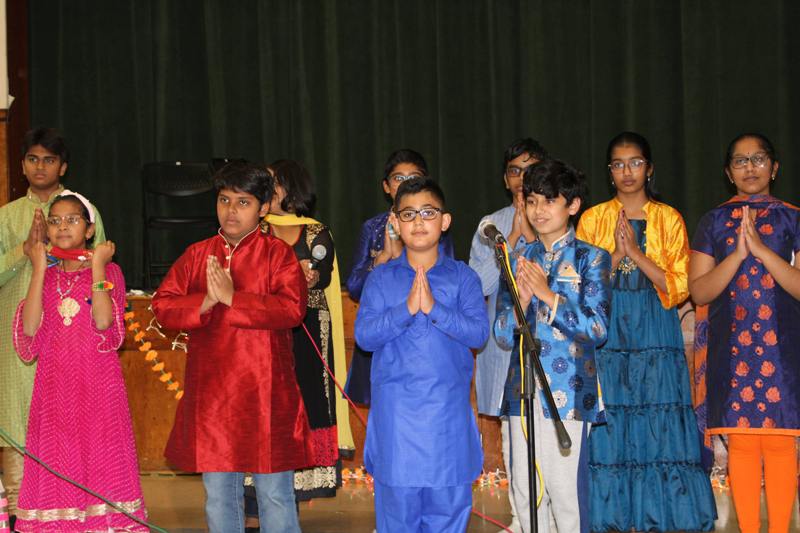
According to Mittal, the organization also organizes an annual Hindi Mahotsava where it recognizes students, holds poetry and drama competitions to give children a platform to speak Hindi on stage and develop public speaking skills in Hindi. Senior students are taken on an educational tour of India every year.
HindiUSA also teaches Hindi to adults including entrepreneurs and executives who work for corporations or those who want to travel to India. “For them, HindiUSA uses a special expedited curriculum focusing more on communication, reading and speaking Hindi,” Mittal said.
Lack of motivation in the children to learn Hindi – Since Hindi is not the mother language of every Indian American, and the desire to learn it may not exist in very young children.
“It is for parents to make young children understand that a language is an introduction to a culture, that those who know Hindi will understand Indian culture and its traditions,” Mittal said. They would not be able to correctly understand the message, the concept and the context of epics like the Mahabharat and the Gita in another language, he said.
Devansh Malhotra, who has won Hindi essay writing competition organized by the Consulate General of India in New York, has relocated to the U.S. with his parents after spending the first 10 years of his life in India. Devansh has still enrolled in HindiUSA advanced classes and volunteers at HindiUSA to teach younger students. Devansh had said in his earlier interview with News India Times that he wanted to learn proper Hindi to be able to speak to his grandparents and other relatives in India who only speak Hindi.
Mittal said other HindiUSA students feel proud about learning Hindi, and display their Hindi skills whenever they get a chance, talking about the language and reciting poems at social gatherings. “They talk to people in Hindi and recite full poems in Hindi to their relatives when they visit India,” he said.
Lack of proper textbooks and educational curriculum – HindiUSA has been successfully teaching Hindi for the past twenty years, but has also faced the lack of standard Hindi teaching curriculum and textbooks. They had to create their own curriculums and text books which are more relevant in the environment in the US.
“Hindi learning books from India are meant for native Hindi speakers, and not designed for children in the U.S. who have a limited exposure to Hindi language,” Mittal said.
Mittal informed HindiUSA co-founder Rachita Singh has rewritten Hindi learning books based on feedback from their teachers, making them current and updating them every 2 years. She has written 30 books for the 9 levels of their complete certificate course. “These books are used in 30 HindiUSA schools, plus 30 affiliated schools in the U.S. who use HindiUSA syllabus, books and exams,” Mittal said, adding they have had requests for the same from schools in India.