

New Delhi [India], March 6 (ANI): After US Treasury Secretary Scott Bessent on Thursday announced that the US was implementing a 30-day waiver for India allowing for the purchase Russian oil in light of the West Asia crisis, the Congress went out all guns blazing against the Government.
Congress’ Chandigarh MP Manish Tewari was the first to issue a sharp retort accusing the Government of not understanding what sovereignty means.
“Issuing a 30 day waiver – the sanctimonious language of condemnation drips with neo-imperial arrogance. Are we a banana republic that we need the permission of the US to secure our energy security imperatives? The silence of an otherwise overly loquacious government is deafening. Does it not understand what sovereignty means?” Tewari stated in a post on X.
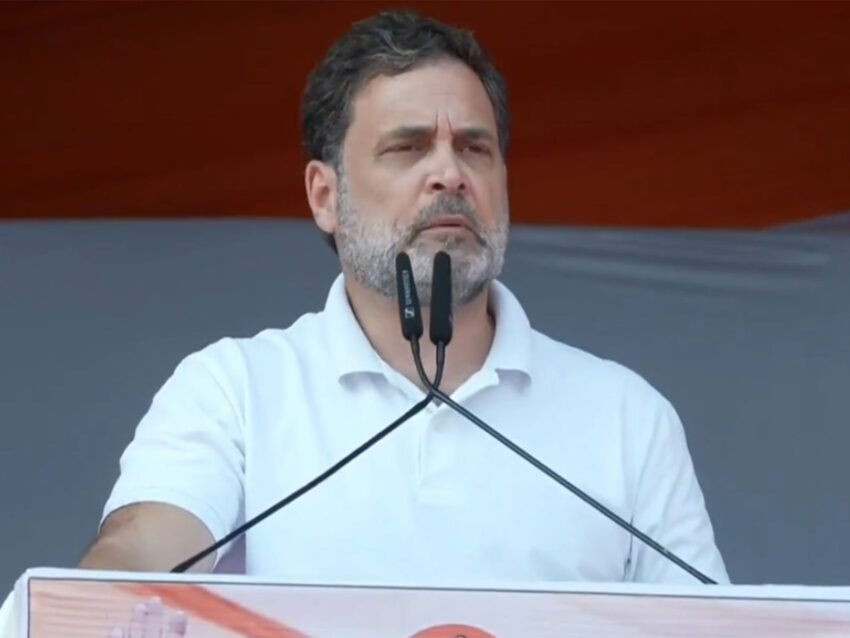
Senior Congress leader and Lok Sabha LoP Rahul Gandhi then took it a notch higher accusing the Government of being compromised on foreign policy.
“India’s foreign policy emerges from the collective will of our people. It should be rooted in our history, our geography, and our spiritual ethos based on Satya and Ahimsa. What we are witnessing today is not policy. It is the result of the exploitation of a compromised individual,” he posted on X.
What the Congress seemed to forget was that Diplomacy and Statecraft have multiple facets to it. In-fact a 2012 deal made with the US, while the Congress led UPA government was in power, has blown holes in the party’s position.
A statement from then US Secretary of State Hillary Clinton on June 11, 2012 shows that India had agreed to significantly reduced crude oil imports from Iran after sanctions imposed by the United States and its partners over Tehran’s nuclear programme.
Clinton added that as a result, US sanctions under Section 1245 of the National Defence Authorisation Act would not apply to financial institutions in those jurisdictions for a renewable period of 180 days.
“Today I have made the determination that seven economies–India, Malaysia, Republic of Korea, South Africa, Sri Lanka, Turkey and Taiwan–have all significantly reduced their volume of crude oil purchases from Iran. They join the 11 countries for which I made this determination in March. As a result, I will report to the Congress that sanctions pursuant to Section 1245(d)(1) of the National Defence Authorization Act for Fiscal Year 2012 will not apply to their financial institutions for a potentially renewable period of 180 days,” the statement read.
A year later, on June 5, 2013, then US Secretary of State John Kerry announced that India and several other countries had again qualified for an exception after making “additional significant reductions” in the volume of their crude oil purchases from Iran or reducing them to zero.
“The United States and the international community stand shoulder to shoulder in maintaining pressure on the Iranian regime until it fully addresses concerns about its nuclear program. That is why today I am pleased to announce that China, India, Malaysia, Republic of Korea, Singapore, South Africa, Sri Lanka, Turkey, and Taiwan have again qualified for an exception to sanctions outlined in section 1245 of the National Defence Authorization Act (NDAA) for Fiscal Year 2012, based on additional significant reductions in the volume of their crude oil purchases from Iran or for reducing those purchases to zero and remaining there. As a result, I will report to the Congress that exceptions to sanctions pursuant to Section 1245 of the NDAA for certain transactions will apply to the financial institutions based in these jurisdictions for a potentially renewable period of 180 days,” the statement read.
The two statements show that when it comes to diplomacy the prevailing situation and national interests dictate policy and the current position of the Congress stands in question.
Meanwhile, in what will bring some relief, Iranian Deputy Foreign Minister Saeed Khatibzadeh has dismissed claims that Iran has shut down the strategically vital Strait of Hormuz.
Speaking at the Raisina Dialogue 2026, Khatibzadeh emphasised that Iran continues to act as a stabilising force despite the escalating war with Israel and the United States.
“Iran is an anchor of stability in the Strait of Hormuz. We will announce if we close the Strait of Hormuz. We have not closed it. We are a responsible power,” he said.
Addressing policymakers and diplomats, he clarified that there is no immediate intention to block the waterway. “We have not yet closed the Strait of Hormuz. We have no intention to do that until further notice,” he added, describing Iran as a key guarantor of maritime stability because of its presence and active role in the region.
About 40 per cent of India’s crude moves through the Strait of Hormuz, and 60 per cent of the rest of the crude comes from other sources.
The government on Friday clarified that India is in a very comfortable position in Crude oil, Oil products and LPG in terms of our current stock. Sources said that India would ramp up supplies from other part of the geographies, and make up any supply crunch from the Strait of Hormuz
Sources further said that India has been buying crude oil from Russia since 2022. In 2022 India imported 0.2 percent of its total import from Russia while in February it imported 20 percent crude oil of its total import from Russia. (ANI)